Colorado Supreme Court kills redistricting ballot measures for 2028
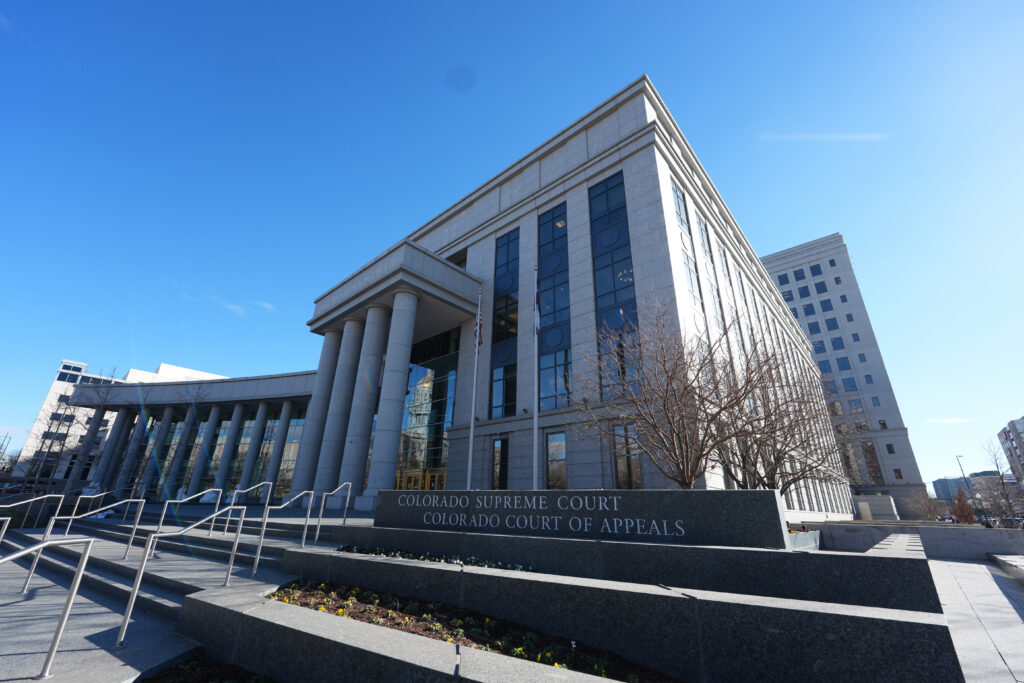
The Colorado Supreme Court killed a set of proposed ballot measures aimed at redrawing the state’s congressional map to counter GOP gerrymanders in other states, finding that they violated the state constitution.
Like in past redistricting pushes in California and Virginia, the measures would ask voters to let the state temporarily sidestep the independent redistricting commission and draw a more Democratic-friendly map in response to Republicans’ mid-decade redraws across the country.
But unlike in California and Virginia, where lawmakers passed redistricting legislation that they sent to the voters for approval, the Colorado redistricting supporters attempted to put the measure to voters by gathering signatures for a ballot initiative. If their effort had not been blocked on procedural grounds, their next step would have been to submit at least 125,000 signatures by Aug. 3 in order to qualify for the ballot.
Get updates straight to your inbox — for free
Join 350,000 readers who rely on our daily and weekly newsletters for the latest in voting, elections and democracy.
Coloradans for a Level Playing Field, a group backing the measures, blasted the Colorado Supreme Court’s decision Monday.
“The success of this partisan attempt to sideline Coloradans from responding to Donald Trump’s unprecedented mid-decade redistricting scheme is disappointing,” Curtis Hubbard, the group’s spokesperson, said in a statement. “While Trump and his MAGA allies regularly sidestep the law and ignore voters, efforts to respond have once again been dealt a legal setback over a technicality.”
But the decision did not appear to be a partisan one. All seven Colorado Supreme Court justices who unanimously blocked the measures were appointed by Democrats.
The ruling also does not close the door on attempts to try again, but supporters would face a tight timeline to complete the necessary steps in time for 2028.
While the group aimed to get the ballot measures on the November ballot this year, the court’s decision means they would need to pass two separate ballot measures, likely requiring multiple successive elections.
The court determined that they violated a Colorado requirement that “(n)o measure shall be proposed by petition containing more than one subject” — in other words, it cannot ask two different questions at once.
A state board previously approved two of the three proposals, finding they complied with the “one subject” requirement. Opponents of the ballot measures then asked the Colorado Supreme Court to review the case.
Colorado is currently represented in the U.S. House of Representatives by four Democrats and four Republicans. Former Vice President Kamala Harris won the state in the 2024 presidential election with 54% of the vote.
On the state level, Colorado has a Democratic trifecta, meaning that Democrats control the governor’s office, the Colorado Senate and the Colorado House. However, Gov. Jared Polis (D) was censured last month by the state’s Democratic Party for caving to Trump’s demand to commute the sentence of notorious election denier Tina Peters.
The proposed ballot measures were coordinated and would have all needed to pass in order to take effect.