MAGA hardliners launch latest failed push to pass SAVE America Act
 Prefer us on Google
to see more of our voting rights news coverage when you search.
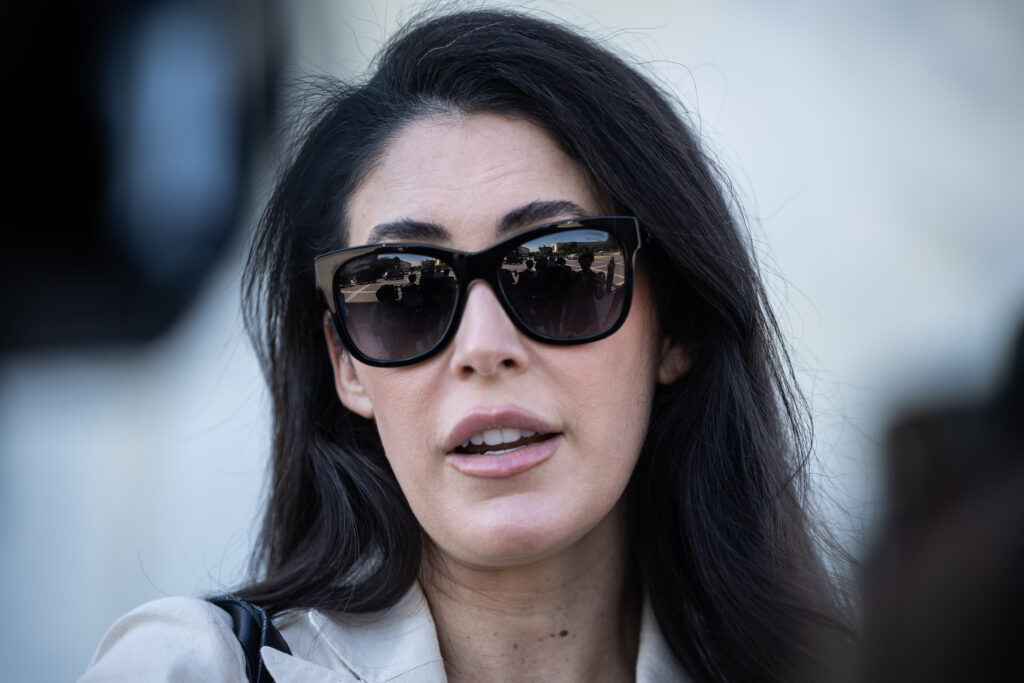
MAGA hardliners in the U.S. House hijacked control of the floor from Speaker Mike Johnson (R-La.) Tuesday in yet another unsuccessful attempt to force through President Donald Trump’s pet anti-voting legislation.
This time, they refused to vote for adding the SAVE America Act to a must-pass annual defense bill — not because they oppose the most anti-voting legislation in recent American history, but because they believed Johnson’s plan would ultimately fail to get it enacted.
It wasn’t their first attempt. And it probably won’t be the last.
Trump has spent most of 2026 demanding that Congress enact the SAVE America Act. But despite incessant presidential pressure, the legislation has stalled in the Senate, unable to clear the filibuster’s 60-vote threshold. Allies like Senate Majority Leader John Thune (R-S.D.) have tried to convince the president to drop his demands, which are rending Republicans apart, but Trump has only ramped up his rhetoric.
“In a time when there is a powerful Communist Movement taking place in our Country, one more dangerous than World War I, World War II, Pearl Harbor, or September 11th all Dumocrats, and our five Republican Senate Hold Outs, Lisa Murkowski, Susan Collins, Thom Tillis, Bill Cassidy, and Mitch McConnell must vote to SAVE OUR COUNTRY, ” Trump wrote in a rambling social media post Monday that seemed to lump Cassidy (R-La.) with other GOP senators who have voted against the bill.
The House voted 198-224 against a procedural step to take up debate of the National Defense Authorization Act (NDAA). Fourteen conservative Republicans joined Democrats in voting no.
Johnson had tried to win over the GOP holdouts in part by offering to attach an early version of the SAVE America Act to the Pentagon policy measure. But that plan wasn’t good enough for a small contingent of archconservatives led by Rep. Anna Paulina Luna (R-Fla.), who marshalled opposition to the preliminary vote, derailing the House’s agenda for the week before a lengthy recess for July 4th.
MAGA loyalists like Luna and Rep. Max Miller (R-Ohio) described Johnson’s proposal as little more than an attempt to pull the wool over their eyes.
“For someone who’s got the holiest tongue in the world, [Johnson] lies more than anyone I’ve ever met,” Miller told reporters outside the vote Tuesday.
Get updates straight to your inbox — for free
Join 350,000 readers who rely on our daily and weekly newsletters for the latest in voting, elections and democracy.
If Johnson’s plan had worked, the SAVE America Act’s documentary proof of citizenship and photo ID provisions would have been added to the NDAA, but not measures Trump specifically sought to add to the legislation: bans on no-excuse mail voting, trans athletes playing in women’s sports, and gender affirming care for minors.
Now it’s unclear whether the House will be able to vote on the NDAA or other important matters this week as originally planned. GOP leaders could decide to hold another vote as soon as Tuesday evening, but would only do that if they can flip a few Republican no votes.
Ahead of the vote, Democrats lambasted the House GOP’s inability to handle the basics of legislating.
“Even your own members are fed up, Mr. Speaker, every week wondering if someone’s going to throw a fit, if Donald Trump is going to post something crazy and blow everything up, if Mike Johnson is going to bring something to the floor when he doesn’t have the votes,” Rep. Jim McGovern (D-Mass.) said. “The chaos and the dysfunction around here is unhinged.”
“And why?” McGovern continued. “Because [Trump] is still busy trying to fraudulently claim that the 2020 election was stolen. And now he wants to use that as an excuse to try to rig the midterms.”
GOP unity sinks over SAVE
The Luna-led opposition comes after Trump blew up a signing ceremony for a bipartisan housing bill — a rare legislative win for this Republican Congress — at the last minute in a half-hearted attempt to hold the measure hostage for the SAVE America Act.
Capitol Hill journalists treated the latest maneuver like a scheme to appease the SAVE Act obsessives so the House could pass the NDAA, not as an earnest attempt at adopting the anti-voting legislation. Punchbowl’s Jake Sherman, who likened Johnson to a triage nurse “trying to stop the bleeding in the House Republican Conference,” called the move “creative.”
“There’s very little chance that House GOP leaders would’ve been able to advance a rule without this move,” he wrote on X. “But it’s a mostly theatrical maneuver. The final NDAA that Congress will send to Trump later this year will be a negotiated bill that Democrats and Republicans in both the House and Senate have signed off on.”
Politico likewise cast the plan as a “bid to unfreeze the House floor this week,” aimed at placating conservative hard-liners so the typically bipartisan defense policy bill can advance.
Luna called out Johnson’s proposal ahead of the procedural vote Tuesday, calling it a procedural “fake.”
Instead, Luna urged an amendment attaching the SAVE America provisions directly to the NDAA.
“IF IT IS NOT DONE THIS WAY, IT WILL EASILY BE TAKEN OUT,” she wrote in a social media post. But if the Senate were to follow her plan, they “would need 60 votes to pass the legislation without SAVE America attached,” Luna added.
That’s incorrect, as a number of Senate observers noted: The Senate could easily remove the SAVE America Act language from the NDAA either way.
The NDAA is one of the few pieces of legislation Congress passes every year, and as such it often attracts unrelated policy riders searching for a legislative vehicle toward passage. But most fail to make it through the bipartisan, bicameral negotiations ahead of a final vote.
Johnson’s trouble stems from the fact that Luna and her allies are trying to leverage what little power they have in the House to influence the Senate. At its peak, the SAVE America Act garnered 53 votes in the Senate — not nearly enough to clear the filibuster’s 60 vote threshold.
Since then, its support has waned as Republicans like Sen. Thom Tillis of North Carolina and Mitch McConnell of Kentucky have expressed their annoyance at the Senate wasting time on a doomed measure by voting against it. Speaking on CNN on Sunday, Tillis called passing the SAVE America act an “impossible task.”
At the same time, more Republicans have begun to push back against the bill itself.
“I think it’s ironic that we control the House, the Senate, the Supreme Court, and the White House and we’re yelling ‘election fraud,’” outgoing Rep. Thomas Massie (R-Ky.) told reporters last week. “I mean we won all the damn elections. We are in charge and what are we doing with it? We’re bankrupting the country, we’re starting new wars, we’re violating the Constitution, we’re not cracking down on the fraud.”
“The problem is not the elections. We won the damn elections,” added Massie, who lost his primary last month after Trump endorsed another Republican. “The problem is we are wasting our opportunity that voters gave us and the Republicans are going to pay for that in November.”
Other Republicans have turned to badmouthing their SAVE-infatuated colleagues anonymously in the press, saying they are only helping make Democratic talking points.
Can SAVE be saved?
The more realistic path to enacting something akin to the SAVE America Act lies in Congress attempting a third reconciliation package, as Johnson told reporters on Monday.
“The only way to get that to the president’s desk, we’ve been shown many times, is to put it on a reconciliation bill,” he said. “We have a plan to do that… which will clearly pass the Byrd test over there.”
Reconciliation is one of the few exceptions to the Senate’s filibuster rule, which requires 60 votes to end debate on a bill or motion on the chamber floor. For certain fiscal measures, the Senate and House budget committees can issue reconciliation instructions to other committees to develop legislation with specific impacts on mandatory spending, revenues, or the debt limit.
But a rule named after Senator Robert C. Byrd limits what kind of legislation that can be passed via reconciliation.
Senators can challenge provisions in a reconciliation package if they don’t produce budgetary effects or if those budgetary effects are merely incidental to the policy change. If the Senate parliamentarian — a nonpartisan congressional employee — agrees, those parts are struck, unless 60 Senators vote to waive the Byrd rule finding.
Republicans considered attaching the SAVE America Act to the last reconciliation package passed by the Senate earlier this month, but that effort failed when four Republicans voted against adding the measure in an amendment. Even if it had been adopted, the parliamentarian probably would have ruled it violated the Byrd rule.
Johnson’s idea is to structure the bill as a $4 billion grant program for states that implement the SAVE America Act’s provisions. However, as Democracy Docket previously reported, the parliamentarian usually sees through such blatant attempts to jump through a loophole.