Senate rejects yet another GOP push to revive SAVE America Act
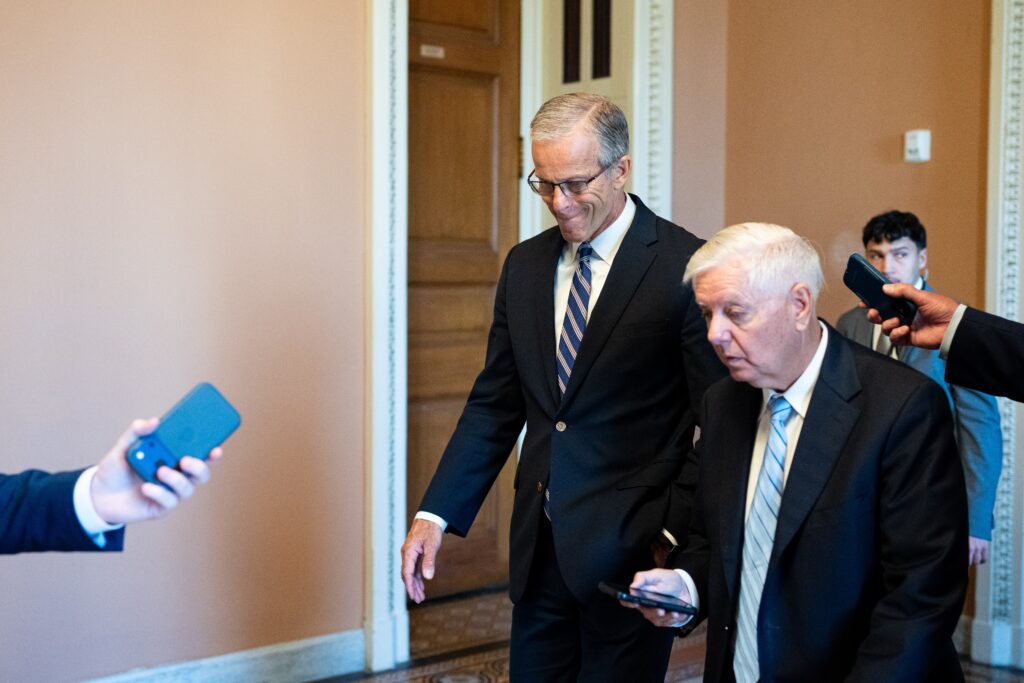
The Senate blocked another Republican attempt Thursday to attach the anti-voting SAVE America Act to an immigration funding package, marking the second failed GOP effort to move the sweeping voting restrictions bill through the chamber.
The amendment, offered by U.S. Sen. Lindsey Graham (R-S.C.), failed in a 48-50 vote. The vote showed Republicans didn’t even have a simple majority for the proposal, even before reaching the 60-vote threshold needed to overcome procedural objections.
Four Senate Republicans — Susan Collins of Maine, Lisa Murkowski of Alaska, Mitch McConnell of Kentucky and Thom Tillis of North Carolina — joined every Democrat to block the amendment.
Get updates straight to your inbox — for free
Join 350,000 readers who rely on our daily and weekly newsletters for the latest in voting, elections and democracy.
The proposal needed 60 votes because Republicans were trying to attach it to a nearly $70 billion budget reconciliation package funding Immigration and Customs Enforcement and Border Patrol. Reconciliation can bypass the filibuster, but only for provisions with a clear budget impact — which is why Republicans have been looking for ways to attach voting restrictions to spending measures.
The failed vote is another major setback for President Donald Trump and Senate Republicans, who have repeatedly tried to revive the SAVE America Act despite unified Democratic opposition and resistance from some members of their own party.
The legislation would impose new national voting restrictions, including ID and citizenship documentation requirements. Voting rights advocates have warned that those requirements could disenfranchise eligible voters who don’t have easy access to qualifying documents.
“Current safeguards are working,” Sen. Alex Padilla (D-Calif.) said, noting a similar attempt by Republicans failed last month. “And yes, it is already unlawful for non-citizens to vote in the United States. What this amendment does is mirrors earlier attempts to push through the president’s priorities, to try to take over elections, to ban vote by mail.”
The defeat came the same day U.S. Rep. Julie Fedorchak (R-N.D.) introduced a separate REAL ID bill that could give Republicans another path to advance parts of the SAVE America agenda through reconciliation. That bill would create a federal grant program to help states provide REAL ID-compliant cards to low-income residents — giving Republicans a clearer budget hook as they look for ways around the filibuster.