LA County checked a sample of voters on DOJ’s ‘noncitizen’ list. 1 in 4 were born in the U.S.
 Prefer us on Google
to see more of our voting rights news coverage when you search.
Los Angeles County reviewed a sample of voters on the Trump administration’s list of more than 20,000 people it says are “likely noncitizens” and found that roughly one in four listed a U.S. birthplace, the county said.
And nearly half, it added, were already canceled or inactive registrations.
The findings, laid out in a Tuesday court filing, raise fresh concerns about the reliability of the federal list the Department of Justice (DOJ) is asking a judge to use to halt the counting of thousands of California ballots just two weeks before Election Day.
Get updates straight to your inbox — for free
Join 350,000 readers who rely on our daily and weekly newsletters for the latest in voting, elections and democracy.
Of the more than 20,000 records on DOJ’s statewide list, 7,035 contained Los Angeles County addresses.
County officials compared a sample of those records with their current voter files and found that 25.8% recorded a place of birth in the United States, which the county described as “a strong indicator of citizenship status.”
The county did not say that every U.S.-born person in the sample is necessarily a citizen. But the finding directly complicates DOJ’s characterization of the federal list as credible evidence that the people on it are all noncitizens.
The review found other striking discrepancies.
More than 71% of the sampled individuals had never voted. And 42.9% of the sampled registrations had already been canceled, while another 4.6% were inactive.
Only 42.4% were active registrations.
Of sampled individuals, just 45% had actually been mailed ballots for the current election. The rest were not sent ballots because their registrations were canceled or inactive.
Those figures cut against the picture DOJ has painted in its escalating fight with California: that election officials are poised to count thousands of ballots from people federal agencies have identified as “likely noncitizens.”
Los Angeles County cautioned that its sampling describes the composition of the records rather than conclusively determining the citizenship of each person. But it argued that the results provide “no basis” for treating the federal list itself as credible evidence of noncitizen voting.
The county’s findings were disclosed Tuesday in its opposition to an emergency request from the Trump administration seeking to force California election officials to sideline ballots belonging to people on DOJ’s list until their citizenship can be independently verified.
DOJ says the list was produced through a multilayered investigation involving U.S. Citizenship and Immigration Services and Homeland Security Investigations. Federal officials have said they used voter roll information, immigration records and other government data to identify matches they deemed likely to be noncitizens.
But Los Angeles County says DOJ’s own court filings reveal significant limitations in that process.
According to the county, the federal review began with a voter roster that was more than a year old and obtained from an unidentified source, which was then supplemented with an unnamed commercial data platform and compared with federal databases. One federal declarant acknowledged that some underlying information may be “incomplete, outdated, or mismatched.”
And although DOJ has described an investigative system that assigns potential matches different confidence levels, the actual list given to Los Angeles County contained no high-, medium- or low-confidence designation for individual voters and no explanation of the evidence underlying any particular person’s inclusion.
The county also said the federal list does not contain the unique identifiers used by Los Angeles’ voter registration system. Matching the names therefore requires election workers to compare names, birth dates and addresses manually — information that can contain conflicting dates or be formatted differently across databases.
Those concerns carry heightened stakes because DOJ is not merely asking California to investigate the names after the election.
The administration wants a federal judge to require election officials to withhold ballots associated with the list until citizenship is affirmatively established. DOJ has acknowledged that the federal government itself cannot realistically finish individualized investigations of thousands or tens of thousands of people before the election ends.
The county argues that leaves potentially eligible voters at risk.
DOJ’s proposed order provides no firm deadline for resolving a voter’s citizenship, no defined process for contesting an erroneous match and no guarantee that a ballot wrongly placed on hold would ultimately be counted.
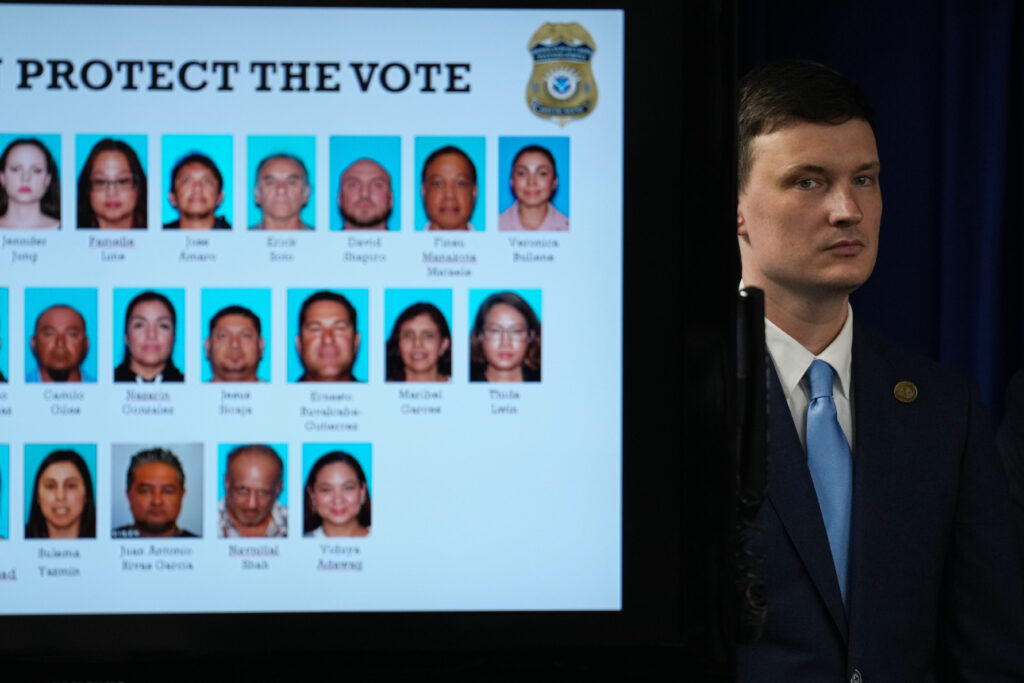
The Los Angeles review comes as DOJ has sought to bolster confidence in its broader list by announcing criminal charges against 28 lawful permanent residents accused of election or immigration-related offenses.
The department says all 28 appeared on the same list of more than 20,000 people.
But those prosecutions establish the alleged conduct of the individuals charged — not the accuracy of the remaining thousands of records. And the county’s own sampling now provides the first public look at what happens when the federal list is compared against current local election records.