Judge blocks Virginia Democrats’ ‘10-1’ redistricting plan for 2026 midterms
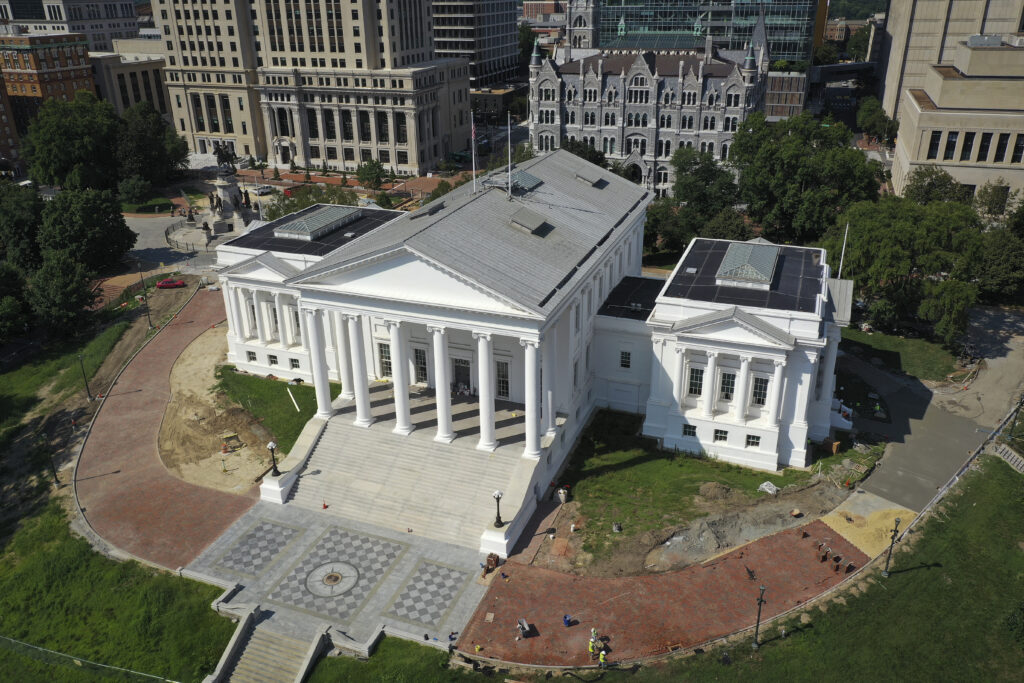
Virginia Democrats’ drive to counter the GOP’s mid-decade gerrymanders in Texas, Ohio, Missouri and potentially other states ahead of the 2026 midterms with a redistricting plan of their own hit a judicial roadblock Tuesday when a state judge jammed the General Assembly’s remapping plans.*
Judge Jack S. Hurley, Jr. granted the motions for preliminary and permanent injunctions sought by Republican state lawmakers and a member of the state’s redistricting commission. The General Assembly’s vote to amend the state constitution back in October was null and void, he ruled.
The General Assembly had failed to follow the procedures laid down by the resolution calling forth the special session, which was originally scheduled in 2024 by then-governor Glenn Youngkin (R) to deal with the state budget, but had never been officially closed, Hurley wrote.
Get updates straight to your inbox — for free
Join 350,000 readers who rely on our daily and weekly newsletters for the latest in voting, elections and democracy.
In a joint statement, the Democratic leadership in the General Assembly vowed to appeal the ruling. “Republicans who can’t win at the ballot box are abusing the legal process ini an attempt to sow confusion and block Virginians from voting,” they wrote. “We will be appealing this ruling immediate and we expect to prevail. This was court-shopping, plain and simple.”
In order to put a constitutional amendment before Virginia voters, a proposal must first pass two successive legislative sessions. Democratic lawmakers had sought to expand the prior special session’s agenda to include the amendment in order to satisfy the consecutive session requirements so they could redraw the congressional maps before the 2026 midterm elections.
But the special session’s procedural resolution stated that “no bill, joint bills, joint resolutions, or resolutions affecting the rules of procedure or schedule of business of the General Assembly,” could be added to the special session’s agenda “except with unanimous consent,” Hurley wrote, and Republicans voted against it.
Unless overturned on appeal, the ruling will block the Democrats’ plans to redraw Virginia’s congressional maps to flip as many as four districts from red-leaning to safely blue seats. Senate president pro tempore Louise Lucas (D) had made a very public push for a “10-1” congressional map dominated by Democrats.
Hurley, who was appointed to the bench by Gov. Bob McDonnell (R) in 2012, also questioned whether October vote on the proposed amendment — conducted after early voting had begun for the 2025 state legislative elections — should count as being held before the election just a few days later for the purposes of satisfying the two successive session rule. “The Constitution REQUIRES an intervening election FOLLOWING the first passage of the constitutional amendment,” he wrote.
Two weeks prior, Hurley ruled against the GOP’s temporary restraining motion seeking to block the General Assembly from voting on the amendment bill in the new session. The measure passed both chambers on party-line votes soon after.
The General Assembly could still continue with its constitutional amendment and redistricting plans, but they would only take effect after the 2026 midterm elections, assuming voters approve the proposals.
*Intervening defendants are represented in the lawsuit by the Elias Law Group (ELG). ELG Chair Marc Elias is the founder of Democracy Docket.
This report has been updated.