Iowa heads to the polls — and the official who shared voters’ personal data with Trump’s DOJ is on the ballot
 Prefer us on Google
to see more of our voting rights news coverage when you search.
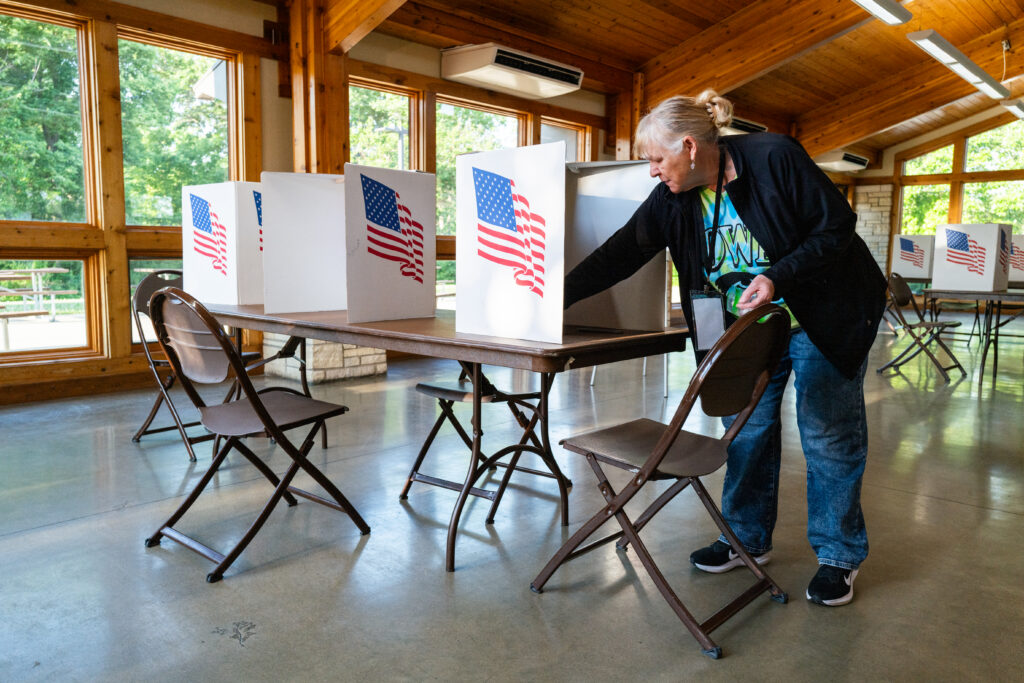
Early voting begins in Iowa Wednesday for the 2026 midterms, and the outcome could have significant implications for voting rights: Voters will now decide whether to reelect the state’s top election official who voluntarily shared Iowa voters’ registration data — including sensitive personal information — with the U.S. Department of Justice (DOJ).
Secretary of State Paul Pate (R) is running for a fourth consecutive term, arguing that he has protected election integrity in Iowa. In reality, his policies have created unnecessary barriers to voting, and he has consistently pushed for measures that could disenfranchise voters.
Get updates straight to your inbox — for free
Join 350,000 readers who rely on our daily and weekly newsletters for the latest in voting, elections and democracy.
Most recently, in July, Pate and the Republican National Committee (RNC) filed a petition in Iowa state court to lift a 2019 order blocking a law that would have required signature verification for absentee ballots.
Signature verification is a flawed practice that can often lead to voters’ ballots being thrown out over minor differences between their signatures on the ballot envelope and on their voter registration file.
In 2024, shortly before the presidential election, Pate directed county clerks to challenge the registration of over 2,000 Iowa voters who had previously been listed as noncitizens. That forced a large number of naturalized citizens to cast provisional ballots, which are only counted once a voter proves their citizenship, and risked disenfranchising them.
Pate was also a driving force behind the 2017 “Election Integrity Act,” a voter suppression proposal that would have added voter verification at polling places and required an ID number for voting by absentee ballot, among other things. While the full Election Integrity Act never went into effect, Iowa Gov. Terry Branstad (R) signed a voter ID requirement into law in 2017.
The law, which took effect in 2019, requires all Iowa voters to present a form of identification at the polls or have another registered voter vouch for their identity. Voter identification laws have been decried by voting rights and democracy advocates for potentially disenfranchising eligible voters who may not have access to the identification documents they need.
Pate also praised the signing of a 2025 bill that strengthened citizenship verification for voter registration.
As the Trump administration has sought to access states’ unredacted voter rolls, Pate made the controversial decision to voluntarily hand over the state’s voter registries to the DOJ in May. That data included personally identifiable information like voters’ driver’s license and Social Security numbers.
Pate said he did that because Iowa was legally required to turn over the data at the request of the federal government. But many other states have refused.
National attention has also focused on the increasingly competitive Iowa race for the U.S. Senate. Democrat Josh Turek is facing off against Republican U.S. Rep. Ashley Hinson for the seat of Sen. Joni Ernst (R), who is not seeking reelection. The Cook Political Report labels the race a “toss-up,” marking a potential sea change in Iowa politics.
Both of the state’s current senators are Republicans, and all four of the state’s U.S. representatives have been Republicans since 2023.
The Iowa Senate race could provide Democrats with one of the four Senate seats the party would need to regain control of the chamber.
Iowa’s early voting period runs until Nov. 2. Voters can find information on polling locations, ID requirements and more here.