North Carolina mailboxes overflow with voter registration warnings after state cut a deal with Trump’s DOJ
 Prefer us on Google
to see more of our voting rights news coverage when you search.
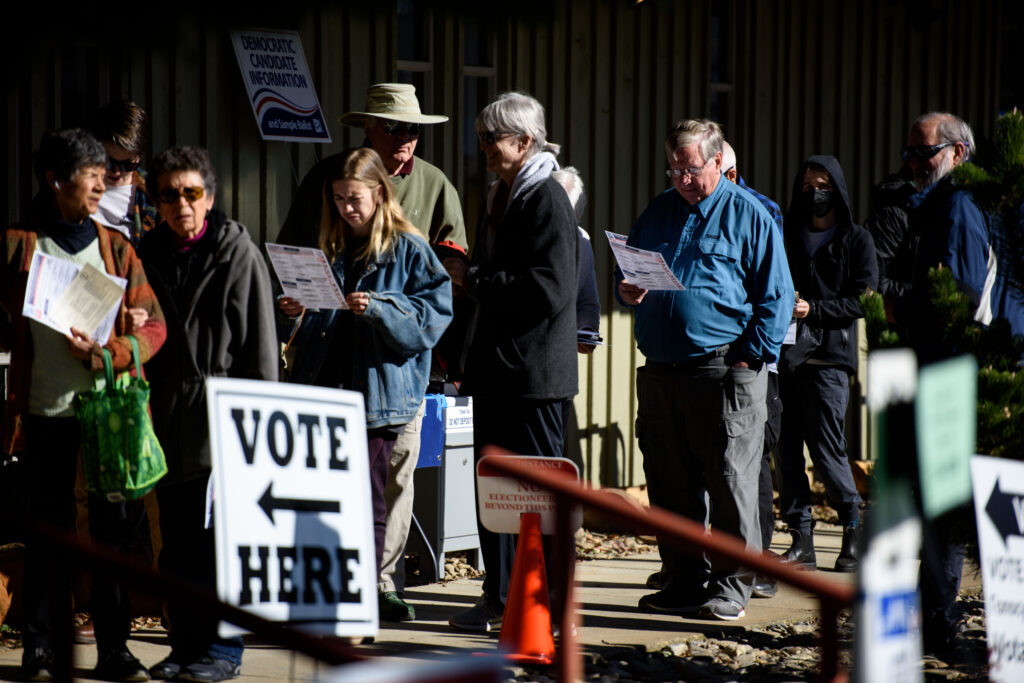
Some North Carolina voters only have a week left to ensure they can cast a ballot in the midterms as a result of a shady settlement the state elections board made with Trump’s Justice Department.
Voters’ mailboxes have been stuffed with a confusing stream of letters lately, warning them they need to update missing personal information by the Oct. 9 registration deadline. Voters with missing information could be forced to cast a provisional ballot.
Terence Everitt of the North Carolina Voter Protection Alliance told Democracy Docket the mailers are another barrier to voting that makes some voters question whether they should bother casting a ballot at all.
“This is death by a thousand cuts,” Everitt said. “It’s why you move voting sites, it’s why you have fewer hours, it’s why our absentee mailing ballots are so complicated because they just want to find places where people just give up.”
Here’s what voters in North Carolina need to know about the legal deal, the mailers, and the steps they might need to take to ensure they can vote this fall.
Get updates straight to your inbox — for free
Join 350,000 readers who rely on our daily and weekly newsletters for the latest in voting, elections and democracy.
The friendly lawsuit
The Republican-dominated North Carolina State Board of Elections (NCSBE) sparked the last-minute confusion after cutting a deal with the Justice Department to end a lawsuit over the state’s voting records. The Justice Department had sued the state, claiming some residents were improperly registered to vote. The lawsuit claimed North Carolina had violated the Help America Vote Act because it did not maintain accurate voter records.
As part of the settlement, North Carolina agreed to send mailers to voters asking them to update their identification information.
Democrats and voting rights groups* attempted to intervene in the lawsuit, arguing the state and Justice Department were essentially on the same side by agreeing to a deal that improperly put the onus on voters — not the state — to correct the records. However, they were not allowed to participate in the case.
“The federal government’s paper-thin allegations do not warrant the heavy-handed relief it seeks, which will invariably lead to thousands of eligible North Carolinians losing their registration status,” the North Carolina Alliance for Retired Americans warned in June.
But state board executive director, Sam Hayes, said in June that he intended to fully comply with the DOJ’s request.
Hayes did not respond to a request for an interview by the time of publication.
State Senator Jay Chaudhuri (D) in a press call Thursday said the settlement marked one of the biggest threats to voter access this fall.
“They didn’t create this problem, and they shouldn’t have to pay for it with their vote,” Chaudhuri said.
A flurry of letters and lots of confusion
After cutting the Justice Department deal, North Carolina in August 2025 began sending some voters letters, telling them they needed to update their registration information by uploading their driver’s license number or the last four digits of their Social Security number via a “registration repair tool.”
If they did not, voters’ registration would be marked incomplete. That could mean they would need to cast a provisional ballot this fall, which has a significantly higher risk of rejection.
The letters initially went out to around 98,000 voters, but Everitt said he believes about half so far have submitted their identification numbers.
Separately, the state sent another batch of letters to upwards of 241,000 voters in February, once again asking them to update their voter registration information. And around 180,000 voters received letters just last month.
These more recent mailers were sent to voters whose information didn’t match or could not be validated against a governmental database, through no fault of their own.
Critically, the 2026 mailers are unrelated to the Justice Department deal. The letters simply mean there was some sort of handwriting or technology error, for example, that did not match what a voter submitted to an existing government database.
“Receiving this request does not affect your ability to vote, how you vote, or whether your vote counts,” the September letter reads in bold, underlined words.
Siobhan Millen, one of two Democrats on the NCSBE, explained that the board sent the September letter because the August mailer was not clear enough that the request for data was voluntary, after getting feedback from frazzled voters.
“People do get worried when they get those letters, especially elderly folks in the eastern part of the state,” Millen told Democracy Docket.
The North Carolina Alliance for Retired Americans had warned about this kind of confusion when it attempted to participate in the Justice Department lawsuit. Many older state residents registered to vote long before the Help America Vote Act identification requirements took effect.
“These voters have cast ballots without issues for years, and as seniors who are particularly protective of their sensitive personal data … many will be reluctant to respond to requests that they now provide extremely personal information (particularly social security numbers),” the North Carolina Alliance for Retired Americans wrote at the time.
What can you do?
Any North Carolina voter can check to see if their name is on the Registration Repair list with the board’s search tool linked here: Registration Repair Tool. If your name appears, that means you must upload your identification information in order to cast a regular ballot. Otherwise, you may have to cast a provisional ballot.
Voter registration ends in North Carolina on Oct. 9, meaning voters still on this list should make sure to update their information to prevent trouble at the ballot box.
Other voters can upload additional identification information, which is encouraged but not required, at payments.ncdot.gov or in person at their county board of elections office.
*The Elias Law Group (ELG) represented intervenor North Carolina Alliance for Retired Americans. ELG Firm Chair Marc Elias is the founder of Democracy Docket.