In blow to Trump, federal judge blocks DHS from using citizenship database to purge voters
 Prefer us on Google
to see more of our voting rights news coverage when you search.
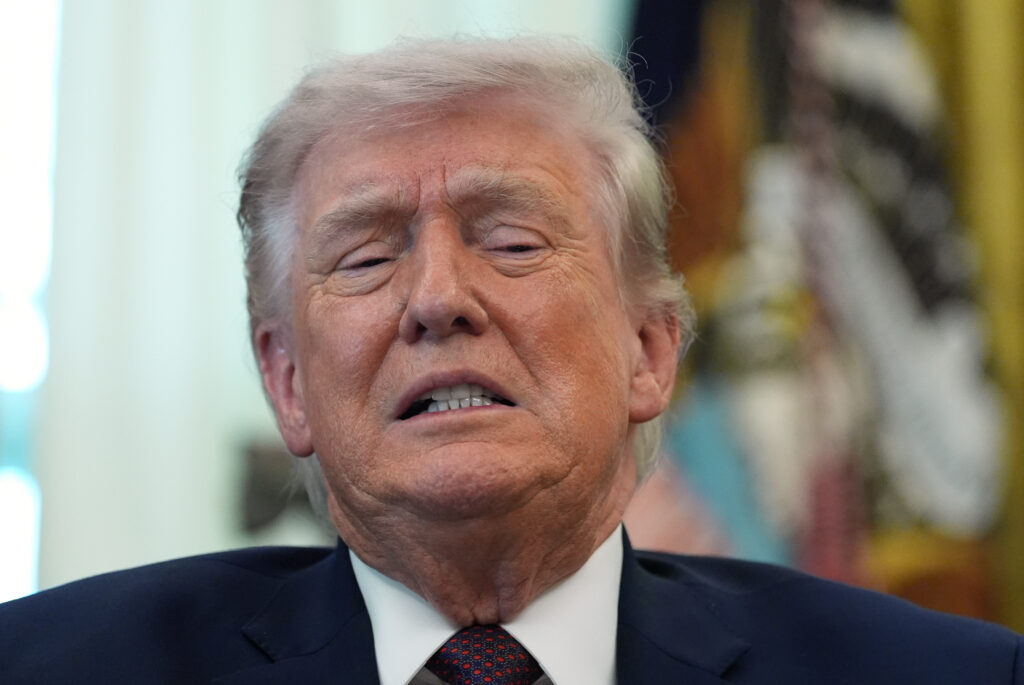
A federal judge in Washington D.C. blocked the Department of Homeland Security (DHS) from using its citizenship database to remove voters from registration rolls, striking a significant blow against President Donald Trump’s unconstitutional attempt to take control of federal elections.
In her 75-page decision Monday, District Court Judge Sparkle L. Sooknanan excoriated Trump and DHS’s implementation of his March 25 executive order for ignoring federal privacy laws as they overhauled the Systemic Alien Verification for Entitlements (SAVE) system into a faulty citizenship checker.
“All in all, the federal government has knowingly trampled on the privacy rights of American citizens in a manner that threatens the sacred right to vote,” Sooknanan wrote. “This Court cannot stand idly by while that happens.”
Trump’s order directed DHS to overhaul SAVE, taking a database of the immigration status of roughly 26.5 million people and turning it into a citizenship-checking system with access to the personal information of most Americans. The upgrades allowed for bulk searches using partial social security numbers and made the database freely available to state and local election officials.
The League of Women Voters led a coalition of voting and privacy advocates in challenging the changes to SAVE last year, suing DHS, the Social Security Administration (SSA) and other federal actors. While Sooknanan declined to issue a stay last November, she granted a summary judgment Monday, saying that the modification of the SAVE system violated the Social Security Act’s prohibition on disclosing social security numbers, various provisions of the 1974 Privacy Act, and the Administrative Procedure Act (APA).
Get updates straight to your inbox — for free
Join 350,000 readers who rely on our daily and weekly newsletters for the latest in voting, elections and democracy.
“The Court therefore sets aside and vacates the 2025 SAVE modified system and the related notices because they were contrary to law, arbitrary and capricious, in excess of statutory authority, and without observance of procedure required by law,” Sooknanan, a President Joe Biden appointee, wrote.
The ruling orders DHS to set aside the modifications to the SAVE system along with the System of Records Notices (SORNs) issued following the updates, and return them to their status quo before the changes.
After Trump issued his executive order last March, DHS quickly began implementing the changes, which included incorporating SSA data without filing the public notices required by the Privacy Act and the APA. The agencies filed the Privacy Act notice in late October, a few days following the first hearing in this lawsuit.
The expanded SAVE program has been used to check the citizenship status of more than 67 million registered voters, mostly from Republican-led states. The program flagged thousands of voters as potential noncitizens — but subsequent investigations have shown many were actually citizens eligible to vote.
In her ruling, Sooknanan highlighted how hastily the government moved to build a new system that relied on faulty information. “The agencies were scrambling to comply with an Executive Order aimed at reshaping federal elections, which directed them to create a system for mass voter verification,” she wrote. “So they haphazardly combined and repurposed the private information of millions of Americans, including citizenship data that they knew to be unreliable.”
The ruling would appear to prevent Republican state election officials from further running their registration rolls through SAVE.
The Department of Justice (DOJ) has sought to force every state to submit its registration records so they can be tested in the database. It has now sued 30 states and Washington D.C. for access to those records. So far, the DOJ is 0-9 in those lawsuits.
Sooknanan’s opinion highlighted internal DHS memos warning that naturalized citizens would be at particular risk of having their registrations erroneously cancelled.
The LWV coalition was represented by lawyers from Citizens for Responsibility and Ethics in Washington (CREW), Fair Elections Center, and Democracy Forward, who cheered the ruling.
“As the Trump-Vance administration continues its attack on the right to vote, this is an important victory for the American people and our democracy,” Skye Perryman, president and CEO of Democracy Forward, said in a statement. “The data at the heart of this lawsuit was unlawfully consolidated in violation of privacy laws intended to protect sensitive personal information. We are honored to work alongside the plaintiffs and co-counsel in this case, and are grateful that the court has acted to protect people and our elections every day and especially during our nation’s 250th anniversary year.”
Because Sooknanan rested her ruling on the administration’s violations of federal statutes like the Privacy Act and the APA, she did not address plaintiffs’ claims that the SAVE expansion violates the U.S. Constitution, which empowers states and Congress — not the executive branch — with administering elections.
But the judge made clear that the administration’s attempts to run every voter registration through SAVE attacked the very core of American democracy.
“This case implicates two fundamental rights that protect Americans from government overreach: the right to privacy and the right to vote,” she wrote. “In the past year, several federal agencies have joined forces to create a centralized federal database that contains the private information of United States citizens, including Social Security numbers, citizenship status, and other sensitive data. But decades ago, Congress put protections in place to prevent precisely this type of centralized data bank. And the record in this case shows that the federal agencies that created this database knew that the database violates those statutory protections.”
The administration can appeal the ruling to the D.C. Circuit Court of Appeals.
*This is a breaking news story that may be updated.