Judge quashes DOJ subpoenas against Minnesota Democrats who opposed Trump’s immigration raids
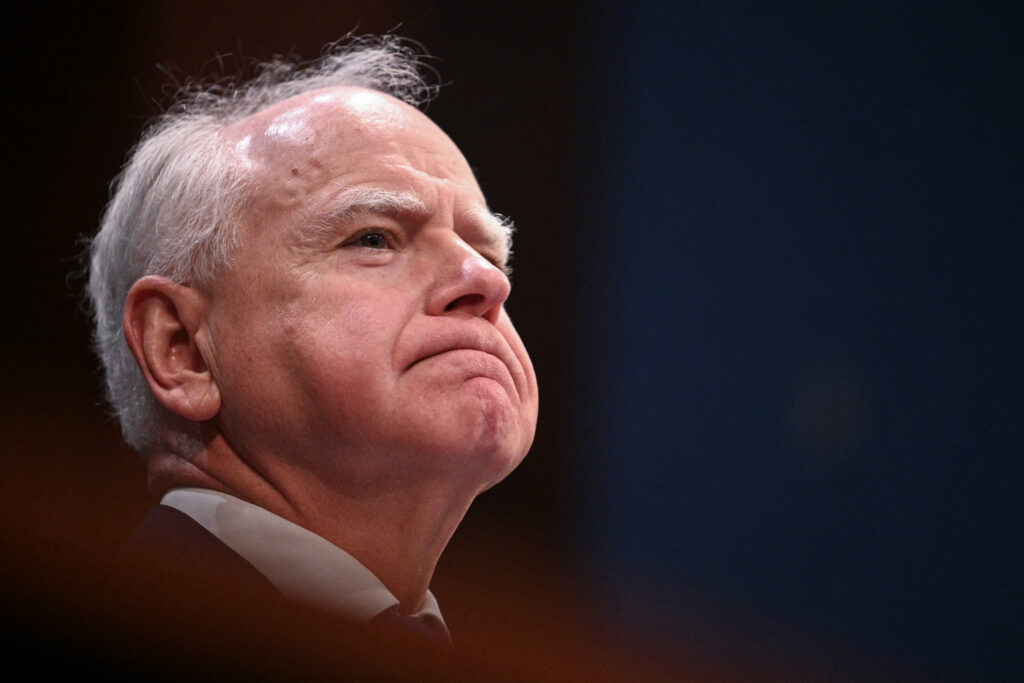
A federal judge Monday blocked multiple Department of Justice (DOJ) subpoenas against top Minnesota Democratic leaders, including Gov. Tim Walz, ruling they were meant to “harass, coerce, and retaliate” against those who opposed President Donald Trump’s aggressive immigration efforts across the state earlier this year.
The decision represents a win for Minnesota, where residents mounted grassroots resistance to the Trump administration’s massive immigration enforcement raids in the Twin Cities area, which were dubbed “Operation Metro Surge.”
Get updates straight to your inbox — for free
Join 350,000 readers who rely on our daily and weekly newsletters for the latest in voting, elections and democracy.
Besides Walz, the DOJ secured subpoenas against Minnesota Attorney General Keith Ellison, Minneapolis Mayor Jacob Frey, St. Paul Mayor Kaohly Her and Hennepin County Attorney Mary Moriarty — all Democrats.
“Today’s ruling is a victory for the rule of law and our democracy,” Walz said in a statement Monday. “I am proud to have joined Minnesotans in exercising our fundamental American freedoms — of speech, assembly, to disagree with our government. These rights are enshrined in our Constitution. And, they are what make America great.”
U.S. District Judge Patrick Schiltz, who was appointed by former President George W. Bush, wrote that there was “overwhelming” evidence that the DOJ unlawfully sought the subpoenas to harass the president’s foes and intimidate them into enforcing federal immigration law.
“Initiating a criminal investigation in order to harass political opponents or to coerce them into taking official action — particularly official action that the federal government cannot directly require those political opponents to take — is a blatantly unlawful and unethical use of the grand-jury process,” Schiltz added.
The DOJ sought the grand jury subpoenas at the height of Operation Metro Surge. Without citing a specific criminal statute, the subpoenas required state officials to produce broad categories of records relating to federal immigration enforcement in Minnesota going back to January 2025.
The DOJ argued that the demands were part of an investigation into whether state officials violated federal law by allegedly conspiring to impede immigration officers. Schiltz, however, found that they were part of Trump’s broader assault on states and municipalities with laws that limit cooperation between local law enforcement and federal immigration authorities like U.S. Immigration and Customs Enforcement (ICE).
“The fact that connections between the information sought in the subpoenas and any possible criminal violation range from extremely weak to nonexistent only adds to the overwhelming evidence that these subpoenas were not issued to investigate, but to harass, coerce, and retaliate,” the judge ruled.
Ellison and Moriarty were hit with subpoenas shortly after launching an independent state investigation into the fatal shooting of Renée Nicole Good by Jonathan Ross, an ICE agent.
The probes into the Minnesota Democrats were in line with “the Trump administration’s well-established history of using criminal investigations to retaliate against and pressure the President’s political and personal adversaries,” Schiltz added, noting Trump’s push for an investigation into former Federal Reserve Chair Jerome Powell.
The judge characterized the DOJ’s defense of its subpoenas as “risible,” saying that the department could not investigate officials for their lack of cooperation with federal immigration officials.
“It is important to stress, once again, that the Constitution forbids the federal government from forcing states or their political subdivisions to enforce federal laws,” he wrote. “On their face, therefore, the subpoenas are directed to investigating activity that is not only legal, but constitutionally protected from interference by the very federal government that issued the subpoenas.”
Schiltz said he would also unseal certain court filings in the case, though his unsealing would not include grand jury transcripts.
Unsealed transcripts from another high-profile criminal case against people who protested Trump’s aggressive immigration raids in Chicago revealed that DOJ prosecutors used improper tactics before a grand jury to secure the charges.