Explained: The ‘mind-boggling’ errors in the fraud claims behind the FBI’s Fulton County raid
 Prefer us on Google
to see more of our voting rights news coverage when you search.
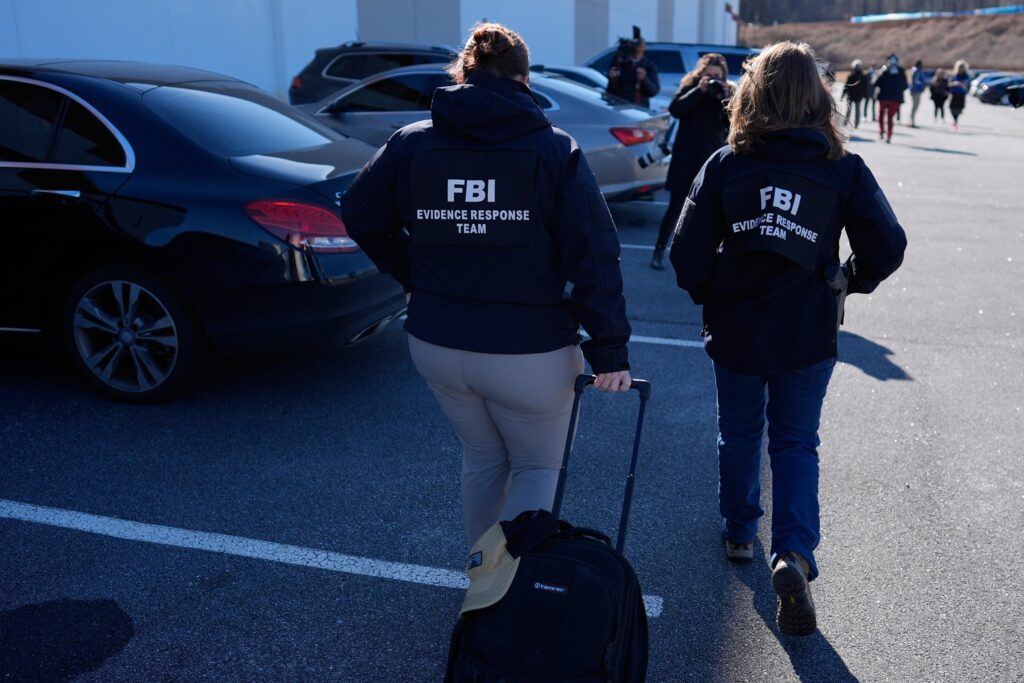
Atlanta — Friday’s federal court hearing here on the FBI’s confiscation of Fulton County, Georgia’s 2020 election records made one thing clear: The “defects” cited by the bureau to obtain the affidavit for the raid were in fact nothing more than glaring misunderstandings of the process, minor inconsistencies, and normal human errors with no significant impact.
The episode is instructive beyond Georgia: As the midterms approach, anti-voting forces are likely to take the same kinds of bogus evidence that they seized on in Fulton County, and similarly inflate it into major fraud allegations.
The FBI’s affidavit in Fulton County listed five “deficiencies or defects” in the county’s 2020 presidential ballot count as its probable cause.
At the hearing, lawyers and election experts for the county explained the alleged defects, and argued that they don’t constitute fraud or intentional violation of federal voting laws. None of the explanations below were offered to the magistrate judge who issued the warrant for the January raid.
Fulton County’s lawsuit against the Department of Justice (DOJ), seeking the return of the records, argues that FBI special agent Hugh Raymond Evans may have fudged the facts to the judge to obtain that warrant.
Get updates straight to your inbox — for free
Join 350,000 readers who rely on our daily and weekly newsletters for the latest in voting, elections and democracy.
These are the five “deficiencies or defects” quoted directly from the affidavit:
- The tabulator machines used by Fulton County are designed to create and save a scanned image of each ballot. Fulton County has admitted that it does not have scanned images of all the 528,777 ballots counted during the Original Count or the 527,925 ballots counted during the Recount.
- Fulton County has confirmed that during the Recount of votes, some ballots were scanned multiple times. Ballot images made available in response to public record requests show ballots with unique markings duplicated within the ballot images.
- During the Risk Limiting Audit, auditors counting the votes by hand reported vote tallies for batches inconsistent with the actual votes within the batch. The State’s Performance Review Board reported that Secretary of State investigators confirmed inaccurate batch tallies from the Risk Limiting Audit.
- Auditors assisting in the Risk Limiting Audit reported counting purported absentee ballots that had never been creased or folded, as would be required for the ballot to be mailed to the voter and for the ballot to be returned in the sealed envelope requiring the voter’s signature for authentication.
- On the day of the deadline to report the Recount results, Fulton County reported a recount totaling 511,343 ballots, 17,434 ballots fewer than [originally] counted.The following day, Fulton County then reported a total of 527,925 ballots counted.
These are all normal occurrences during ballot counts, explained Fulton County’s elections expert witness Ryan Macias – who federal lawyers unsuccessfully tried to block from testifying – at the hearing. He and Fulton County lawyer Abbe Lowell broke each defect down for U.S. District Judge Jean-Paul Boulee.
Missing scanned ballot images: A witness testified that he found that the number of ballot images from a recount didn’t match the final number of ballots cast. However, as Macias explained at the hearing: “Ballot images are just pictures” – they are not used for the “cast vote record,” which is the final tabulation. Ballots are often scanned for other purposes, but they are not part of the tally.
Here’s how Lowell explained it: “I go to a concert and I have a paper ticket. I take a picture of the ticket with my phone, but I forget to save the image. I can still get into the concert, though, because I still have the paper ticket.”
Duplicate and multiple-scanned ballots: A witness testified that after running ballot images through an app called ZebraDuck, he found “duplicate ballots” included in the original count and the recount. Macias explained that “duplicate ballot” is simply a ballot that is “recreated or remade” for a specific reason — not a ballot that was counted twice.
For example, some military members vote with a digital ballot that is sent via email or through an online portal. A digital ballot can’t be scanned, so it is “remade” with a paper ballot. Macias also explained that ballots may be scanned multiple times for various reasons – for instance, a jam in the scanning process that causes the scanner to start over. But he reiterated that the scans are not counted in the tabulator.
Risk Limiting Audit (RLA) discrepancies: The affidavit doesn’t explain why this was counted as a defect. But Macias explained that it was normal to sometimes have non-matching tallies. The RLA is a hand tally performed after the machine count to make sure the final outcome is correct.
Yes, the hand-count RLA sometimes comes out with a different number from the machine count. In those cases, if the margin is large enough that the final outcome could be affected, then a recount is performed. The RLA found only a small error in this case, which typically would not trigger a recount, but Fulton County did one anyway. No serious discrepancy was found in that recount nor in subsequent audits and investigations.
Unfolded ballots: A witness said she found a batch of 110 absentee ballots, 107 of which she reported were “pristine in that they had not been folded,” and “were too clean” to be authenticated. Macias explained that while absentee ballots are normally folded, it is sometimes “standard” for some exceptions, such as some military voter ballots.
Final count discrepancy: This was another instance where a complaint was named in the affidavit, but not explained in detail. Apparently, a witness saw the number 511,343 recorded somewhere, assumed it was an official count, and then used it to claim that it was roughly 17,000 votes short of the number Fulton County actually reported (527,925).
Macias explained that the 511,343 number was an internal tally showing where a vote count stopped at a particular time, and that it was not reported to the state or anywhere else. Lowell described it as a person who is counting coins in a jar, but can’t finish, so they mark down the number they stopped at so that they know where to pick up again when the counting resumes. Lowell called that last “defect” the “most mind-boggling” and “egregious” mistake made in the affidavit.
But together, the “defects” were enough to convince a judge of possible misconduct. A search warrant was issued based on these five “defects,” even though none of them showed crimes were likely committed and no person or perpetrator was named as a target.
Boulee did not indicate when he would make a ruling on Fulton’s claim that the records should be returned. However, the fact that the judge allowed Macias to testify against DOJ’s wishes, to explain these “defects” – a cross-examination that took up the bulk of the nearly eight-hour hearing – makes clear the judge was at least open to hearing why the warrant was issued in the first place.