Report: FBI previously debunked fraud claims used to justify its Fulton County election raid
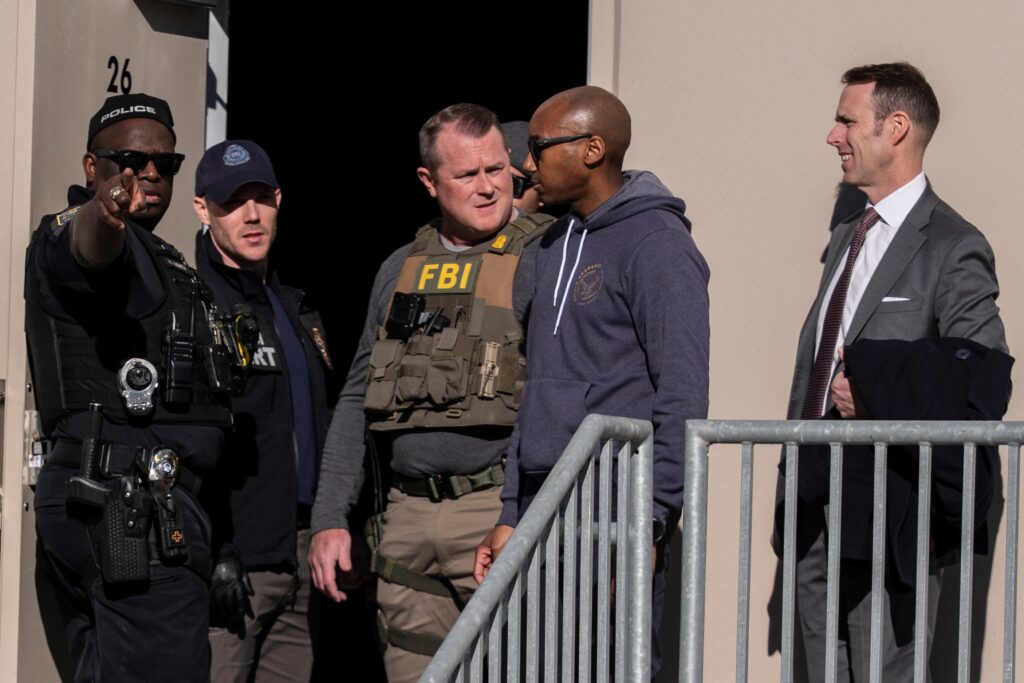
When the FBI seized 2020 election materials from an election hub in Fulton County, Georgia, this January, their extraordinary raid was predicated in part on a report alleging election fraud in the county.
But before the raid, officials within the bureau had already debunked that report, according to a new investigation by ProPublica.
ProPublica’s reporting, published Monday, also revealed closer coordination between the White House and the Department of Justice (DOJ) during the bureau’s criminal investigation into the county than had been previously known.
Get updates straight to your inbox — for free
Join 350,000 readers who rely on our daily and weekly newsletters for the latest in voting, elections and democracy.
The revelations are likely to be cited in Fulton County’s ongoing lawsuit to force the DOJ to return the sensitive election records, which included original ballots.
The report in question first came to light when a judge ordered that the search warrant affidavit authorizing the FBI raid be unsealed during legal proceedings in that suit. The affidavit indicated that the FBI’s criminal investigation was partially based on a report published by the Election Oversight Group (EOG) and known election skeptic Kevin Moncla.
The EOG’s report claimed to have found evidence of criminal misconduct in Fulton County’s handling of the 2020 election, which President Donald Trump has falsely claimed was stolen from him.
However, just weeks before the FBI raid, officials in the bureau’s Atlanta field office formally debunked the report after it was brought to them by Kurt Olsen, a notorious election denier the White House hired to investigate election fraud claims.
In a previously undisclosed meeting near the end of last year between Olsen and Paul Brown, the chief of the Atlanta field office at the time, Olsen cited the report while urging Brown to seize the election materials from Fulton County, according to ProPublica.
Fulton County, a Democratic stronghold, has long been a leading target for those in the election denial movement since Trump’s loss to former President Joe Biden in the 2020 presidential race.
After Brown and his team examined the EOG report, they determined that it contained no evidence of criminal wrongdoing and that any inconsistencies it raised regarding the county’s 2020 results were attributable to human error.
Brown and his team weren’t alone in making that determination. Years before, Georgia’s election board also reviewed the report and concluded that it contained no evidence of intentional misconduct by Fulton County elections staff during the election.
Brown’s team later told their superiors at the DOJ that the Atlanta office could not open a criminal investigation based on the report. However, soon thereafter, Brown, a longtime veteran of the bureau, was told to retire or be reassigned to a new office. He chose to retire and left the office roughly a week before the raid.
While journalists had previously reported on Brown’s removal, Olsen’s involvement in his ouster and the FBI’s prior debunking of the EOG report had not previously been disclosed until ProPublica’s report.
With Brown gone, the criminal investigation and raid proceeded under his temporary successor based on a criminal referral from Olsen that relied on the EOG report.
A recent review by conservatives at the nonpartisan nonprofit States United Democracy Center also concluded that the EOG report “contains no legitimate conclusions about the conduct or results of the 2020 election in Fulton County.”
“It relies on faulty and inadequate evidence, unsupported claims, meaningless comparisons, omissions and misreadings of primary sources, misunderstanding of election laws, and disregard for the election safeguards in place in 2020,” the States United analysis states.
Olsen’s close interaction with the FBI throughout its criminal probe into Fulton County likely violates internal DOJ policies restricting communications with the White House to prevent political interference in law enforcement.
Trump appointed Olsen, one of the president’s former campaign lawyers who played a key role in his effort to overturn the 2020 election, to a 130-day term as a special White House employee last October.
In its lawsuit, Fulton County is currently probing whether Olsen also coordinated his actions with the DOJ’s Civil Rights Division, which at the time was also attempting to obtain the county’s 2020 election materials.
The judge presiding over the case said in a hearing last month that evidence of coordination between the White House and DOJ could bolster the county’s argument that the FBI’s criminal investigation and raid were pretextual and unconstitutional.
Separately, Democracy Forward*, a nonprofit pro-democracy legal organization, filed a lawsuit last week seeking to force Harmeet Dhillon, the DOJ’s civil rights chief, and other senior officials to disclose any communications they have had with Olsen.
*Democracy Docket Founder Marc Elias is the chair of the Democracy Forward board.