Fulton County alleges DOJ used FBI raid to circumvent lawsuit, seize 2020 ballots
 Prefer us on Google
to see more of our voting rights news coverage when you search.
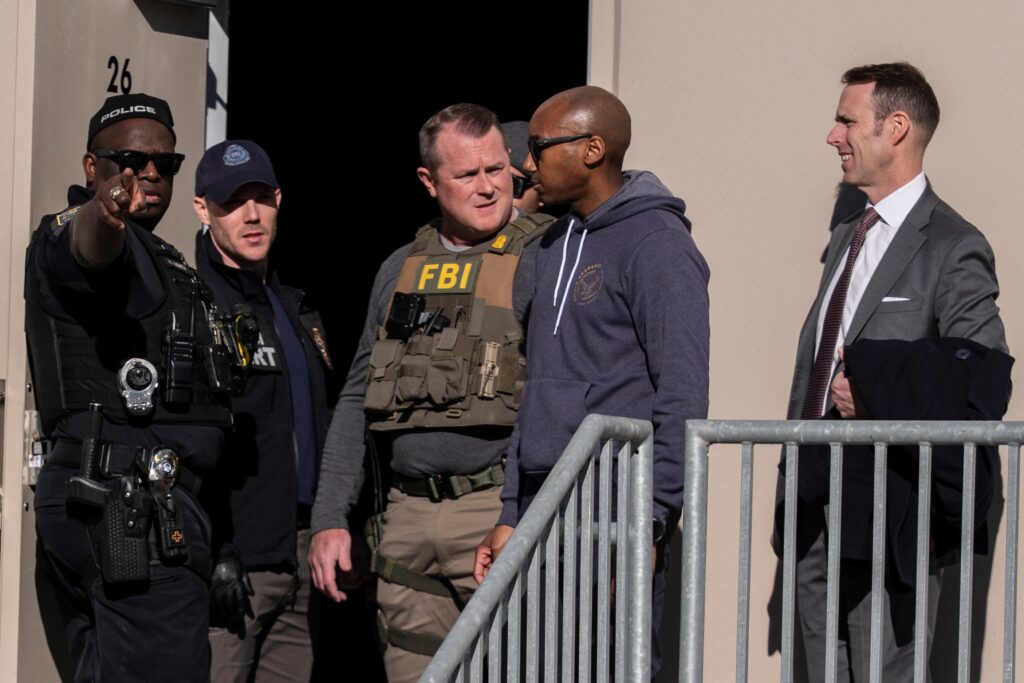
Fulton County officials fighting for the return of 2020 election materials seized by the FBI asked a federal judge Tuesday to order the Department of Justice (DOJ) to disclose details about its repeated attempts to obtain the county’s election records.
In a new filing, the officials alleged that unusual events before the FBI’s raid strongly suggested that the DOJ, having previously sought the records through demand letters and a lawsuit, pursued a criminal investigation against the county to seize and access the documents by force.
Get updates straight to your inbox — for free
Join 350,000 readers who rely on our daily and weekly newsletters for the latest in voting, elections and democracy.
The county officials noted that the FBI’s January search was initiated around 48 days after the DOJ’s Civil Rights Division sought the same records in a lawsuit filed in mid December and just days after the division ran into legal obstacles in that suit.
“The timing of the search warrant, especially as it relates to the status of the civil proceedings, creates a strong inference that the search warrant served as an improper means to expedite access to the 2020 election records that DOJ sought in the civil case,” Fulton County officials wrote to U.S. District Judge Jean-Paul Boulee, who is presiding over their case.
In a hearing last week, Boulee, who was appointed in Trump’s first term, suggested it would be troubling if the DOJ used a criminal search warrant to circumvent proceedings in its civil case. He also noted that any connections between the Civil Rights Division’s lawsuit and the raid would be a “good argument” in favor of the county’s demand that the FBI return the sensitive election records, which included original ballots.
As an initial piece of evidence, Fulton County officials included a screenshot of a social media post from Harmeet Dhillon, the head of the Civil Rights Division.
Published less than two weeks after the raid, her post tied the FBI’s search to her division’s lawsuit against Ché Alexander, the clerk of courts for Fulton County and the authorized custodian of the 2020 records.
“Fulton County refused to cooperate with [the Civil Rights Division’s] request for 2020 election-related documents, alas,” Dhillon wrote.
In addition to homing in on the short time period between the DOJ’s lawsuit and the FBI’s raid, the county has also focused on President Donald Trump’s appointment of Kurt Olsen as a special White House employee to investigate fraud claims.
Olsen, one of Trump’s former campaign lawyers who has advanced the president’s effort to overturn the 2020 election, has been at the center of the FBI’s probe into the county. In fact, according to the search warrant affidavit that backed the bureau’s raid, the investigation was based on a criminal referral from him.
Trump hired Olsen for a 130-day term last October — though the exact date of his appointment is currently unknown. Around that same time, however, Dhillon sent Fulton County a letter demanding access to the 2020 records.
After Alexander refused Dhillon’s demand, the DOJ sued, claiming that the clerk had violated the Civil Rights Act of 1960.
The act requires election officials to retain a large swath of election documents, including voter registrations and ballots, for 22 months after any federal election. It also requires officials to make the documents available for “inspection, reproduction, and copying” in response to a request by the attorney general.
However, it’s far from certain that the act still allowed the DOJ to unilaterally demand the records. Over 60 months had passed since the 2020 election and Dhillon’s letter. Georgia law also blocked Alexander from unilaterally producing the documents absent a court order.
Fulton County officials noted that the raid occurred just eight days after the Civil Rights Division filed a response to Alexander’s motion to dismiss the lawsuit, which was paused in light of the FBI’s raid.
The county asked Boulee to force the department to disclose whether DOJ and White House officials, including Olsen, had ever discussed using a criminal search to get around delays and legal hurdles in Dhillon’s suit against Alexander.
The county officials also said they wanted to know exactly when Olsen sent his referral to the FBI, when the bureau opened its probe, and whether there were any communications between officials working on the Alexander lawsuit and the FBI search warrant.
“To the extent that any such communications exist, Respondent should log them and prepare them for in camera review,” the Fulton County officials wrote.
“Given Mr. Olsen’s role, his statements since 2020, public statements from AAG Dhillon, the timing of the letter, and the rapid switch to a search warrant when the Alexander civil suit was challenged, the Court was correct to inquire about Respondent’s actions,” they added.
In response to questions from Boulee in last week’s hearing, DOJ attorneys said they had no “personal knowledge” of any such discussions between DOJ and White House officials. However, Fulton County officials noted that those attorneys wouldn’t have personal knowledge, as they joined the case after the raid.
“Respondent’s counsel joined this case more than two weeks after the warrant was executed, so they necessarily lacked first-hand information about the search warrant’s origins,” the county officials said.
Absent at the hearing, they noted, were those who actually initiated the FBI’s criminal investigation: Olsen and Thomas Albus, a Missouri-based U.S. attorney overseeing the DOJ’s probe into the 2020 vote in Georgia.
Other recent statements from Trump officials indicated that the White House had detailed knowledge of the FBI’s criminal investigation against the county.
Director of National Intelligence Tulsi Gabbard said in a Senate hearing earlier this month that, on the morning of the raid, Trump directed her to travel from D.C. to Fulton County to participate in the search. That timeline indicated that the president had prior knowledge of the search.
A day later, Gabbard set up a call between the FBI agents who carried out the search and Trump, who personally thanked them for their work and asked them questions about the investigation, according to the New York Times.