Fulton County urges judge to return seized ballots from FBI as DOJ defends raid
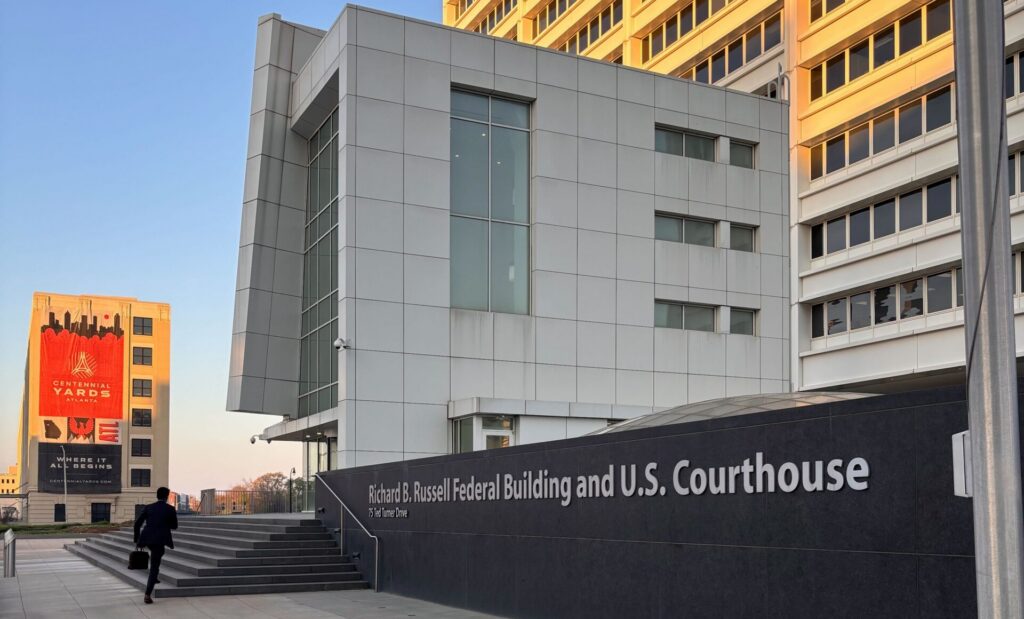
Atlanta, Georgia — Fulton County officials urged a federal judge Friday to order the Department of Justice to return 2020 election records seized during the FBI’s unprecedented raid on the county’s election hub earlier this year, arguing the move violated voters’ rights and relied on misinformation.
During an all-day evidentiary hearing, county lawyers said the January seizure of more than 650 boxes of election materials — including original ballots — showed “callous disregard” for voters’ private information and undermined state and local authority over elections.
Federal attorneys pushed back, arguing that “callous disregard” is a high legal standard that the county failed to meet and defending the search as part of an ongoing investigation into potential issues with Fulton County’s handling of the 2020 election.
Get updates straight to your inbox — for free
Join 350,000 readers who rely on our daily and weekly newsletters for the latest in voting, elections and democracy.
A central focus of Friday’s hearing was testimony from Ryan Macias, an election technology expert called by Fulton County.
Macias — who federal lawyers did not want to testify — said the affidavit used to justify the search warrant relied on misinformation from election deniers and individuals lacking firsthand knowledge.
“The information in the affidavit does not make sense and has no substantial basis in reality,” Macias said.
DOJ lawyers attempted to block Macias from testifying, arguing he lacked insight into FBI investigative processes, but U.S. District Judge Jean-Paul Boulee allowed his testimony.
During cross-examination, federal attorneys repeatedly questioned Macias about whether he could assess the intent of FBI agents, asking whether he knew “what was in the FBI agent’s head” when pursuing the warrant.
That line of questioning prompted Fulton County lawyers to again ask for testimony from the FBI agent who submitted the affidavit — Special Agent Hugh Raymond Evans — but Boulee, who was nominated by President Donald Trump in 2019, declined their request.
According to Evans’ affidavit, the FBI’s investigation into Fulton County was initiated by a referral from Kurt Olsen, a former Trump campaign lawyer who played a key role in the president’s effort to overturn the 2020 election. Olsen joined the White House in late 2025 as a “special government employee” to investigate the 2020 election.
County attorneys argued the warrant should never have been issued, saying it was based on exaggerated or misunderstood reports presented as evidence of fraud. Evans allegedly presented misleading and long-discredited election fraud claims from notorious conspiracy theorists to a court to secure the search warrant that authorized the bureau’s raid.
They also pointed to what they described as unusual circumstances surrounding the raid — noting that it came years after multiple investigations found no wrongdoing by Fulton County officials in the 2020 election.
Several reviews of Fulton County’s election results by the Georgia secretary of state and independent groups have refuted the core allegations of the affidavit.
According to testimony, the DOJ had previously sought access to the same records through at least two separate proceedings, but executed the search warrant before those cases were resolved.
The judge questioned DOJ attorneys about whether the raid was used to circumvent the other cases. The DOJ said they were not aware of any such coordination.
Another central argument in Fulton County’s suit is that Evans failed to demonstrate he had probable cause to believe that a crime occurred. That’s a basic standard required by the Fourth Amendment, which prohibits unreasonable searches and seizures.
State election officials and democracy advocates have denounced the investigation as stemming from Trump’s attempt to relitigate his loss in the 2020 election and to undermine future elections.
Through its raid, the FBI obtained over 636 boxes of sensitive election materials, including original ballots.
Civil rights and pro-voting organizations have alleged that the federal government could use the data to purge voters from the state rolls, improperly disclose voters’ personal information, or otherwise intimidate them.
Boulee ordered Friday’s hearing after the DOJ and Fulton County failed to reach an agreement over possession of the seized documents during private negotiations. The judge previously suggested that the DOJ could make copies of the records for use in ongoing or future investigations and return the original documents to the county.
But that arrangement could set a worrisome precedent, potentially allowing the federal government to illegally seize and perpetually access records from future elections without fear of legal repercussions.
The judge sided with the DOJ’s argument that the agent’s testimony would jeopardize the federal government’s ongoing investigation into the county. The department hasn’t filed criminal charges in the probe.
Yunior Rivas contributed to this report.