Election denier Rep. Byron Donalds wins Florida GOP primary for governor
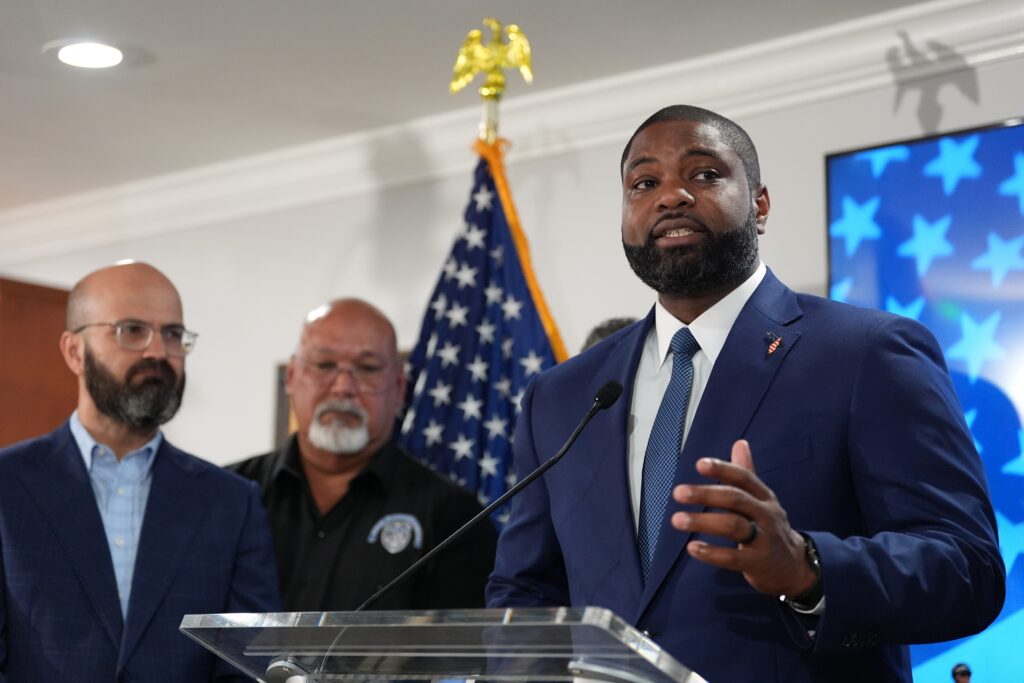
Rep. Byron Donalds (R-Fla.), an election denier and a staunch ally of President Donald Trump, won the Republican primary for Florida governor Tuesday, becoming the GOP nominee to replace Gov. Ron DeSantis (R).
In November, he will face off against Democratic former U.S. Rep. David Jolly.
As a lawmaker, Donalds has aggressively advocated for national legislation to restrict voting, including Trump’s SAVE America Act. If passed, that legislation would likely disenfranchise millions of eligible voters by requiring them to show documents like a passport or birth certificate to register to vote.
Beyond that, Donalds essentially began his career as a U.S. representative with election denial.
Get updates straight to your inbox — for free
Join 350,000 readers who rely on our daily and weekly newsletters for the latest in voting, elections and democracy.
In one of his first acts in Congress, he objected to certifying 2020 election results in Arizona and Pennsylvania, both of which former President Joe Biden narrowly won. To justify his attempt to invalidate the results, he falsely claimed that the swing states did not comply with their own election laws.
Donalds’ objections came hours after a pro-Trump mob attacked the U.S. Capitol on Jan. 6th, 2021, to disrupt certification of the election. At the time, Donalds denounced the rioters as “lawless vigilantes” who “wreaked havoc.”
However, he later did not support efforts to investigate the riot, denounced cases brought against Jan. 6 defendants and consistently maintained that Trump bore no responsibility for the attack.
Later, Donalds said he believed Biden wasn’t a legitimate president, and he repeatedly refused to commit to certifying the 2024 election if Trump lost.
“My answer’s always conditional because you want to see the processes of the election actually go according to law, not according to outside groups and legal cases,” Donalds said in May 2024.
Besides supporting federal legislation to restrict voting, Donalds has also defended state-level anti-voting measures, such as the Florida SAVE Act.
Like its federal counterpart, the Florida law, if it goes into effect in January 2027, would require prospective and existing voters to provide documentary proof of citizenship to register or remain eligible to vote.
Because the U.S. does not have a single, standardized system to prove citizenship, thousands of voters who lack citizenship documents would be disenfranchised under the new requirement.
After DeSantis signed the act into law in April, Donalds falsely claimed that pro-voting groups only challenged the citizenship requirement because they want to promote fraud in U.S. elections.
“They sue because they want weakness in the controls of our elections, so it helps them find votes to win,” he said.
In reality, the groups — including the Florida chapter of the NAACP and the Florida Alliance for Retired Americans — have alleged that the requirement is an unconstitutional barrier to voting.