Democrats, voting rights advocates praise block on Trump’s anti-mail voting order for midterms
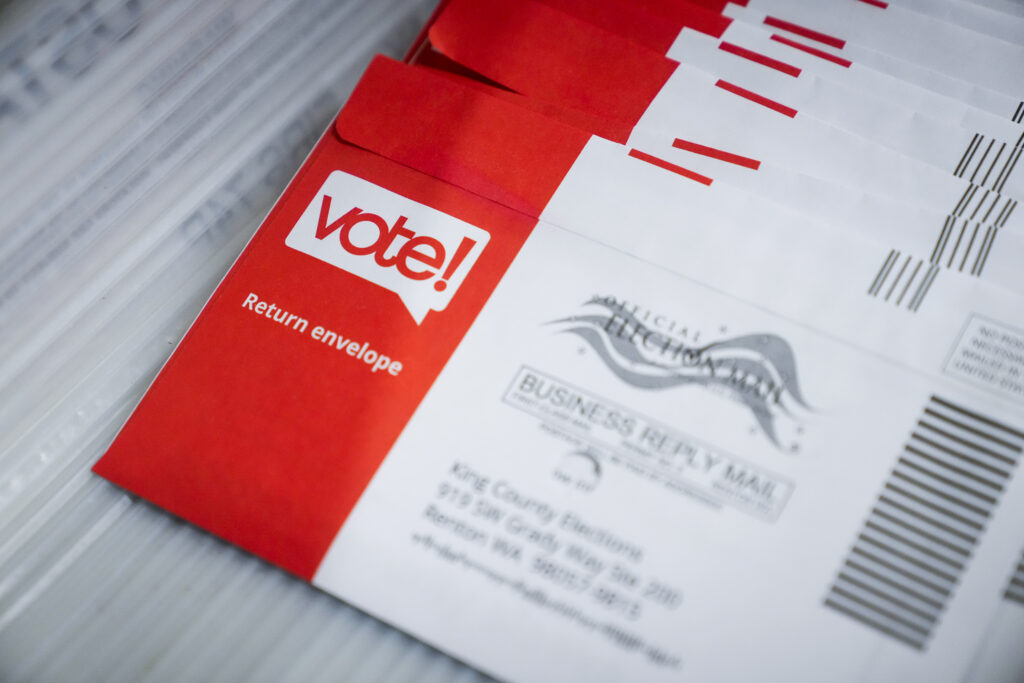
Democratic officials, voting rights advocates and state election leaders celebrated a ruling Friday that blocked the Trump administration from enforcing sweeping new mail ballot restrictions for the 2026 midterms — casting the ruling as a victory for voting access and state control of elections.
U.S. District Judge Indira Talwani granted a preliminary injunction against key provisions of the Postal Service’s new rule, finding that challengers are likely to succeed on claims that USPS exceeded its authority and intruded on election powers reserved to Congress and the states.
She warned that, given the compressed timeline and the still-unfinished federal ballot portal, disenfranchisement would be “practically inevitable.”
The ruling replaces a temporary restraining order Talwani issued last week.
Get updates straight to your inbox — for free
Join 350,000 readers who rely on our daily and weekly newsletters for the latest in voting, elections and democracy.
Colorado Secretary of State Jena Griswold (D) focused her response on the U.S. Postal Service’s role, arguing that the agency should deliver ballots rather than determine which voters receive them.
“We are glad that this Court has stopped the Postal Service from impacting who can receive a ballot in the 2026 election,” Griswold said. “The Postal Service must stick to its job of delivering the mail, rather than trying to decide who gets to vote. We will continue to fight Trump to stop his unlawful attempts to suppress the vote and disenfranchise voters.”
Nevada Secretary of State Francisco Aguilar (D) went further, accusing Trump of deliberately trying to disrupt the election.
“The President’s objective is to cause chaos in the hope that voters will give up and simply not participate,” Aguilar said. “I’m grateful to the court for blocking yet another attempt to upend our elections.”
Aguilar also highlighted the impact on election and postal workers, saying the administration had put them “in a difficult position” while state officials were trying to prepare for November.
California Gov. Gavin Newsom (D) called the injunction “a huge win for democracy,” noting that California and other states immediately sued after USPS finalized the rule.
“They tried to restrict voting rights via the USPS system, we sued, and we won an order blocking the USPS rule through the November elections!” Newsom said. “As ballots begin to be mailed out across the country, we must all continue to take concrete action to safeguard our republic.”
California Attorney General Rob Bonta (D), whose state helped lead the challenge, described the ruling as an “extended block” on what he called the administration’s attempt to restrict mail voting.
“This ruling will keep the USPS’ unprecedented and drastic changes from going into effect while our case moves forward,” Bonta said. “We’ll continue fighting to stop the Trump Administration from trampling on voting rights.”
Michigan Attorney General Dana Nessel (D) emphasized a different problem: USPS itself has acknowledged that its new Federal Ballot Mail Portal is not yet ready. In a declaration filed Thursday, a senior USPS official said the agency expected the portal to become available for voluntary use “sometime next week.”
Nessel said the admission undercut the urgency of the administration’s push to implement the rule.
“The Trump administration has admitted to the Courts that they are still not ready to implement their own rule,” Nessel said, adding that rule changes of this scale “take months to implement, not days.”
The League of Women Voters and attorneys representing plaintiffs in one of the cases framed the decision as a reaffirmation that election administration belongs primarily to states.
“Today’s ruling makes it crystal clear: The US Postal Service must deliver all election mail. USPS has no authority in the Constitution or federal law over how states administer mail voting,” the plaintiffs and their counsel said in a joint statement. “And the President cannot order the Postal Service to create a disruptive new bureaucracy that will throw the election into chaos and disenfranchise untold numbers of voters.”
They also noted that states have already begun sending ballots and argued that the injunction provides protection against disruption as the election approaches.
Dax Goldstein, Election Protection Program Director at the States United Democracy Center, similarly called the rule “unprecedented federal overreach into state and local election administration.”
“The Trump administration has no business, authority, or experience trying to control mail voting processes — that job lives with the states,” Goldstein said. “Mail voting is popular and trusted by Americans, and has long been run by the state and local officials who keep our elections secure. Trump’s attempt to force the Postal Service to become election administrators risks silencing millions of voters’ voices nationwide.”
The reactions came as the administration and its Republican allies immediately moved to challenge Talwani’s ruling.
The Department of Justice filed a notice of appeal Friday evening with the 1st U.S. Circuit Court of Appeals, seeking review of the preliminary injunction. Twelve Republican-led states that intervened to defend the rule — Alabama, Florida, Indiana, Kansas, Louisiana, Missouri, Montana, Nebraska, Oklahoma, South Carolina, South Dakota and Texas — also filed an appeal.
Trump and other prominent Republican officials had not issued substantive public responses to the ruling as of Friday night. The administration’s legal filings, however, have defended the USPS rule as a lawful exercise of the agency’s authority and argued that the new requirements would improve the handling and tracking of federal ballot mail.
The broader legal fight is now moving back to the 1st Circuit, with the administration expected to seek emergency relief from Talwani’s injunction.