Mississippi Senate race votes at risk after state eliminates mail ballot curing rule
 Prefer us on Google
to see more of our voting rights news coverage when you search.
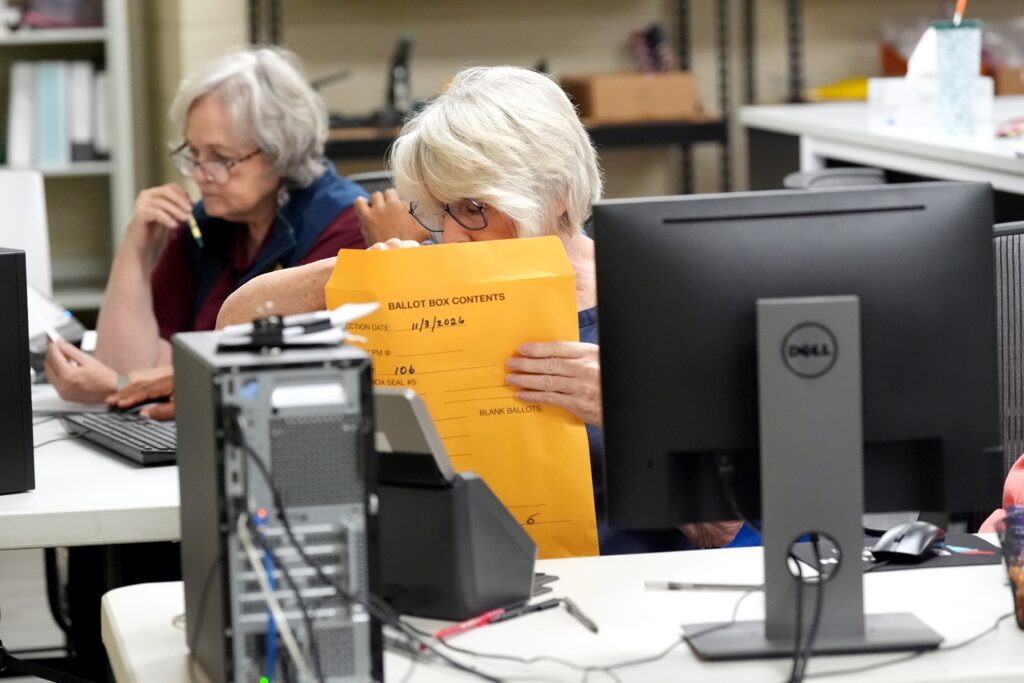
The extremely tight U.S. Senate race in Mississippi is now coming down to the final few provisional and mail ballots, which could determine the outcome.*
But a few months ago, Mississippi’s secretary of state quietly deleted state regulations that let mail voters fix minor issues with their ballots after casting them, putting those votes at risk this year.
The last-minute change has left Mississippians — including some pro-voting organizations — broadly confused about how to cure a mail ballot. In fact, voters no longer can.
A spokesperson for Secretary of State Michael Watson’s (R) office confirmed to Democracy Docket that there are “no steps for curing a mail-in.”
In most states, when a voter’s signature on a mail ballot or the ballot envelope does not appear to match what they penned on their registration form, election officials flag it and then notify the voter that they need to “cure” the ballot. Most often, that means the voter sends in a form or swings by an election office to confirm their identity.
And until mid-August, that’s basically how it worked in Mississippi.
But then the secretary of state’s office quietly promulgated a temporary rule that deleted the entirety of Chapter 4, the mail ballot curing provision.
Now, with the race between Democratic challenger Scott Colom and incumbent Republican Sen. Cindy Hyde-Smith coming down to the wire, civil rights groups have been instructing Mississippi voters on how to cure their mail ballots relying on the old, now-deleted regulation, which is still published on the secretary of state’s website.
Get updates straight to your inbox — for free
Join 350,000 readers who rely on our daily and weekly newsletters for the latest in voting, elections and democracy.
The mail ballot curing rule was put in place in October 2020 after the Southern Poverty Law Center and other voting rights groups sued Mississippi over its unconstitutional lack of a procedure for voters to cure ballot signature issues. But when the secretary of state’s office adopted the ballot curing provision, the parties mutually agreed to dismiss the lawsuit. So when Watson’s office later deleted Chapter 4, it didn’t violate any standing court orders.
Unlike most states, Mississippi lacks a recount law governing close elections. That limits the opportunity for campaigns to petition officials to count ballots that were previously discarded for minor, technical issues.
Watson has responded to criticism over his decision to flag more than 200,000 voter registrations as inactive using private data obtained from the credit reporting agency Experian. That decision forced many voters to submit “affidavit” — i.e., provisional — ballots, which has slowed down the count.
*The Elias Law Group (ELG) represents the Democratic Senatorial Campaign Committee and is active in the legal effort on behalf of the Colom campaign. ELG Firm Chair Marc Elias is the founder of Democracy Docket.