California sheriff used ‘non-existent’ quotes in legal defense of ballot seizures
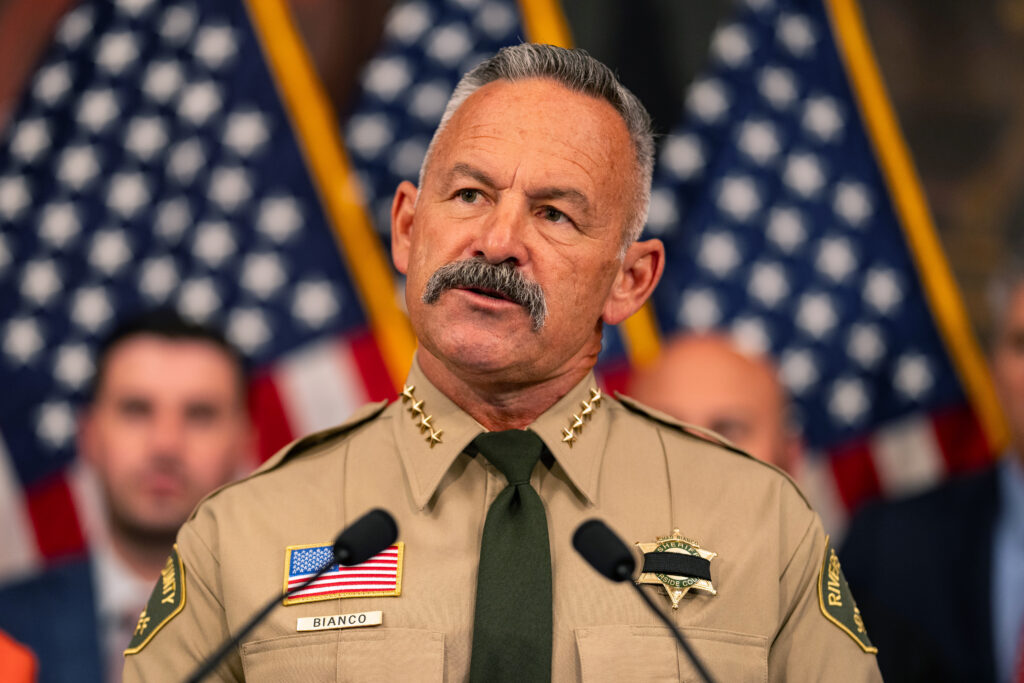
A California sheriff who seized 650,000 ballots in an attempt to challenge last year’s redistricting referendum is now facing allegations of using made-up quotations in a legal brief opposing a lawsuit challenging that seizure.
Riverside County Sheriff Chad Bianco, a Republican who is also running for governor of California, took custody of the ballots and began his own recount based on allegations of a huge discrepancy between ballots cast and counted.
County officials said that figure stemmed from a volunteer group’s misunderstanding of how votes are tabulated.
In response, four Riverside County voters represented by the UCLA Voting Rights Project have filed a lawsuit with the California Supreme Court demanding Bianco return the seized ballots and accusing him of violating state election laws by removing the ballots from the custody of local election officials.
In a brief filed Monday, the UCLA Voting Rights Project said Bianco and his private attorney, Robert Tyler, incorrectly cited a quotation in the brief they filed in opposition to the voters’ lawsuit.
Get updates straight to your inbox — for free
Join 350,000 readers who rely on our daily and weekly newsletters for the latest in voting, elections and democracy.
In the filing, Bianco’s attorney argued that the voters didn’t have standing to file suit, citing a ruling in the case Common Cause v. Board of Supervisors that standing requires “a grievance shared in substantially equal measure by all or a large class of citizens.”
But that quotation “appears nowhere in the opinion,” the plaintiffs’ attorneys noted. And they argued it was part of a “concerning pattern” throughout Bianco’s brief.
“Several cases cited in the brief reference real cases but point to non-existent quotes and made-up holdings. Several citations are to cases that do not stand for the proposition Respondent represents,” they wrote.
In fact, the Common Cause ruling cited in Bianco’s brief actually demonstrates that the voters do have standing, they noted.
It’s not the first time questionable quotations have found their way into consequential legal documents related to voting rights. In November, as the Wisconsin Supreme Court took steps towards striking down the state’s congressional map, a conservative justice included a non-existent quote from a real past U.S. Supreme Court ruling in her dissent.
Such non-existent quotes can be the result of lawyers using artificial intelligence to help draft their arguments — though it’s unclear how they wound up in Bianco’s brief.
Asked to clarify where the quotation came from and whether he had used AI to write the brief, Tyler, Bianco’s attorney, responded in a written statement.
“We did note a few errors that we are correcting today,” Tyler said. “Unfortunately, the numerous petitions by the Attorney General and the former Attorney General have created multiple rush filings and very limited time to respond.”