As election looms, states are stuck in wait-and-see mode on Trump mail voting order
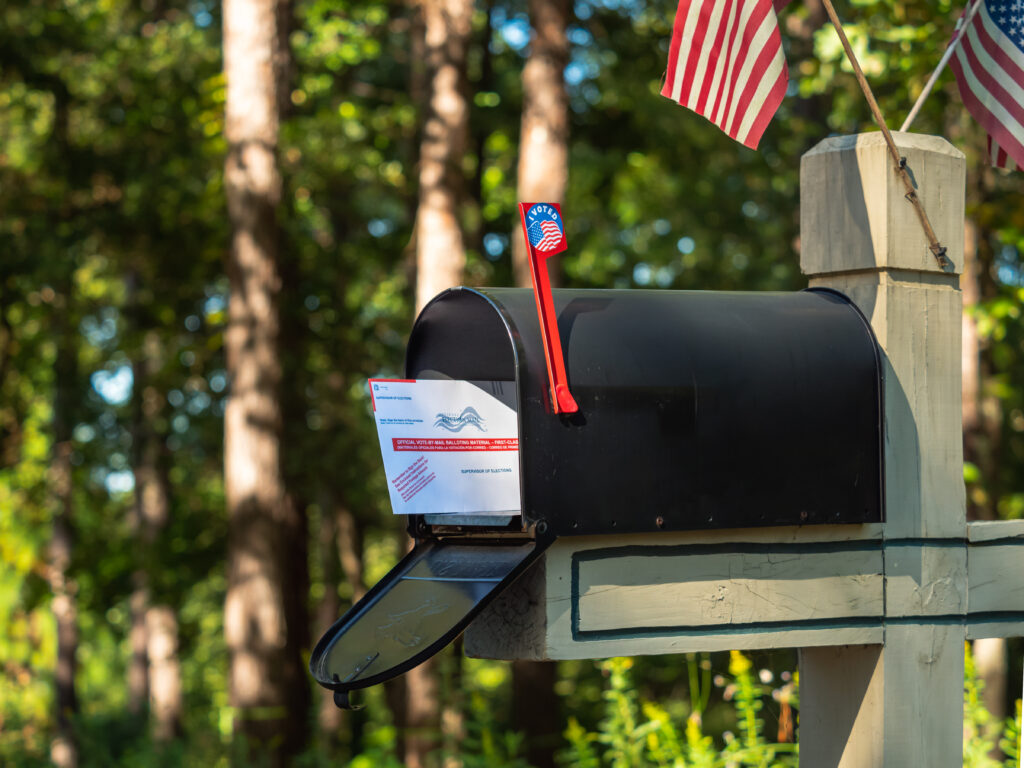
State election leaders say they’re largely in the dark on mail voting just weeks away from when many are set to send ballots out to voters.
The uncertainty adds to the growing danger that chaos and confusion could ensue if states are required to comply with President Donald Trump’s anti-mail voting executive order so close to the election. That was underscored by the release of a whistleblower report Tuesday that warned the U.S. Postal Service’s (USPS) rush to implement the order could cause a “catastrophic failure” of the mail voting system.
With USPS’s final mail voting rule in the thick of fierce litigation, and without the resources needed to comply even if it’s greenlit, some state election leaders told Democracy Docket they’re sitting on their hands until there’s a final court order.
One spokesperson for a secretary of state told Democracy Docket that while chief elections officials across the country are in talks with each other, most questions remain unanswered. They said even states who may be “super thrilled” to implement the order can’t push forward without guidance.
“If we have to do this, we have to do this, but there’s no guidance yet so I think we’re all in the same boat,” said the spokesperson Monday.
Get updates straight to your inbox — for free
Join 350,000 readers who rely on our daily and weekly newsletters for the latest in voting, elections and democracy.
Last week, North Carolina took the first step to implement the USPS rule that requires states to submit voting materials for review and approval and upload names to a federal voter eligibility list to screen who can receive mail ballots. It’s the first state to do so, with its state-mandated deadline to send out ballots Sept. 4.
Following North Carolina’s announcement, Democracy Docket reached out to the offices of every secretary of state and received responses from 24 states. As of Tuesday afternoon, 18 states said they have not and do not plan to submit envelopes or voter names to the USPS for review. Five states said they did not want to comment pending the ongoing litigation.
Oklahoma’s office said it has “been in contact with USPS regarding absentee ballots,” according to an email statement from the Oklahoma State Election Board.
Oklahoma is one of the dozen states, plus the District of Columbia, that will send out mail ballots in September, starting with Wisconsin Sept. 17.
In a document provided by the Wisconsin State Board of Elections, the state pointed to the fact that there’s no existing portal to upload voter names even if they wanted to.
“Wisconsin cannot comply for several reasons. First, the USPS portal does not exist. USPS has given no indication of when or whether it will exist, and USPS has provided no training on how the portal will be used,” an FAQ from the Wisconsin Elections Commission published Monday reads.
Meanwhile, Democrat-led states have continued to push back against the USPS rule that, if deemed legal, could bar millions from voting.
“Secretary Bellows has no intention of obeying in advance and would certainly not violate her oath to the Constitution and the nationwide injunction by complying with an unconstitutional and unlawful order,” said Deputy Secretary of State for Communications Jana Spaulding in a statement to Democracy Docket.
And New Mexico, which joined 24 states in a lawsuit challenging the order, said it’s simply too late for the state to make any changes to its mail voting system.
“New Mexico has not submitted, nor do we plan to submit, envelopes to be used for mail ballots to the U.S. Postal Service for review and approval. We are sending out our UOCAVA ballots September 19th, and it is our position that it is too late to implement any changes for the midterms,” wrote Deputy Secretary of State and Chief of Staff Sharon Pino.
Maryland, Colorado, Pennsylvania, California and Nevada also expressed strong opposition.
“Nevada will continue to run a safe, secure election as it has in the past. The State will only make adjustments when told to do so by a judge — and our fight is far from over,” said a statement from Secretary of State Francisco Aguilar’s office.
As it stands, there’s a nationwide temporary restraining order (TRO) on the USPS rule that seeks to further execute President Donald Trump’s anti-mail voting executive order. A majority of states that responded to Democracy Docket pointed to this as a central reason they cannot take action.
U.S. District Court Judge Indira Talwani will hold a hearing on the rule’s preliminary injunction Thursday. Separately, there is another lawsuit challenging the executive order. But all three lawsuits will likely result in one outcome, with the final say for states left in the hands of the U.S. Supreme Court.