Maricopa County election staff told to grant FBI unrestricted access, new emails show
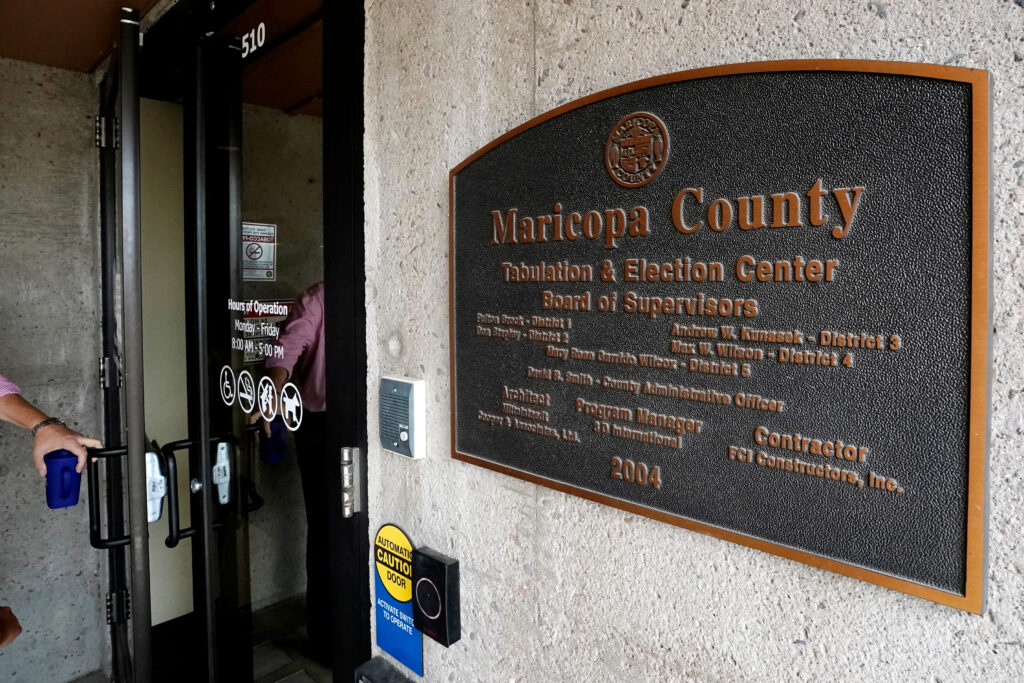
Editor’s Note: This story highlights the troubling Trump administration effort to gain access to election materials in Maricopa County, Arizona. But due to editing errors, it unfairly suggests that Maricopa County Elections Director Scott Jarrett acted improperly in directing staff to give federal agents full access to county election facilities. It should have included the need for Jarrett to protect the safety of his staff as an obvious potential motivation for his email. It should also have noted Jarrett’s reputation as a widely respected election administrator with a commitment to integrity and fair elections. Finally, it should have involved contacting Jarrett’s office to incorporate his view.
Election administrators in Maricopa County, Arizona ordered staff to grant federal agents sweeping, unmonitored access to election facilities — including instructions not to record their actions — according to newly released emails.
The internal communications, obtained by the watchdog group American Oversight and first reported in part by Votebeat, reveal that officials in Maricopa County and the Arizona Secretary of State’s office were bracing for potential federal law enforcement activity months before the FBI issued a subpoena tied to the 2020 election.
Get updates straight to your inbox — for free
Join 350,000 readers who rely on our daily and weekly newsletters for the latest in voting, elections and democracy.
The emails depict Arizona election offices preparing for possible federal intervention while at least one top local official offered support for the probe. Arizona officials were not just responding to routine legal requests — they were preparing for the possibility of federal agents physically entering election facilities.
In late January, Arizona State Election Director Lisa Marra alerted election officials across the state to a news report that the FBI had executed a search warrant that day at an election office in Fulton County, Georgia — a key battleground repeatedly targeted by election conspiracy theorists.
“I wanted to make sure you were aware of a situation occurring today in Fulton County, Georgia,” Marra wrote. “The Secretary’s Office is taking steps to be prepared if something similar happens in Arizona and will support any counties if they have questions about records requests or retention requirements.”
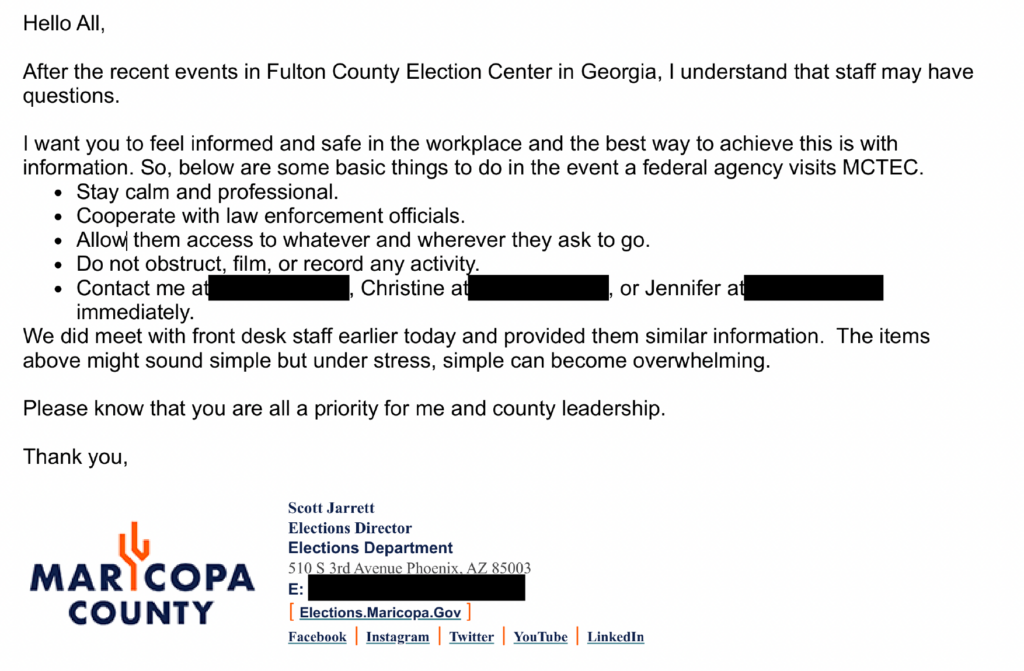
Weeks later, Maricopa County Elections Director Scott Jarrett sent a message to staff outlining exactly how to respond if federal agents arrived at the county’s election center.
“Allow them access to whatever and wherever they ask to go,” Jarrett wrote. “Do not obstruct, film, or record any activity.”
Those instructions go beyond typical guidance for cooperating with law enforcement.
By directing staff not to document federal activity, the policy would leave no internal record of what agents accessed, reviewed or removed inside one of the nation’s most scrutinized election jurisdictions.
For voting rights advocates, the directive may raise serious concerns about transparency, accountability and the security of election systems — particularly as federal authorities pursue an investigation rooted in claims of election fraud that courts have repeatedly rejected.
Maricopa County — home to Phoenix — is by far Arizona’s largest county and one of the most critical voting jurisdictions in the country, routinely deciding statewide races and playing a central role in presidential elections.
The emails also expand on Votebeat’s report, which found that Maricopa County Recorder Justin Heap (R) communicated directly with Department of Justice (DOJ) officials as the investigation took shape.
In a September 2025 letter included in the records, Heap pledged cooperation with the federal probe.
“Please be assured that my office is committed to full cooperation with the Department of Justice as it conducts its investigation,” he wrote. “We share your goal of safeguarding election integrity and transparency.”
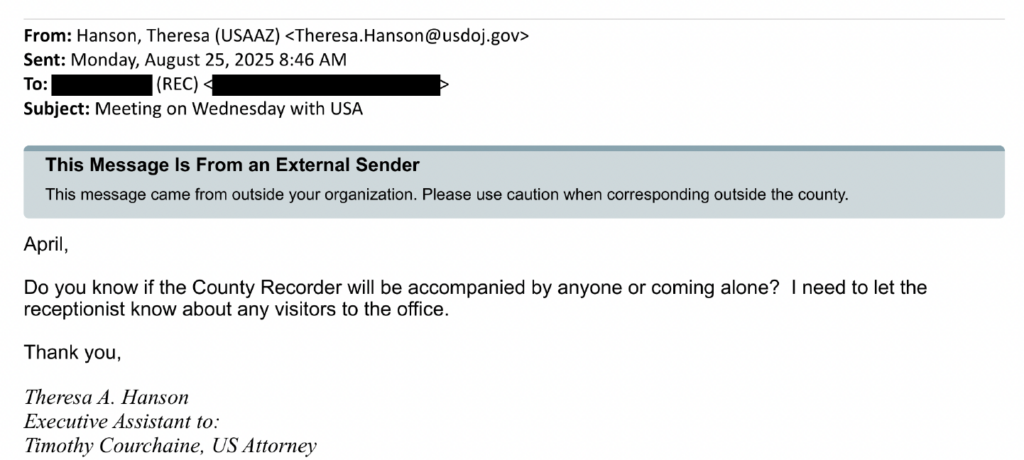
Additional emails show that Heap met with U.S. Attorney Timothy Courchaine alongside other high-level federal prosecutors, and later provided DOJ officials with details about internal litigation over control of election records — underscoring an ongoing line of communication between local election officials and federal investigators.
The records also reveal that Heap moved to establish his own email archiving system within the Recorder’s Office — a step he said was necessary to maintain control over retention practices.
“Our department will be implementing its own email retention and archiving system,” he wrote, “to maintain control over retention schedules.”*
Other documents show DOJ’s Civil Rights chief Harmeet Dhillon warning Arizona officials that any destruction of election-related records could be treated as evidence of wrongdoing.
The department cited unspecified “complaints concerning errors and malfeasance” in Maricopa County elections while demanding the preservation of records dating back to 2020.
Dhillon has since sued Arizona for access to the state’s full, unredacted voter rolls.
That pressure campaign has since expanded into a multi-agency effort, involving the FBI, the DOJ’s Civil Rights Division and the Department of Homeland Security — even as multiple reviews have found no evidence of widespread fraud in the 2020 election.
And the revelations also come as Arizona Senate President Warren Petersen (R) escalates the conflict, accusing Attorney General Kris Mayes (D) and Secretary of State Adrian Fontes (D) of interfering with a federal grand jury probe into election records.
Petersen has accused Mayes and Fontes of improperly discouraging local cooperation with federal investigators — even suggesting their actions could amount to obstruction of justice.
*This story originally reported that Heap’s change to the email archiving system came “as federal officials were seeking election-related records.” In fact, it occurred before prosecutors subpoenaed Petersen for the records.