Reject Trump’s ‘embarrassing’ Alaska lawsuit, voting experts tell court
 Prefer us on Google
to see more of our voting rights news coverage when you search.
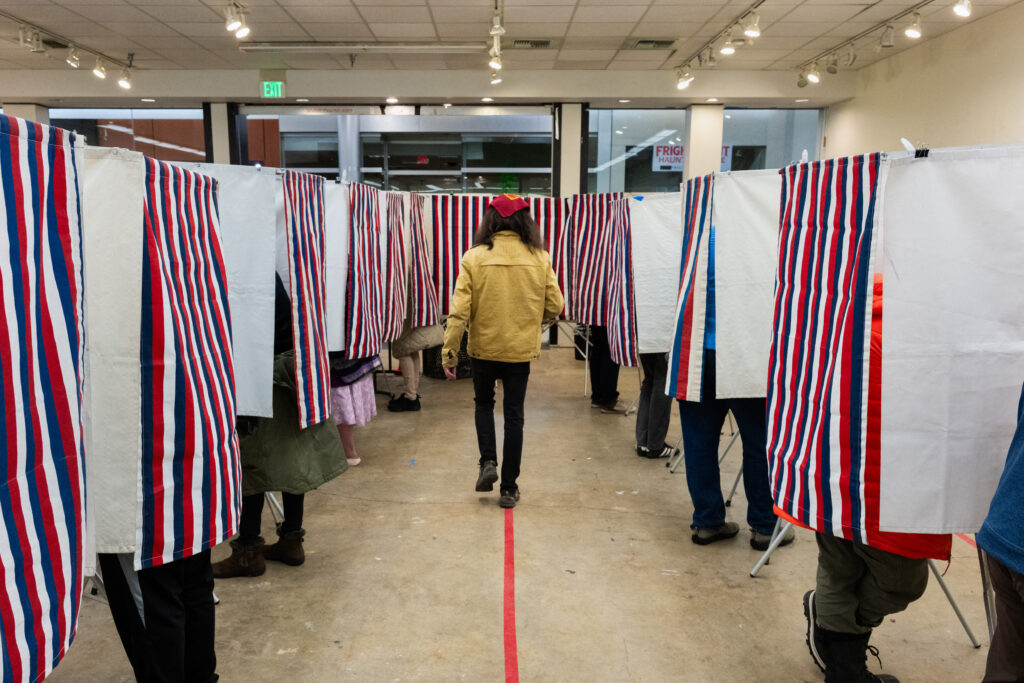
Allowing the Trump administration to subvert the results of Alaska’s U.S. Senate race based on alleged voter confusion would create a dangerous precedent for federal interference in future elections, voting experts warned a federal appeals court.
Former Maricopa County Recorder Stephen Richer and election scholars from UCLA School of Law’s Safeguarding Democracy Project (SDP) each submitted amicus briefs Friday imploring the Ninth Circuit Court of Appeals to dismiss the U.S. Department of Justice’s (DOJ) lawsuit demanding Alaska not certify its Senate race if the Republican incumbent loses.
The Trump administration took the highly unusual step of suing to block certification of Alaska’s Senate race before election day, claiming the presence of a longshot candidate with a name similar to Sen. Dan Sullivan confused voters. The lawsuit was part of the Trump administration’s wider attempts to subvert states’ constitutional authority to manage elections before midterms voting began.
Get updates straight to your inbox — for free
Join 350,000 readers who rely on our daily and weekly newsletters for the latest in voting, elections and democracy.
“Leading election law experts from across the political spectrum uniformly derided this lawsuit filed by the United States,” reads the brief from SDP, which is led by election law professor Richard Hasen. “This Court should send a swift and clear message to the federal government and the country that the State of Alaska, and Alaska alone, has the right to certify the winner of its elections.”
The winner of Alaska’s U.S. Senate race has not yet been decided, but Democratic candidate Mary Peltola is currently leading the incumbent Republican Sen. Dan Sullivan in votes.
A district court dismissed the DOJ’s lawsuit on Nov. 1, and the DOJ immediately asked the federal appeals court to intervene. DOJ has not yet filed a brief outlining its legal argument for its authority to demand Alaska set aside votes cast for longshot candidate Dan J. Sullivan.
According to Richer and SDP, there is no legal basis for DOJ’s demands.
Richer pointed out that the state already settled the matter of the two Sullivans, with a state trial court ruling that the Sen. Sullivan’s namesake could remain on the ballot, which Alaska’s supreme court affirmed.
The state’s elections division clearly distinguished the two Sullivans apart on the ballot, labeling Sen. Sullivan as the incumbent Republican. Alaska’s ranked-choice voting system further mitigates voter confusion by allowing people to choose multiple candidates and list them by order of preference. Peltola’s lead is currently larger than both Sullivans’ vote counts combined.
“The machinery of state election law operated as designed,” Richer’s brief reads. “There is no basis for the federal government to challenge that result—or for a federal court to circumvent it.”
Richer also argued that the state courts addressed the issue well before the election started, which he said is the appropriate time to stage an intervention.
“It is significant not only that these cases were decided by state courts but also that they arose at the ballot-access stage, not on the eve of an election or at certification,” Richer wrote. “This approach is intuitive: Once an election is concluded, it is no longer feasible for a court—any court—to determine why voters might have voted for one candidate instead of another, be it confusion or some other reason entirely.”
The SDP brief placed the DOJ lawsuit within the context of a “much larger and troubling pattern” of the Trump administration’s repeated attempts to undermine states’ authority over elections.
SDP in its brief invokes the major questions doctrine, which requires clear congressional authorization for executive actions that significantly impact national policy.
It also contends that the court is required to dismiss the case under the laches doctrine, under which the DOJ’s request should be denied given that it unreasonably waited until late in the election season to file suit.
“Laches has special importance in the elections context, where mistimed election litigation can undermine voter confidence in the electoral process and the judiciary, upset the process of administering elections, and potentially even reverse or determine election outcomes,” the brief reads.