Maine early voting starts today. Here’s what you need to know
 Prefer us on Google
to see more of our voting rights news coverage when you search.
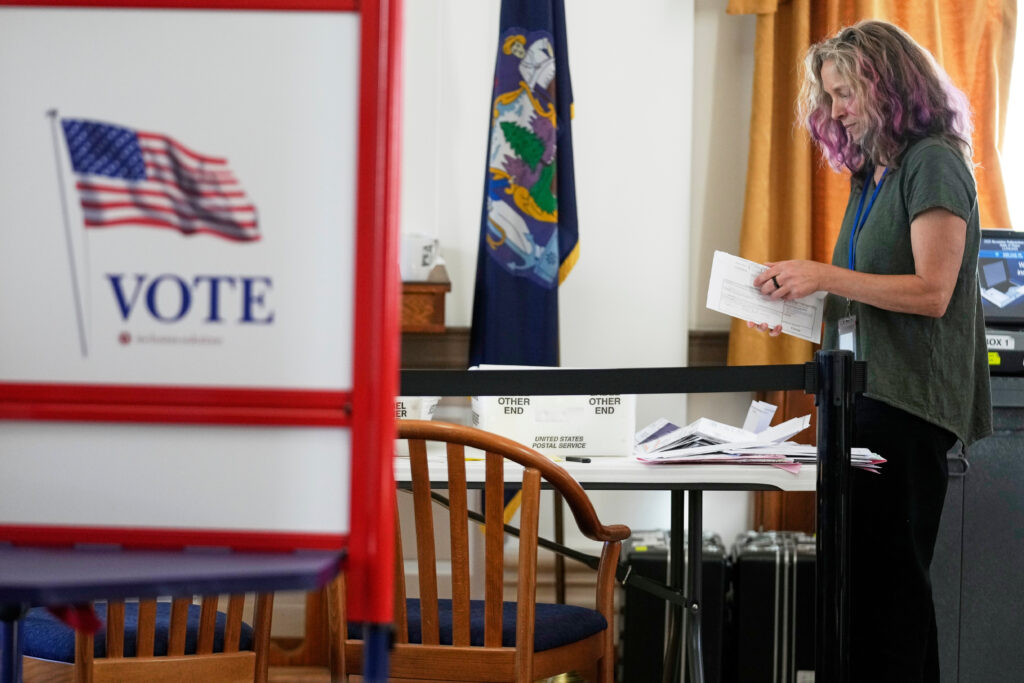
Early voting begins in Maine on Monday, with one of the most closely watched U.S. Senate races in the nation on the line.
The Democrats’ strongest path to flipping Congress relies on Troy Jackson defeating the state’s longtime Republican incumbent Sen. Susan Collins.
Given the intense scrutiny of that race, Mainers are particularly on edge about the possibility of election interference from President Donald Trump. It’s not an unfounded fear — Maine Secretary of State Shenna Bellows (D) has been one of the earliest and most vocal state election chiefs to defy the Trump administration’s unprecedented efforts to access the state’s unredacted voter data.
When the U.S. Department of Justice sent a letter to Bellows last summer demanding she hand over the state’s voter roll, she held a press conference to give a pointed public response.
“The Gulf of Maine is awfully cold, but maybe that’s what the DOJ needs to cool down,” Bellows said. “So here’s my answer to Trump’s DOJ today: Go jump in the Gulf of Maine.”
The DOJ sued Bellows not long after, but it didn’t deter her fight to protect voters’ private data.
“We stand by the integrity of Maine election officials at both the state and local level,” Bellows told Democracy Docket last September. “Maine ranks consistently at the top of the nation in voter turnout because our voters have confidence in the strength of our systems. DOJ is targeting Maine and Oregon for political reasons. We won’t back down.”
The DOJ lost its case to gain access to Maine’s voter rolls, just as they have in every state where a judge has ruled. For those keeping score at home, that’s 0-26.
Get updates straight to your inbox — for free
Join 350,000 readers who rely on our daily and weekly newsletters for the latest in voting, elections and democracy.
One of Maine voters’ biggest fears in the midterm elections was recently settled last month, after the U.S. Supreme Court rejected the Trump administration’s bid to revive mail voting restrictions. A quarter of Maine voters cast ballots by mail in 2024.
Bellows told Democracy Docket that she was worried “just the threats from Trump and the Postmaster General would scare people away from mail-in voting.”
But after the SCOTUS ruling, Bellows said voters’ concerns about issues with mail voting dropped.
“That anxiety seems to have subsided to some degree, which I think is a good thing in a place like Maine, where we have tons of older Mainers — we’re the oldest state in the nation demographically, and we have people with disabilities.
Despite the Court’s action to stop Trump from messing with mail voting, some Maine voters are still worried about federal interference. Particularly, the looming threat that Trump might send Immigration and Customs Enforcement (ICE) or other federal agents to polling sites.
Maine has been a particularly brutal target for the Trump administration’s immigration crackdown over the past year. Many residents described being “terrorized” by the ICE surge in January, as state leaders criticized the tactics of the agency’s operations. ICE pulled back on its Maine operation for a few months but renewed its efforts over the summer — and killed an unarmed 25-year-old asylum seeker in his vehicle in July.
Bellows said that this has put Maine voters on edge — especially since Maine Republican gubernatorial nominee Bobby Charles has asked Trump to send ICE to the polls.
It is against the law for any federal law enforcement to police polling sites, and Bellows said her main focus is reminding voters of that to help quell any fear people might have about casting their ballot in person.
And it’s working.
“I think people trust that the federal law will be followed — and that comes down to the willingness of election officials to basically reinforce and enforce their chain of command,” Bellows said. “We’re saying everywhere, relentlessly over and over and over again, that this would be a violation of federal law with criminal penalties. Just to reinforce for that random ICE agent who might get an unlawful order that this is something where immunity won’t save you.”