Is the future of voting electronic? For some voters with disabilities, it’s the only way
 Prefer us on Google
to see more of our voting rights news coverage when you search.
When flooding kept nearly 250 Utahns from reaching the polls this November, election officials turned to an alternative: electronic voting. In San Juan County, where washed-out roads blocked access to polling places, some voters cast their ballots through an online portal.
Of those impacted by the natural disaster, 244 voted through the emergency system, authorized by Lt. Gov. Deidre Henderson (R). Eligible voters received emails telling them how to access the secure portal, available via phone or computer, Henderson’s office told Democracy Docket.
“Our office was not aware of any security problems during the voting process,” the Lt. Gov.’s office added.
That’s likely in part because the system already exists for some voters, including overseas voters and people with disabilities, within state law.
Get updates straight to your inbox — for free
Join 350,000 readers who rely on our daily and weekly newsletters for the latest in voting, elections and democracy.
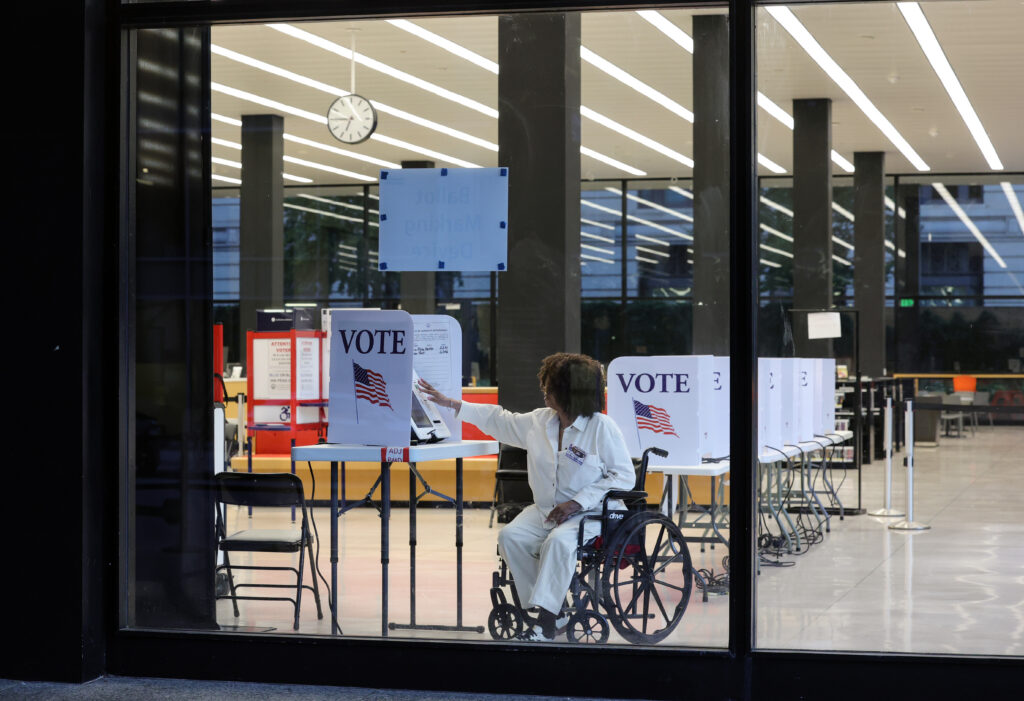
Electronic voting, while controversial in some security circles, has grown in popularity across dozens of states for certain populations. And within the disability community, many of whom still face systemic barriers to voting, electronic voting could be an accessibility guarantee.
Alexia Kemerling, the director of Accessible Democracy at the American Association of People with Disabilities, said despite pushback from technology experts, electronic voting has been a top priority for her organization.
“Having a secure system and having a fully accessible system don’t have to be mutually exclusive,” Kemerling told Democracy Docket.
What is electronic voting?
Barbara Simons, a computer scientist with decades of experience, including on the Board of Advisors of the U.S. Election Assistance Commission, is passionate about ensuring elections are safeguarded to the highest degree.
Simons wants voting access for everyone, including people with disabilities, she told Democracy Docket. But she’s concerned about every vote counting and fears electronic voting could open the door to security breaches that experts like herself may not be able to measure without post-election audits.
Simons opposes online or internet voting, which she defines as “a voted ballot that is returned over the internet.”
That’s because, for one, the United States uses a secret ballot. This means voters’ identities cannot be linked to their choices once their ballots are cast, protecting the privacy of each person’s vote.
“If it were possible for the voter to communicate, in a secure fashion with the election official and make sure that the internet-voted ballot was correctly received and correctly recorded, that would make it more secure,” Simons said. “But you can’t do that because of the secret ballot.”
Simons also worries about the rise of artificial intelligence and what this technology could mean for casting a vote over the internet. To ensure a wholly secure vote, Simons advocates for paper ballots marked by voters, a strong chain of custody for ballots and rigorous audits after all votes are counted.
But internet voting is different from the electronic voting most states offer, called Remote Accessible Vote-by-Mail, or RAVAM. This allows voters to access, read and mark their ballots using their personal device.
It’s more secure, according to experts like Simons, but it does not let voters return their ballots electronically. Instead, voters must return their marked ballots physically. This isn’t possible for every voter with a disability.
In some states, like California, courts are finding the accessible system not accessible enough. In other cases, like North Carolina, states have restricted who can help voters return their mail ballots in the name of security.
Advancing access
While she acknowledges valid technology concerns, Kemerling said a democracy isn’t secure unless it’s available to everyone.
“I think that the more people that can participate in our democracy, the stronger and more secure it is,” Kemerling said. “So if we are disenfranchising people from being able to participate, that’s not a secure democracy either.”
The next step in accessible voting, as disability voting advocates see it, would be for voters to not just receive and mark their ballots electronically, but return them through an online portal. That’s what the 244 Utah voters impacted by flooding did this midterm season.
While 32 states currently allow some version of electronic mail ballot return, voters with disabilities can only access the system in 13 states. Dora Uchel-Martinez, who is blind, worked for years to help pass Nevada’s accessible voting system.
It’s called the Effective Absentee System for Elections, or EASE, and it allows for a fully electronic voting process, from registration to ballot delivery. Enacted in 2021, EASE retrieves a voter’s electronic signature, that’s already on file, to their voter packet.
Efforts to enact the system were collaborative, with the disability community, Nevada’s tribal nations and Rep. Lesley Cohen (D) leading the charge. The system requires the voter to enter their Social Security number and address, which then generates a unique confirmation number. The number can be used later to check the status of a ballot.
While the initiative had some initial pushback over security concerns, the bill passed unanimously after voters testified to their personal experiences. Voters across communities signed onto letters and showed up for virtual meetings to talk about why a printed ballot was inaccessible for so many.
“I really feel that ‘nothing about us without us’ played in our favor,” Uchel-Martinez told Democracy Docket, an homage to the call for marginalized communities to be directly involved in policy decisions impacting them.
This relationship between security and accessibility is one courts are actively weighing as legal challenges about state mail voting systems come to a head.
Even in California, one of the first states to implement electronic voting, access concerns loom. The state’s mail voting system was struck down in October for violating state and federal law.
Though voters with disabilities are permitted to receive and mark their ballots electronically, the state’s system required voters return their ballots by paper and without assistance from others. But some voters, like two plaintiffs in the lawsuit who are blind, needed assistance merely filling out their ballots.
“Requiring assistance from another person to complete the voting by mail process is antithetical [to] voting privately and secretly,” U.S. Magistrate Judge Sallie Kim wrote for the court.
A similar system was overturned in Wisconsin this summer. The state required voters to handmark and physically return the marked ballot to the city clerk’s office. This left some voters with mobility constraints and print disabilities out of the voting process, the Wisconsin judge concluded in August. She upheld the decision this week.
In both California and Wisconsin, the judges stopped short of endorsing the electronic voting systems plaintiffs suggested. Whether those states will join the 13 that allow this access for voters with disabilities will come down to future legal battles.
There’s a critical difference in determining the security of a fully electronic voting system for a subset of voters who could not otherwise vote and a widespread deployment of the technology. It’s not likely all Americans will be able to vote from their phones anytime soon, and that’s not what advocates like Kemerling are pushing for.
“We’re not advocating for broad use of electronic voting, right?” Kemerling said. “We’re advocating for its use in these specific and relatively small populations who need it.”
The future of voting may not be electronic for everyone, but it needs to be better than what it currently is for voters with disabilities, according to advocates like Kemerling.
“The true freedom and power is being able to choose what works best for you, and it’s not a true choice if one option isn’t accessible,” Kemerling said. “So we need polling places to be physically accessible but we also need absentee processes to be fully accessible.”
This idea of choice was especially evident to Uchel-Martinez this past election. She’s a part of the Nevada Election Observation Network and monitors polling places to ensure they’re accessible for all voters.
She said despite the state’s widespread electronic voting system, she talked to several people in wheelchairs and others with walkers in line to vote. Some told her voting in person gives them a reason to socialize. Others said they didn’t feel confident in their technology skills, or didn’t have access to Wi-Fi because they needed to save money for groceries.
“Even if one person votes, that still counts because voting makes a difference,” Uchel-Martinez said. “Just because they have a disability should not mean you’re not eligible to vote, or that you have to use only one system available.”