Hours before absentee ballots go out, North Carolina approves new restrictions
 Prefer us on Google
to see more of our voting rights news coverage when you search.
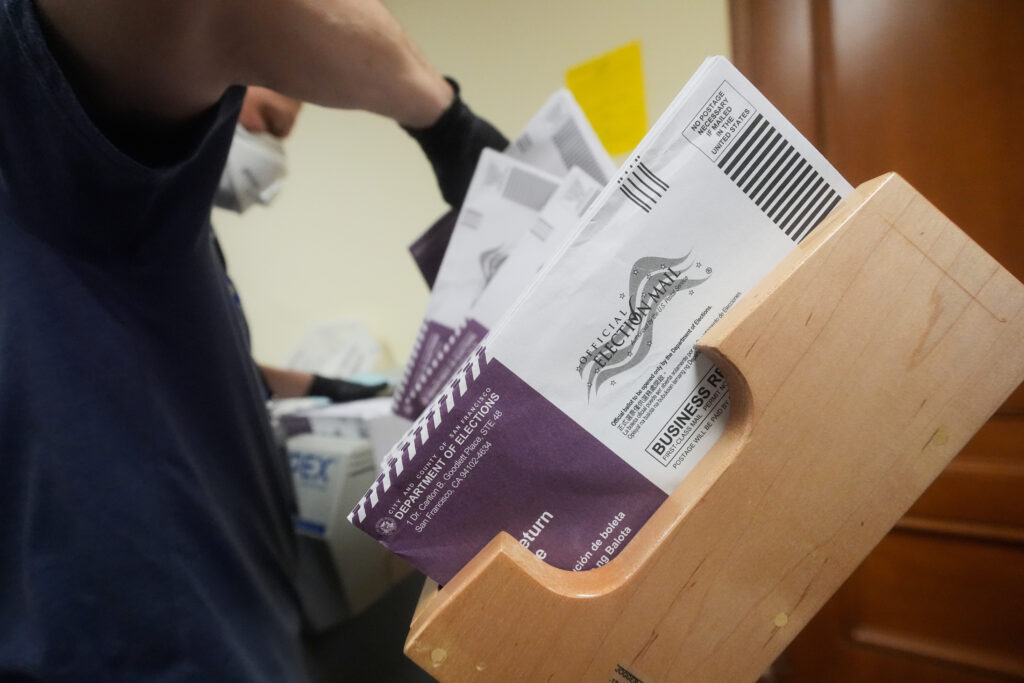
Hours before sending out absentee ballots to voters, North Carolina pushed through its latest restrictions that could make it harder for those votes to count.
The North Carolina State Board of Elections Friday voted 3-2 along party lines to pass two numbered memos, despite voter opposition, that make it harder for voters to return their absentee ballots and easier for counties to throw those ballots out.
The Board revisited the measures after more than 10 people formally objected and requested legislative review. But with the election nearly underway, the Board circumvented the General Assembly to quickly greenlight the restrictions.
The memos were not publicized until 7:09 a.m. today — just hours before mail-in ballots are set to go out at noon.
“I do not understand the need for secrecy,” Board Member Siobhan Millen (D) said at the start of the meeting.
Get updates straight to your inbox — for free
Join 350,000 readers who rely on our daily and weekly newsletters for the latest in voting, elections and democracy.
Republicans on the board framed passing the memos as a routine administrative task and said they would ensure “election security.” The two Democrats argued it was a workaround to ultimately create unnecessary hurdles that could disenfranchise voters.
“What are we doing here?” Board Member Jeff Carmon (D) asked his colleagues.
One memo creates stricter rules for voters to seal ballot envelopes. In the past, an improperly sealed envelope would be considered a “non-material error,” and the vote would still count. Under Numbered Memo 2021-03, these votes would be spoiled.
For example, if a voter sends a ballot with the outer envelope sealed but the inner envelope mistakenly unsealed, the vote will not count.
“It affects whether your ballot counts and that’s huge,” Millen said. “I think people do care, not just whether they sent a ballot in, but whether it ended up counting.”
Millen said she heard from county officials early Friday morning who told her anywhere from 3% to 20% of ballots may be sent in with these small technical errors in any given election.
The second memo restricts who is able to help voters submit ballots. Only a “voter’s near relative or legal guardian” may have any role in handling the absentee ballot. Although there is an exception for voters with disabilities, this rule creates difficulties for out-of-state students seeking to vote in their home state and older adults who may have recently moved away.
Republican members largely argued the memos were of no consequence because the GOP-led General Assembly would have approved them come January anyway.
“Legislative review doesn’t just mean rubber-stamp it. It should mean, let’s take into account these 10 objections we’ve gotten and see if we need to make some tweaks or changes,” Millen fired back. “Legislative review — those words ought to have a meaning.”
Governor Josh Stein (D) called the vote a “slap in the face to voters who stood up to these changes,” urging North Carolinians to keep tabs on updated guidance.
“North Carolina voters deserve transparency in their elections, not last-minute workarounds that could keep their vote from counting,” Stein added.
On Thursday, Stein joined voters who urged the board to vote against the rules and admonished the board for its eleventh-hour decision.
“This state has had more than a year to plan for this year’s election, and administering elections is its only job,” Stein said.
Although North Carolina has a Democratic governor, Friday’s vote falls in line with increasingly restrictive voting measures pushed by the GOP-led state board. Notably, every county in the state, including majority-Democratic ones, is led by Republicans as well.
The board recently reduced Sunday voting hours and cut polling sites most accessible to minority voters and students, including at the nation’s largest Historically Black College or University. Ballots sent out today will also comply with the U.S. Postal Service’s new rule that further restricts mail voting, making North Carolina the first state to do so.
Although the governor has little say over voting access in the Tar Heel State, there are things voters can do to stay proactive.
Voters should request an absentee ballot by 5 p.m. Oct. 20 and return their ballot as soon as possible, Stein said. North Carolina voters can track their ballots using the statewide BallotTrax system.