Voting is still not accessible for the disability community. The GOP’s SAVE America Act would magnify suppression
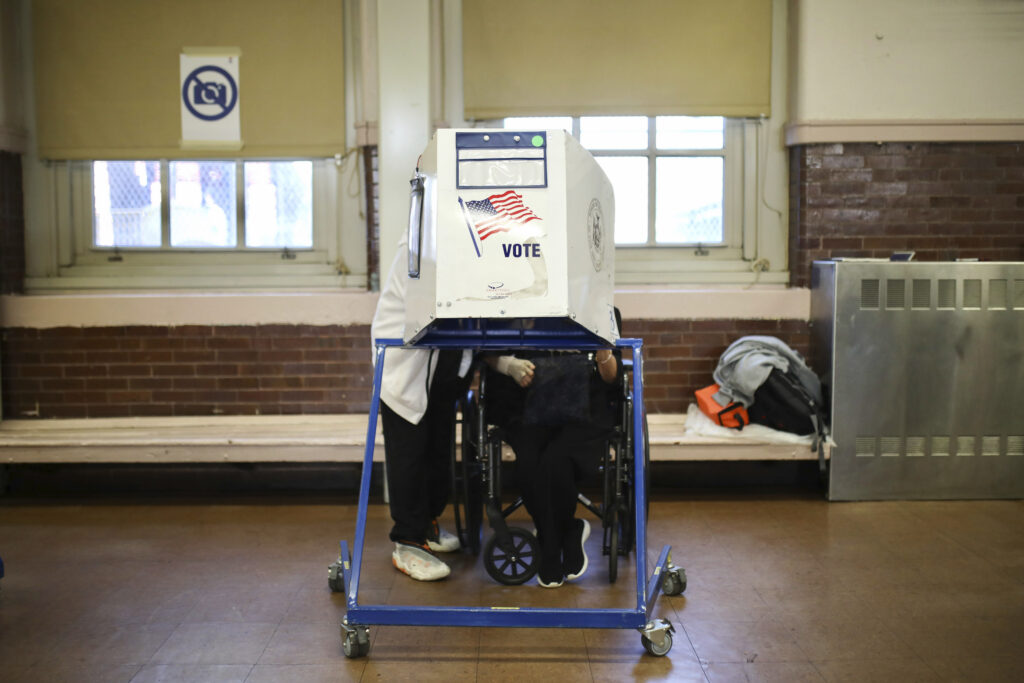
Marc Safman, 55, has been a political junkie since his parents took him to former President Jimmy Carter’s inauguration in 1977.
He voted in every election for 38 years, until last year.
Safman, who is deafblind, said he was unable to cast his ballot in the 2025 New York City mayoral election because of issues with his polling site’s ballot-marking machine and a “lack of basic awareness” from poll workers.
Despite incremental improvements over the past several decades to make voting more accessible, people like Safman with disabilities, who comprise one fourth of the nation’s population, continue to face outsized barriers when casting their ballots.
However, the GOP’s SAVE America Act, the most restrictive voting bill in U.S. history, threatens to roll back what progress has been made and set voters with disabilities back by years with new draconian restrictions.
Get updates straight to your inbox — for free
Join 350,000 readers who rely on our daily and weekly newsletters for the latest in voting, elections and democracy.
Safman is an experienced policy advocate and an inaugural member of the NYC Board of Elections Accessible Voting Committee who has continuously advocated for accessible voting on municipal, state and federal levels. He told Democracy Docket that the SAVE America Act would make it even harder to vote with unnecessary ID requirements.
“[The SAVE America Act] really imposes a burden on our deafblind community in America,” Safman said.
And while those in the deafblind community face specific challenges to exercise their voting rights, anyone with any disability could be affected by the GOP-backed bill, which passed in the House earlier this month.
The most crucial aspect of the act for people with disabilities is the proposed demand that all voters show identification to cast a ballot. That’s partly because those in the disability community are less likely than the general population to have government-issued IDs, such as driver’s licenses, the most common form of identification in the U.S.
“If you are a person with a disability who is blind or low vision, or has a disability that impacts your mobility, you’re going to be less likely to drive and you’re not going to have a driver’s license,” Alexia Kemerling, the director of accessible democracy at the American Association of People with Disabilities, told Democracy Docket.
The act’s additional requirement that all prospective voters show documented proof of citizenship to register to vote would also affect those in the disability community. Passports are a common form of documentary proof of citizenship, though for disabled Americans, they can be even more difficult to acquire than government-issued IDs, Kemerling said.
While many dread getting their passports renewed every few years, it’s more than just an inconvenience for members of the disability community.
The process requires people to make an in-person appointment at a passport agency, which in rural areas can be more difficult and require travel to towns or cities. While this can be challenging, though possible, for those who live independently, it can be extremely difficult for those who live in group settings that may prevent them from deciding when and where they can travel, such as nursing homes.
Part of Kemerling’s job is ensuring that those with less agency are able to register to vote. She said she often has to talk to staff in group homes to try and acquire necessary information, like social security numbers. This reliance on others can pose a challenge, she said.
And that’s all before getting to the appointment. Once at a passport agency, sitting up straight, remaining still and facing a camera may be painful or impossible for people with mobility issues.
Kemerling told Democracy Docket that when she was registering voters at a group home in Ohio last year, she witnessed a woman break down in front of her after she was told her ID was expired.
“People living in group homes or nursing homes, they may not be able to decide what time they wake up in the morning, what they eat for lunch, who they live with, but they can decide who they vote for,” Kemerling said. “That’s one area and connection to community that they have true agency over.”
Kate Larose, formerly the pandemic equity coordinator and now the youth services coordinator at the Vermont Center for Independent Living, has held multiple private passport events to help those who could not otherwise obtain theirs because they were “very much medically fragile.”
People seeking attendance included those undergoing cancer treatment, people with long COVID and others with suppressed immune systems who risked serious health concerns just by taking a mask off for a passport picture.
Over 80 people registered for two passport events last year, and 51 people in total attended, according to Larose. While it was a good turnout, she said dozens of people did not show because they could not access their birth certificate or lacked transportation.
Transgender voters in the disability community also expressed fear that name-change documents would be “confiscated on site” if they provided them at the event, Larose said. Many others did not have the necessary funds to pay the fees and costs for a new or renewed document, she added.
Larose said that although new restrictions would harm the community, disabled Vermonters already face significant voter suppression. In fact, the state ranks second-to-last in the nation for “the degree to which voters are deterred from voting because of disability or illness.”
“We cannot vote in local elections, in budgets including school boards, including public options, can’t vote for our select board members if we do not go there and go in-person to sit inside a five hour meeting on a Tuesday morning,” Larose said.
Larose said she herself hasn’t been able to vote on local issues in years, despite repeated requests for reasonable accommodations.
And for community members living in long-term care facilities, Larose said the same issues arise locally in getting to a board meeting as they would federally with getting to a passport agency for voter registration.
Political messaging about the bill has also left some disability community members confused and concerned.
Although the version of the SAVE America Act that passed the House does not include limits on voting by mail — an extremely important form of voting for those in the disability community — President Donald Trump touted restrictions on mail ballots as a talking point while calling on Congress to pass the bill in his State of the Union address last week.
So far, the bill faces long odds in the Senate. Though 50 Republican senators have backed the act, it needs 60 votes to break an inevitable Democratic filibuster. That’s currently a very unlikely outcome. However, the lingering fear of the SAVE America Act’s implications remain within the disability community.
Kemerling said even without the imposed restrictions, it could create a chilling effect on voting.
“People that are going to have more challenges navigating systems or going through administrative bureaucracy are going to be not just left behind, but excluded,” Kemerling said. “The amount of people participating in our democracy is going to shrink.”