Federal judge won’t block New Hampshire’s student ID voting ban — for now
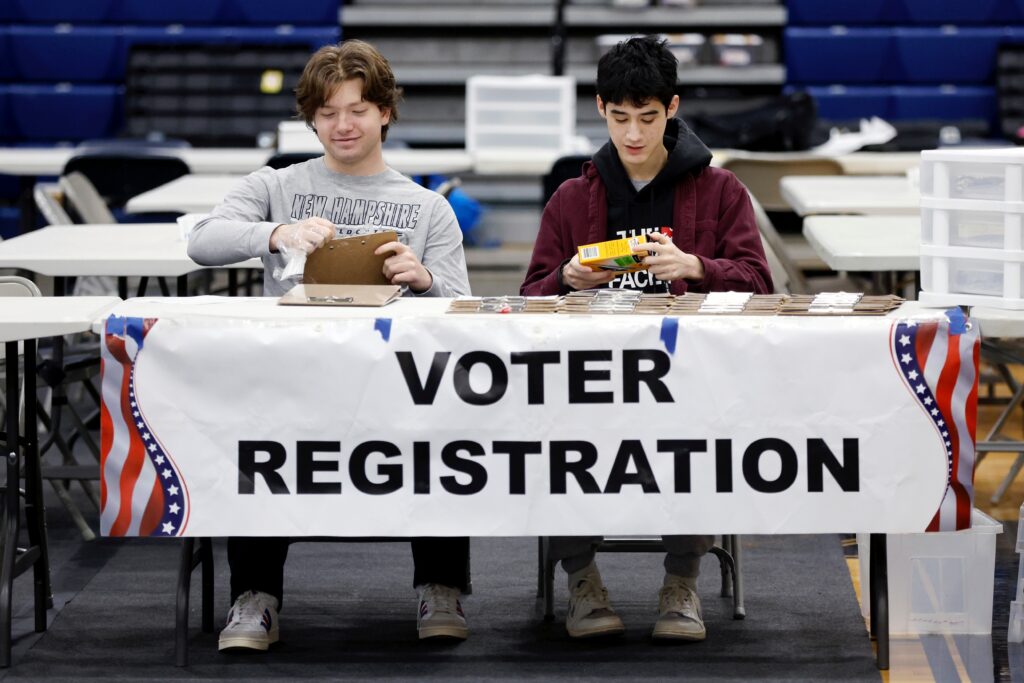
In a loss for voters, a federal judge in New Hampshire will allow the state’s new ban on using student IDs for voting to remain in place for the Sept. 8 primary election. But the judge left the door open to possibly ban the law for November’s general election.
The pro-voting group Coalition for Open Democracy (COD) sued New Hampshire last month to block the GOP-backed state law from taking effect, but District Court Judge Joseph Laplante — a George W. Bush appointee — cited the Purcell principle in denying the motion for a preliminary injunction. Purcell is a legal doctrine stating that courts should not change voting rules too close to an election because it could confuse voters and officials.
“After reviewing the parties’ submissions and holding requested oral argument, the court denies the motion for a preliminary injunction to the extent it requests relief prior to the September 8 primary election,” Laplante wrote. “The Purcell doctrine dictates that the court refrain from interfering in the State’s election law on the eve of the election, with absentee voting already underway.”
In April, Gov. Kelly Ayotte (R) signed HB 323 into law, which eliminated student IDs as an acceptable form of identification for obtaining a ballot. Secretary of State David Scanlan (R) promptly issued guidance to election officials that they can no longer accept student ID to prove a voter’s identity when registering to vote, requesting an absentee ballot, or checking in to vote.
Get updates straight to your inbox — for free
Join 350,000 readers who rely on our daily and weekly newsletters for the latest in voting, elections and democracy.
In its lawsuit, COD argued that the GOP-backed law illegally discriminates against young voters and that Scanlan exceeded his authority by issuing his directive to election officials.
“The burdens HB 323 creates—which are addressed at length below—were magnified by Secretary Scanlan on April 23, 2026, when he unlawfully extended the ban in HB 323 to the voting registration process, in excess of any power he possesses,” COD wrote in its lawsuit. “As a result, young voters in New Hampshire must now navigate a burdensome bureaucracy to exercise their fundamental right to vote,” the complaint states. “This scheme unconstitutionally burdens the right to vote, discriminates against young voters on account of their age, and unlawfully rewrites New Hampshire’s election statutes.”
The GOP has long sought to suppress student voting — and New Hampshire has been one of the states leading the efforts with laws targeting residency requirements for voter registration.
Though Laplante’s order is a major setback for many New Hampshire students who were planning to cast their ballots in the state’s primary next week, it might not be a permanent one.
“The general election may be on different footing,” Laplante wrote. “At 63 days out, the November election has not yet reached the stage of active ballot distribution and voting in the way the primary has…This suggests the possibility of an orderly transition back to the previous voter identification laws is at least logistically feasible for that election, even if it would be difficult.”