New Hampshire sued for banning student IDs to vote as part of GOP’s broader attack on young voters
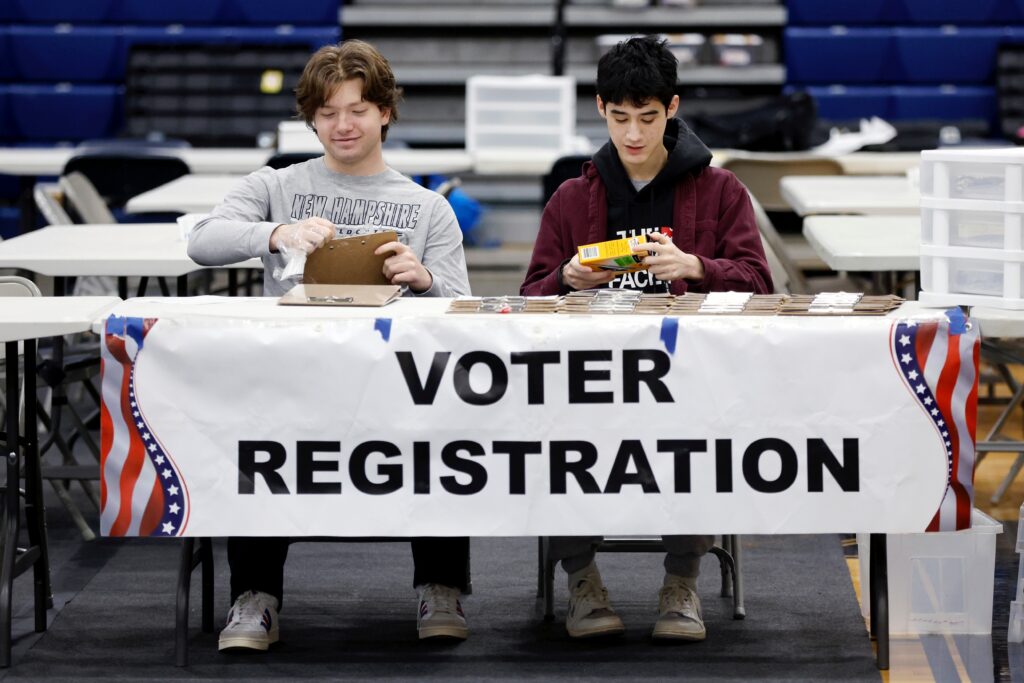
A voting rights group sued New Hampshire officials Tuesday over the state’s new ban on student IDs for voting, arguing the GOP-backed law illegally discriminates against young voters and that the Republican secretary of state exceeded his authority by extending the restriction to voter registration.
The Coalition for Open Democracy filed the federal lawsuit against New Hampshire Secretary of State David Scanlan and Attorney General John Formella, asking a court to block House Bill 323 (HB 323) weeks before the state’s Sept. 8 primary.
Get updates straight to your inbox — for free
Join 350,000 readers who rely on our daily and weekly newsletters for the latest in voting, elections and democracy.
Gov. Kelly Ayotte (R) signed HB 323 in April, eliminating student IDs as an acceptable form of identification for obtaining a ballot.
The law took effect June 2. But the lawsuit challenges more than the law itself.
After the law was signed, Scanlan issued guidance telling election officials that student IDs could no longer be used to prove identity when registering to vote, requesting an absentee ballot or checking in to vote. The plaintiffs argue that HB 323 only changed the law governing identification used to obtain a ballot and did not amend the separate voter registration statute.
The lawsuit alleges Scanlan effectively expanded the restriction without authorization from the Legislature, violating the New Hampshire Constitution’s separation-of-powers protections.
“The burdens HB 323 creates—which are addressed at length below—were magnified by Secretary Scanlan on April 23, 2026, when he unlawfully extended the ban in HB 323 to the voting registration process, in excess of any power he possesses. As a result, young voters in New Hampshire must now navigate a burdensome bureaucracy to exercise their fundamental right to vote,” the complaint states. “This scheme unconstitutionally burdens the right to vote, discriminates against young voters on account of their age, and unlawfully rewrites New Hampshire’s election statutes.”
The pro-voting group also argues that the student ID ban violates the First, 14th and 26th Amendments.
The 26th Amendment prohibits states from denying or abridging the right to vote for citizens 18 and older on account of age. The lawsuit alleges HB 323 disproportionately harms young voters, who are significantly less likely than older voters to have driver’s licenses and more likely to rely on student IDs.
The practical consequences can be significant, the group argues.
Students without a driver’s license or passport may now need to travel to a state DMV office to obtain a non-driver ID. Open Democracy says it has redirected resources toward helping young voters navigate that process and has even raised money to help cover the $20 ID fee.
The lawsuit is the latest chapter in a long-running fight over student voting in New Hampshire. Republican lawmakers have repeatedly pursued restrictions affecting college voters, including past attempts to tighten residency requirements.
The new complaint argues HB 323 continues that history by targeting an identification overwhelmingly used by younger voters.
HB 323 also comes amid a broader Republican push to restrict voting access in the state.
In 2024, New Hampshire enacted HB 1569, which eliminated affidavit options that allowed eligible voters without certain documents in hand to prove their qualifications and vote. A federal judge struck down key portions of that law in May, finding the restrictions imposed an unjustifiable burden on eligible voters.
The state appealed and asked the First Circuit Court of Appeals to pause that ruling while the appeal proceeds. That law remains blocked.
Now, another major piece of New Hampshire Republicans’ voting agenda is headed to court — this time over a restriction aimed squarely at a form of identification commonly carried by young voters.