Missouri blocks anti-gerrymander referendum from November ballot in attempt to silence voters
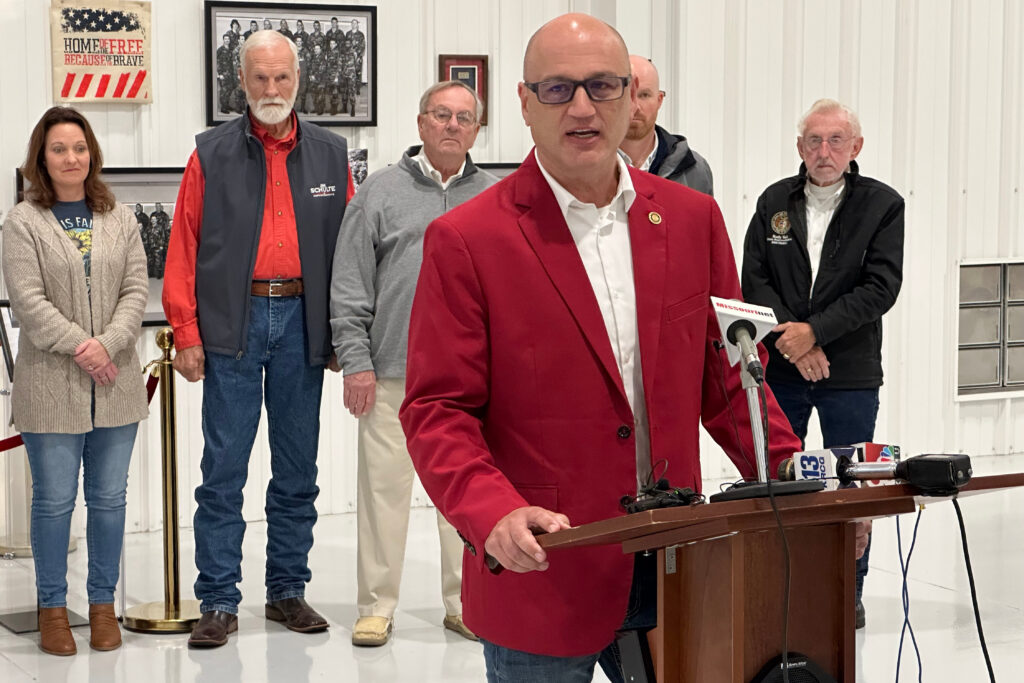
Nearly a year after voting advocates launched a campaign to prevent a pro-GOP gerrymander from taking effect in Missouri, Secretary of State Denny Hoskins (R) officially blocked the citizen-initiated referendum on the new congressional map from appearing on the ballot in November.
Hoskins said he rejected the referendum as legally insufficient because, in his view, Missouri voters have no constitutional authority to overturn a congressional map enacted by the state legislature.
“After careful consideration, I have determined the challenge to the new Missouri First congressional map to be insufficient due to it being unconstitutional,” Hoskins said during a press conference. “At issue is not the number of signatures turned in to challenge the new congressional map, but the fact that the referendum itself is null and void by virtue of the fact that it is unconstitutional.”
Get updates straight to your inbox — for free
Join 350,000 readers who rely on our daily and weekly newsletters for the latest in voting, elections and democracy.
Hoskins said his decision was supported by advice from his general counsel and Attorney General Catherine Hanaway. Hoskins declared that House Bill 1, which contains the new congressional map, “continues to be the law of the land”
He also invoked the Election Clause of the U.S. Constitution, which allows state legislatures to set the “Times, Places and Manner of holding Elections,” to argue that prevents voters from challenging the map through a referendum.
“The Missouri Constitution cannot be interpreted to strip away the General Assembly of its authority over redistricting absent a clear statement,” Hoskins said. “For those reasons, I do rule the referendum insufficient because it is unconstitutional.”
Voter advocates are expected to immediately challenge the move and ask the courts to ensure that Missouri voters have the final say on the map.
It’s a long shot, but opponents continue to argue the battle is not over.
Hoskins acknowledged that the decision would certainly be challenged in court within hours.
“I had no doubt in my mind that I will be challenged on this, and there may be even a lawsuit filed before 5 p.m. tonight,” he said, adding that the state was prepared to defend the rejection.
Last year, Missouri Republicans bent the knee to President Donald Trump and joined his redistricting war, passing a new congressional map that stripped political power from Black voters in Kansas City and dismantled a congressional district currently represented by Rep. Emanuel Cleaver (D).
But Republicans quickly encountered a problem with their plan: Unlike in the other GOP-controlled states that redrew electoral maps, Missouri voters had a uniquely powerful tool to fight back: The state constitution gave them the right to put a referendum on the ballot and veto unpopular state legislation.
Missourians turned in more than 300,000 petition signatures in December to put the redistricting referendum on the ballot, almost three times more than necessary to qualify. Historically, once signatures are turned in, Missouri officials have paused the challenged legislation until voters weigh in. But Hoskins broke with that precedent, proclaiming that the gerrymandered map would be used in this year’s elections and effectively blocking voters’ rights to weigh in.
By March, the referendum cleared an important milestone: Local clerks verified enough signatures to confirm that the measure had qualified for a statewide vote.
However, the referendum still needed to be certified by the secretary of state’s office. Hoskins delayed his decision until Aug. 4 — the last possible date, and also the same day as the primary election.
“What they are hoping to do is to lose slowly enough so that they may conduct an illegal election and provide President Trump a congressional seat against the requirements of the Missouri Constitution and, I think, the wish of Missouri voters,” Richard von Glahn, who is leading the referendum effort, told Democracy Docket in March.
Hoskins’ refusal to certify the referendum petition does not come as a surprise.
He and other GOP state officials filed an unprecedented federal lawsuit last year arguing the referendum violated the Missouri and U.S. constitutions.
The judge dismissed the case. But part of his decision offered an early sign of trouble ahead for the referendum effort: The judge wrote that Hoskins didn’t need a federal court to stop the referendum because he had the power to block it on his own.
“Fortunately for the State, Secretary Hoskins has a tool at his disposal that almost no other litigant could boast — the power to declare the petition unconstitutional himself,” U.S. District Judge Zachary M. Bluestone wrote.
Eight months later, Hoskins has finally done just that, rejecting the referendum as unconstitutional after delaying his final decision until the legal deadline, all in an effort to thwart voters.
Now the battle returns to the courtroom.