In Missouri redistricting battle, GOP wants to lose ‘slowly enough’ to win, opponents say
 Prefer us on Google
to see more of our voting rights news coverage when you search.
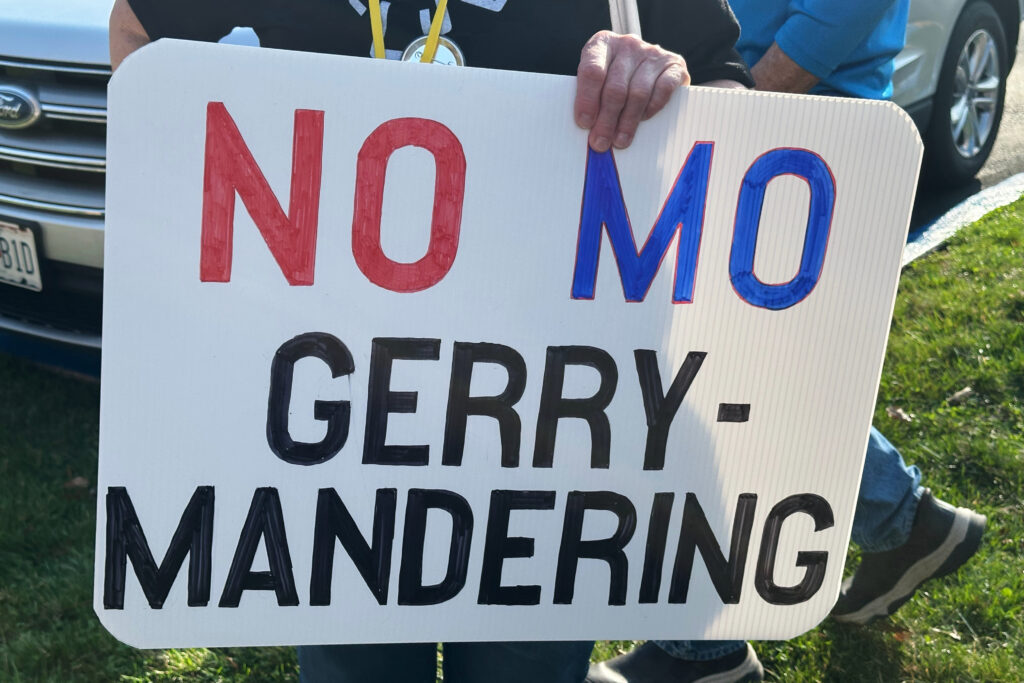
It’s no accident that six months after Republicans rushed their Missouri congressional gerrymander into law, it’s still unclear which map is in effect for the 2026 election. In fact, opponents of the gerrymander say that delay has been the goal all along.
Richard von Glahn, who is leading the Missouri opposition effort, told Democracy Docket the GOP’s strategy has been to run out the clock on efforts to block the new map.
“What they are hoping to do is to lose slowly enough so that they may conduct an illegal election and provide President Trump a congressional seat against the requirements of the Missouri Constitution and, I think, the wish of Missouri voters,” von Glahn said.
Get updates straight to your inbox — for free
Join 350,000 readers who rely on our daily and weekly newsletters for the latest in voting, elections and democracy.
Von Glahn leads People Not Politicians, the group that turned in more than 300,000 signatures in December to hold a citizens “veto referendum” on the map.
The latest likely example of Missouri’s slow-walking, according to von Glahn? They’re not rushing to count those signatures.
People Not Politicians began organizing last fall, when Missouri quickly passed a new congressional map after Trump demanded GOP-controlled states redraw their congressional districts to deliver more Republican seats in Congress.
For over 100 years, the Missouri Constitution has given voters the right to veto legislation, much like the governor has. But Republicans are determined to stop Missourians from holding a vote on the map. They are now insisting — in a break with precedent — that the new map is already in effect, even though Missourians haven’t yet had a chance to vote on it.
Missouri Secretary of State Denny Hoskins, an elected Republican, has attempted to thwart the redistricting referendum over and over — echoing similar GOP efforts across the country to crack down on direct democracy.
County election offices in Missouri are now verifying signatures to determine whether the referendum has qualified to be on the ballot. The petition must be signed by five percent of the voters in six out of eight congressional districts in the state.
And while the referendum is now well beyond that threshold in five out of six districts, signature verification in the final district – Congressional District 7 – has crept along at an astoundingly slow pace. As of this week, it’s just 38 signatures shy of the goal.
With thousands of signatures still uncounted in the district, Von Glahn said he expects to hit the goal by next week. But the pace has been “somewhat glacial” as some counties appeared to stop counting, while others seemed to finally get started, he told Democracy Docket.
After People Not Politicians repeatedly requested data on the signature verification progress, the secretary of state’s office began posting it online. It revealed heavily uneven progress in signature verification.
For example, Greene County – a large county in District 7 – hasn’t verified any signatures since March 2, according to the data People Not Politicians obtained from the Secretary of State’s Office. The county has checked just under 10,000 signatures and still has thousands of unverified signatures to go.
“What we found when we started sunshining these documents is that some counties hadn’t started and were not aware that they should start, so there was some miscommunication or poor communication from the Secretary of State’s office to the local clerks,” von Glahn said. “And so in some cases, we had to get that cleared up, that they could get started.”
In a statement to Democracy Docket, a spokesperson for Hoskins said the signature verification process can be time consuming because of “the complexity of the review and the volume of submissions.”
“Signature verification is conducted by local election authorities in accordance with Missouri law, and the process involves multiple steps to ensure accuracy, consistency, and compliance,” she said.
The timing of signature verification is an important puzzle piece in the ongoing litigation, because Missouri Republicans have argued the new map can’t be suspended until there’s evidence that enough signatures have been submitted, von Glahn said.
“That’s a bogus argument,” von Glahn said. “But if you take that argument at its face, well, now they’re faced with the fact that there’s evidence that enough signatures are submitted.”
Ultimately, the signature counting process is just one window into the broader attempt to enact the Trump gerrymander by running out the clock.
Missouri Attorney General Catherine Hanaway initially tried to reject the referendum petition in September, only for Hoskins to finally approve it three weeks later while claiming thousands of signatures were already invalid. When referendum organizers filed a lawsuit to have those signatures included in the count, Republicans repeatedly filed requests for a change of judge, delaying the proceedings, then told the court there was no rush to issue a ruling. Hoskins then proposed misleading ballot language for the measure, forcing referendum supporters into another lengthy legal battle.
Meanwhile, Missouri Republicans spent $2.9 million trying to prevent voters from signing the petition.
“They are trying to slow-walk the process in hopes that they can use it in the 2026 election, and so we’ll have one election with rigged maps before voters overturn them and reject it,” von Glahn said.
He’s not the only one pointing out the strategy. Chuck Hatfield, an attorney representing the referendum organizers, told a judge this week that he’s concerned state officials have an end game in sight.
“I am worried that what is going on here is an attempt to delay all this, and whatever happens, they are going to say it is too late,” Hatfield said in a hearing for an ongoing case about the signatures.