This week at Democracy Docket: A rare pro-voting ruling from the Supreme Court — and a revealing shift among election deniers
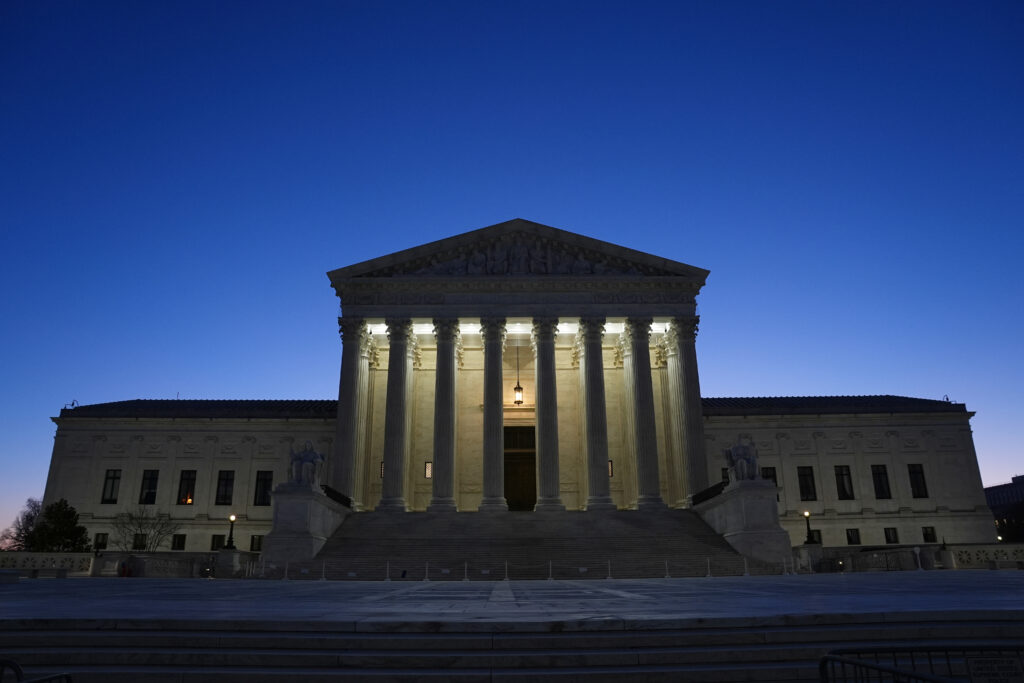
In the biggest voting news of the week, the Supreme Court rejected a Republican attempt to restrict mail voting by barring states from accepting ballots that arrive after Election Day.
At Democracy Docket, we went deeper on Watson v. RNC than any other news outlet.
Get updates straight to your inbox — for free
Join 350,000 readers who rely on our daily and weekly newsletters for the latest in voting, elections and democracy.
• Within minutes, Jim Saksa brought you the news, and a close look at the 5-4 decision.
• Matt Cohen covered the anguished responses from President Donald Trump and MAGA (“this is how our country dies,” one overwrought anti-voting activist wrote).
• Jacob Knutson reminded us that the case, by arguing that election day is a single day, was always intended in part to lay the groundwork to kill early voting as well — and that Republicans won’t give up on that plan.
• As if to prove it, Matt noted that the influential anti-voting activist Cleta Mitchell is already claiming the ruling in fact opens the door to kill off early voting (it’s not clear why). “Let’s file some cases,” Mitchell said.
• Jim followed up by looking at what the ruling means for Trump’s wider assault on voting, which has suffered an embarrassing string of court losses in recent weeks.
• Yunior Rivas reported that Trump is trying to use the SCOTUS loss to push for his monster voter suppression blll, the SAVE America Act — even though the measure has nothing to do with when mail ballots arrive.
• And Matt rounded up the responses from Democrats and voting rights advocates, who hailed the decision as a major win for voters and democracy.
There was other good news for voters, too. As Jim reported, a court blocked the U.S. Postal Service from implementing Trump’s executive order that takes a different approach to restricting mail voting. That’s the second ruling blocking the order — but the first one applied only to the 23 Democratic-led states that had filed suit. This one applies nationwide.
But it wasn’t all positive. Yunior reported that SCOTUS said this week it would hear a Republican-backed case out of Arizona which aims to weaken enforcement of the 90-day “quiet period.” That’s the three-month period before an election when federal voting law bars states from conducting voter purges, since wrongly removed voters may not have time to fix the error. As Yunior explained in a followup, If the justices accept the GOP’s argument, it could lead to widespread removals of eligible voters.
Finally, Matt noticed a fascinating shift in the rhetoric being used by election deniers: They’re now more likely to say elections are “rigged” than “stolen.” What’s the difference? “Stolen” refers to fraud, which they’ve utterly failed tp prove exists at significant levels. “Rigged” has a looser meaning that can encompass pro-voting laws — like no-excuse mail voting — which the right sees as simply making voting too easy.
It’s another reminder that for many conservatives, it’s never really been about fraud. It’s been about a basic distrust of voting — and democracy — themselves.