Cleta Mitchell says Supreme Court’s mail ballot ruling opens door to kill early voting: ‘Let’s file some cases’
 Prefer us on Google
to see more of our voting rights news coverage when you search.
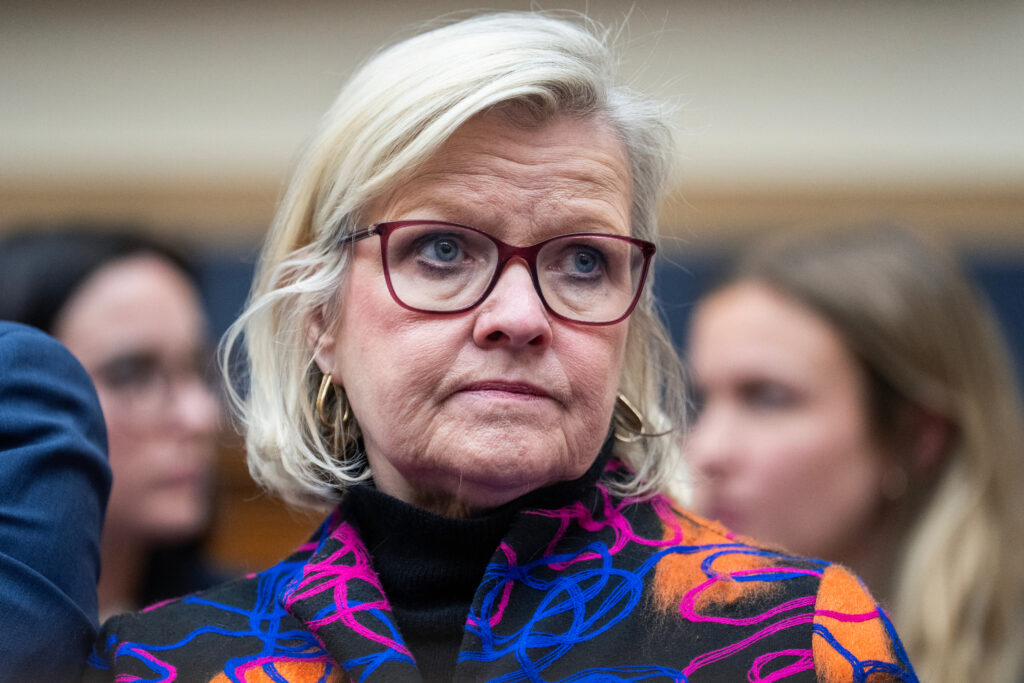
After the U.S. Supreme Court’s mail ballot ruling Monday, anti-voting lawyer Cleta Mitchell believes there’s now a legal avenue to kill early voting — and she doesn’t want to wait to sue.
Mitchell’s attack on early voting offers a stark reminder of the right’s remarkable zeal to abolish almost any form of voting that expands access.
“We have to have the lawyers on our side, and all the legal groups need to get together, and we need to pick through this and start filing lawsuits immediately,” Mitchell said on former Trump advisor Steve Bannon’s podcast Monday.
In a 5-4 decision in Watson v. Republican National Committee (RNC), the nation’s highest court upheld state laws that allow grace periods for ballots mailed by Election Day. Currently, 14 states have laws allowing mail ballots postmarked by Election Day to be counted if they arrive after. Writing the majority opinion, Justice Amy Coney Barrett rejected the RNC’s argument that federal laws setting a date for elections preempted states from accepting ballots after that day.
Get updates straight to your inbox — for free
Join 350,000 readers who rely on our daily and weekly newsletters for the latest in voting, elections and democracy.
“The Framers recognized the difficulty of crafting election laws ‘applicable to every probable change in the situation of the country,’ Barrett wrote. “So instead of constitutionalizing election law, they decided that ‘a discretionary power over elections’ needed to be lodged ‘somewhere.’ Suffice it to say, that power was not lodged in this Court.”
But Mitchell told Bannon that her interpretation of Barrett’s opinion opens a path to legally challenge states with early voting periods.
“As I am reading through this majority opinion, I’m thinking… if they say that the act of voting is supposed to take place on Election Day, and that’s separate from receiving the ballot, I think that’s crazy, but that means early voting is out the door,” Mitchell said. “So let’s get on it. Let’s file some cases.”
Mitchell’s case to kill early voting might be a legal longshot — at least given the majority’s opinion in Watson, in which Barrett specifically defended early voting.
Barrett wrote that if the Court adopted the RNC’s legal theory in Watson, “early voting would also be at risk.”
Barrett also noted that both the RNC and Trump’s Department of Justice — which joined the RNC to challenge mail-ballot grace periods — agreed in oral arguments earlier this year that the election-day statutes permit early voting.
Barrett wasn’t alone in her defense of early voting.
Justice Samuel Alito, who penned the dissent, endorsed the Court’s majority opinion that election-day statutes allow for early voting.
“No matter when a State receives voters’ individual ballots, the electorate’s choice is not made until all ballots have been cast and collected,” Alito wrote. “So long as that occurs on the Tuesday after the first Monday in November, the election-day statutes are satisfied.”
Still, plenty of others on the right have used the Watson case to make clear that they’re coming for early voting, too.
“Election Day means Election DAY!” Harmeet Dhillon, who heads the DOJ’s Civil Rights Division, said in a social media post after the Supreme Court said it would hear Watson earlier this year.
“Go back to Election Day—not election month—and require voters to prove they are who they say they are,” Sen. John Kennedy (R-La.) said in an interview Monday. “That’s how we earn back the American people’s trust.”