This week at Democracy Docket: Trump’s attack on mail voting advances, while Georgia Republicans retreat
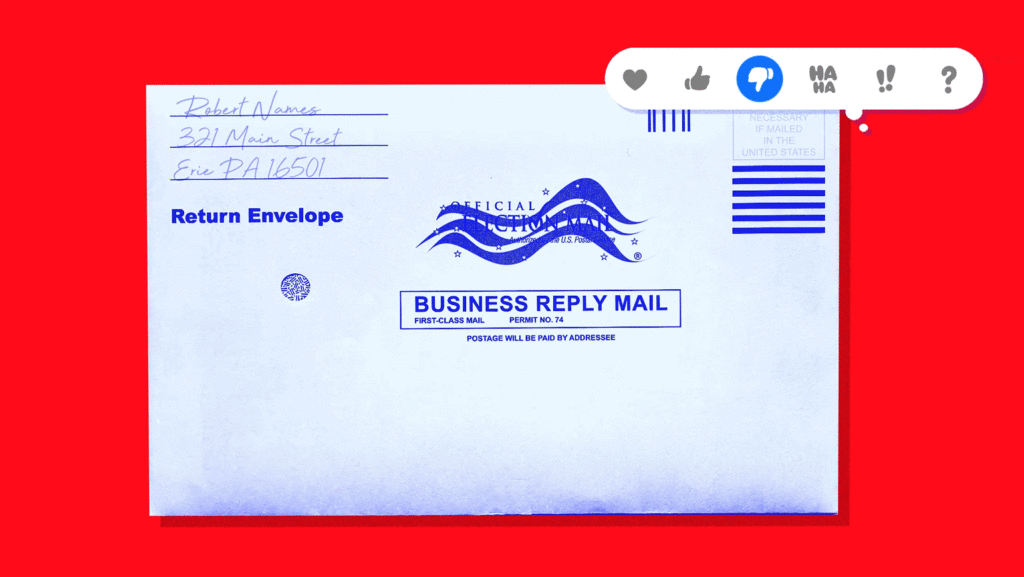
The legal battle over President Donald Trump’s effort to crack down on mail voting is heating up. And Democracy Docket is covering it more closely than any other news outlet.
On Wednesday, Jim Saksa reported that Democrats asked an appeals court to block Trump’s dangerous executive order, issued in March, which aims to require that states send mail ballots only to voters on federally created lists. Democrats argued that a lower court judge, appointed by Trump, erred when he ruled their lawsuit was premature, and pointed to concrete steps the administration has already taken to implement the order.
Get updates straight to your inbox — for free
Join 350,000 readers who rely on our daily and weekly newsletters for the latest in voting, elections and democracy.
The next day, we learned about more steps in that direction. Matt Cohen and Yunior Rivas reported on a memo issued by the Department of Homeland Security, confirming that the first phase of building a national mail voter list — a key part of Trump’s scheme — will be complete by the end of the month. The memo also said that states will get the list before voters have the ability to check it for errors, raising concerns that eligible voters could be purged from the rolls with little recourse.
The U.S. Postal Service (USPS), too, is moving ahead with its part of the plan. Yunior noted a federal court filing Thursday disclosing that USPS has begun the process of creating a new records system to track mail ballots.
Perhaps no surprise, then, that on the same day, a federal judge ruled that a different challenge to Trump’s order — this one brought by a group of state attorneys general — could proceed as it relates to the midterms. As Jacob Knutson reported, the judge noted that multiple federal agencies are actively implementing the order, and that the actions directed by the order “will affect the upcoming election.”
Trump’s order has grabbed many of the headlines. But at Democracy Docket, we think it’s crucial to make sure you’re aware of the threats to fair elections that have flown further under the radar, too.
In that vein, Jim told you about a brewing GOP effort to allow states to purge voter rolls during the 90-day “quiet period” before an election — something that the National Voter Registration Act has long been understood to ban. In the Trump administration’s lawsuit over Georgia’s voter rolls, it’s asking a court to sidestep the ban, which would badly weaken the landmark 1993 law. And the Supreme Court is considering hearing a different case, this one from Arizona, in which Republicans are likewise pushing to loosen the ban as it applies to noncitizens.
We also kept you up to date on the enemies of voting who are trying to get elected to key positions this fall — from which they could work to subvert the next presidential election. Matt compiled an invaluable list of the 19 GOP candidates most worth keeping an eye on from that standpoint.
Among the 19 are Jim Marchant, the far-right Nevada election denier running for secretary of state, and Tim Fleming, a supporter of restrictive voting rules who’s running for the same post in Georgia. As Yunior reported, both men this week won the GOP nomination in their races — putting them in line to control the voting systems of two key swing states heading into 2028, should they win in November. As if there weren’t already enough at stake this fall.
Finally, we got some good news from Georgia on the redistricting front. As Jen Rice reported, Republicans unexpectedly backtracked at the last minute on a plan to gerrymander congressional and state legislative districts for 2028 and beyond. To be clear, it’s not as if they had a genuine change of heart. As Yunior wrote, they got cold feet after vigorous protests from civil rights groups and Democrats made clear the effort could backfire by energizing Black voters in the state this fall.
Still, the threat hasn’t gone away — there are fears Republicans may just wait till after the midterms are over to enact their plan. That’s why we won’t take our eye off the ball — there or anywhere else where fair elections are under threat.