Trump is undermining the people who run our elections. Here’s how we can fight back
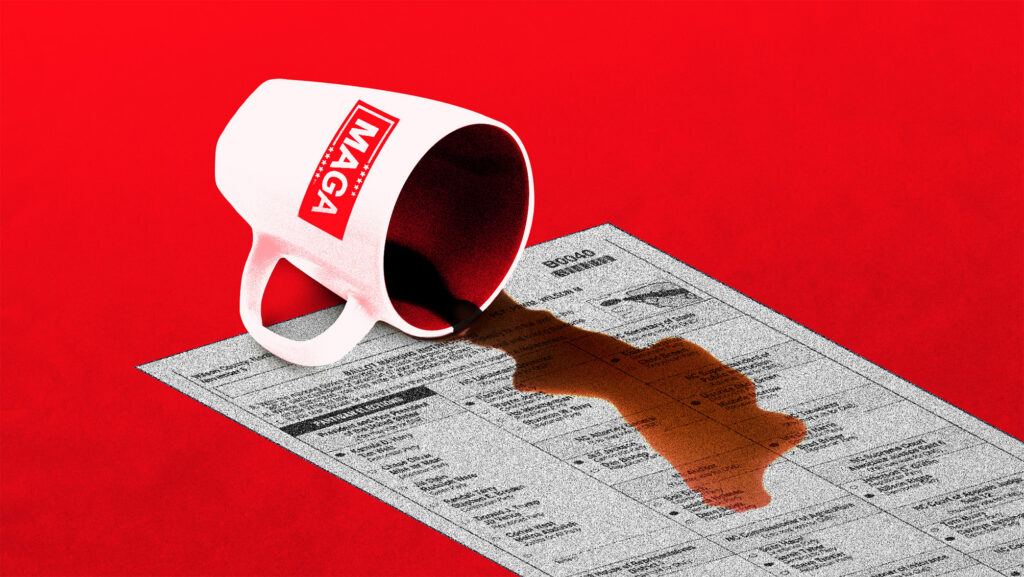
There is a group of Americans who wake up every day thinking about one thing: making sure your vote counts. They are county clerks, local election directors, state officials — largely nonpartisan, often underpaid, working out of government buildings or strip mall offices you’ve driven past a hundred times without noticing. They are the infrastructure of democracy. And right now, they are under pressure unlike anything most of them have ever seen.
In a functioning version of American democracy, the federal government helps election administrators do their job. It funds cybersecurity support. It coordinates the collection and analysis of threat information and helps share it with election officials. But it also respects constitutional boundaries and stays in its lane, because the structure of American elections — decentralized, state-run — exists for a reason.
We are not living in that version right now. And none of what has followed is normal.
Get updates straight to your inbox — for free
Join 350,000 readers who rely on our daily and weekly newsletters for the latest in voting, elections and democracy.
Donald Trump’s actions threaten free and fair elections. As part of his effort, election administrators are being undermined as the federal government overreaches its power.
In the first months of this administration, it cut funding and staffing for CISA and the EI-ISAC — the primary federal resources that help state and local election officials defend against cyberattacks and outside interference. To put this into context, at a time when foreign adversaries are actively probing American election infrastructure, the federal government defunded the people protecting it. That is the opposite of what a government serious about election security would do.
That was only the beginning. There have been open threats to “nationalize” elections, or for one party to seize administrative control in key jurisdictions. The FBI seized election materials in Fulton County, Georgia, based on an affidavit that legal and technical experts found riddled with problems. Federal agencies have demanded voter rolls containing private information that states are legally obligated to protect. The Office of the Director of National Intelligence — an intelligence agency — has been pulled into conversations about election administration, in which it has no legal role. Federal agencies are filling key positions with individuals whose primary qualification seems to be years of parroting repeatedly disproven claims about stolen elections.
None of this is normal. The administration has no authority over how states and localities run their elections — that is not a matter of debate, it is the structure of American law. And taken together, these actions are not a series of unrelated stumbles. They are a pattern — one that fits a larger pattern of behavior that has alarmed constitutional scholars, former officials of both parties, and anyone paying close attention to what democratic erosion actually looks like in practice.
Which brings us to the hard question: how do voters find the truth in a sea of untruths?
It starts with recognizing the tactic. One function of constant, escalating chaos is that it exhausts the people trying to track it. When a new outrage arrives before the public has fully processed the last one, accountability becomes nearly impossible. This is not accidental. The disruption is, at least in part, the point — as is the erosion of public confidence. You don’t have to prove fraud to damage democracy. You only have to convince enough people that the system is broken that they stop trusting results and start doubting their own power to shape them.
The antidote to manufactured confusion is knowledge. Not every claim deserves equal treatment. The evidence for widespread fraud has been sought exhaustively — by courts, by state officials of both parties, by researchers — and has not materialized. What has materialized is a federal government taking repeated steps to hinder the people who run elections at the exact moment they most need support.
And that might work, if all that was happening in response was handwringing.
Instead, Fulton County fought back. Election officials across the country are refusing to be rattled. They are talking to each other, sharing information, and preparing for every scenario. Lawyers are scrutinizing affidavits. Journalists are asking hard questions. Voting rights organizations are mobilizing. Underneath the imposed chaos, a serious, unglamorous, largely invisible effort is underway to make sure the next election takes off and lands safely. These are not people who will let disruption become an excuse for failure.
So here is what the rest of us can do. Know who runs elections in your county. Understand the difference between a legitimate federal inquiry and a fishing expedition with no legal basis. If you see something that looks like intimidation or overreach, say so — loudly and specifically. The people administering your elections are not asking for much; they are asking to be allowed to do their jobs, and you can help. Volunteer, and bring your friends.
The noise is not going to stop before November. But neither will those Americans who’ve dedicated their careers to making sure your vote counts — and neither should you. Recognize what is happening. Say clearly that it is not normal. And do not let the volume of the chaos convince you that the outcome is already written.
It isn’t, and it’s up to the voters to write it.
Pamela Smith is the President & CEO of Verified Voting, a nonpartisan organization whose mission is to promote the responsible use of technology in elections. Smith plays a national role in safeguarding elections, advocating for secure and fair voting processes, and building working alliances between advocates, election officials, and other stakeholders.