To protect voting rights after Callais, we need to invest in red states
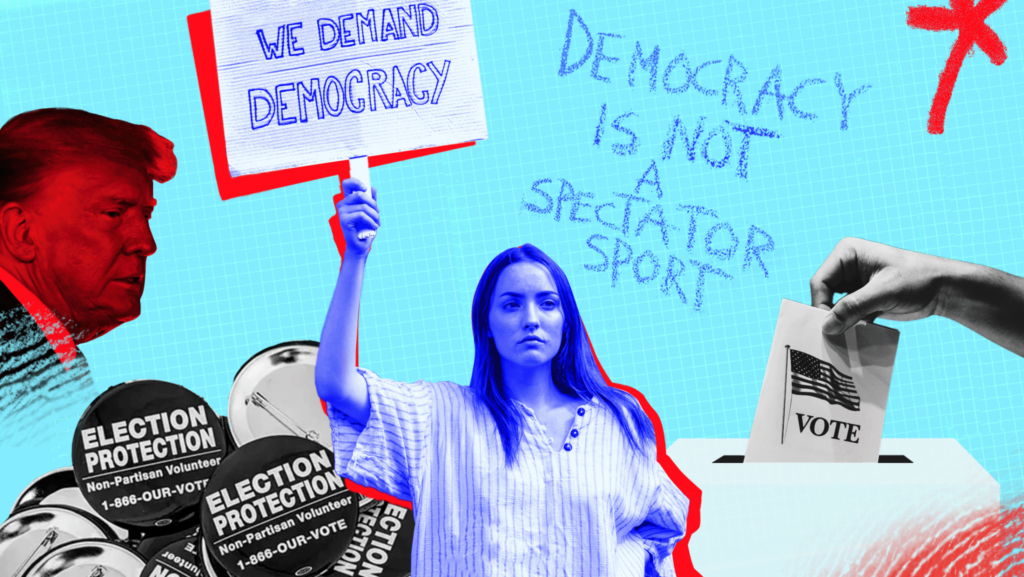
Three weeks ago, the Supreme Court finished what it started in 2013. In Louisiana v. Callais, a 6-3 majority gutted Section 2 of the Voting Rights Act — stripping Black voters in Louisiana of the two congressional districts they had fought for, litigated and finally won. Decades of civil rights law, rendered unenforceable. One decision. Six votes.
The reaction has been swift and understandable. Outrage. Condemnation. Calls to fight back.
The calls are right, but they are not enough. Because the deeper lesson of Callais is not just that we must fight back. It’s that the people who actually live in these states have been fighting all along and all alone. Support for them today comes in far too little and decades too late.
Get updates straight to your inbox — for free
Join 350,000 readers who rely on our daily and weekly newsletters for the latest in voting, elections and democracy.
Black voters in Louisiana didn’t need this ruling to tell them what was at stake. Voting rights organizers across the South didn’t need a Supreme Court opinion to know what was being built against them. They have been sounding the alarm and doing the work to protect their hard-won progress for years. What failed them wasn’t effort. It was a national political world that decided these places weren’t worth sustained investment.
As someone who spent eight years in Congress — and many more among influential Democratic, progressive and social justice-oriented national circles — I am intimately familiar with this landscape. The political target lists that light up the East and West but ignore the South and almost everything in between. The oft-traveled flights to the same old battleground fights.. The addiction to boom and bust spending; if money comes in, it’s late and ineffective.
That is the failure Callais should force us, myself included, to reckon with.
Because this ruling didn’t come out of nowhere. It was built on decades of uncontested Republican dominance at the state level — the kind of durable political infrastructure that, over time, gives you the legislature, the map, the governor’s mansion, the court, the case.
The deeper lesson of Callais is not just that we must fight back. It’s that the people who actually live in these states have been fighting all along and all alone.
Shelby County v. Holder, out of Alabama in 2013, which gutted the preclearance protections that had guarded against exactly this kind of voter suppression for nearly 50 years. Dobbs v. Jackson Women’s Health Organization, decided out of Mississippi in 2022, which overturned 50 years of federal precedent because one side spent decades building power in the states, while too many on our side focused almost exclusively on federal elections and federal courts.
The examples are endless, the pattern consistent, and the lesson the same: ceding state terrain is how you eventually lose federal terrain, too. It isn’t a coincidence, it is a strategy. Their well-funded, long-term strategy. And for too long, we didn’t have one to match it.
Americans for Prosperity and its affiliated Koch network have chapter operations in 35 states, built over decades with investment that dwarfs anything the pro-democracy movement has put into comparable terrain — more than half a billion dollars from a single funding source into AFP alone between 2013 and 2023.
We will not outspend them overnight. But we can — and must — stop ceding the field.
That means making a long-term commitment to year-round community organizing in overlooked states: not parachuting in during election season and leaving. Instead, building the kind of sustained, locally-rooted infrastructure that earns trust over years and creates the conditions for civic participation to take root.
It means investing in the people and groups who are already there — because they have always been there, doing this work without support; not just organizing but taking care of each other in the face of the care their country has withdrawn or denied.
And it means accepting that this is not a two-year project or a four-year project. The other side has been at this for forty years. We don’t win by matching their last sprint. We win by finally committing to the marathon.
The hard truth that Callais demands we face extends beyond Louisiana — though what is happening to Black voters in the South is the most egregious and urgent expression of it. But all across this country, working people have faced their own version of governance without accountability: state legislatures that override what their own constituents vote for, basic services stripped, with no organized opposition to push back. The consequences fall hardest on Black communities in the South, as all of our country’s ugliest oppressions and injustices do. But no one is left untouched when we stop competing.
Callais is a gut punch. It is also a clarifying moment. The question is not whether we should fight — of course we should. The question is whether we will finally fight where the battle actually is: in the state legislatures, at the local organizing tables, within the communities that have been asking for this investment for a generation and doing the work in the meantime without it.
The organizers I work with in states like Mississippi, Alabama, West Virginia and Oklahoma didn’t need this ruling to tell them the stakes. They’ve known. The question has always been whether the rest of us were paying attention.
Joe Kennedy III is a former U.S. Representative from Massachusetts and the founder of Groundwork Project, which supports year-round community organizing in overlooked states.