The SAVE America Act: a modern-day poll tax
Imagine that you just moved to Virginia from across the country. You work long hours to provide for your family and your kids keep you busy, but you want to stay civically engaged.
You send in your voter registration form, but it bounces back. The Department of Elections says your driver’s license isn’t sufficient ID: you need proof of citizenship. You lost your birth certificate in the move and you don’t have a passport. In order to get these documents, you must either pay $165 dollars for a passport or pay and wait weeks for a new birth certificate to be shipped from the state of your birth. With a tight budget and election day looming, neither option is possible.
So you give up. You can’t vote.
Get updates straight to your inbox — for free
Join 350,000 readers who rely on our daily and weekly newsletters for the latest in voting, elections and democracy.
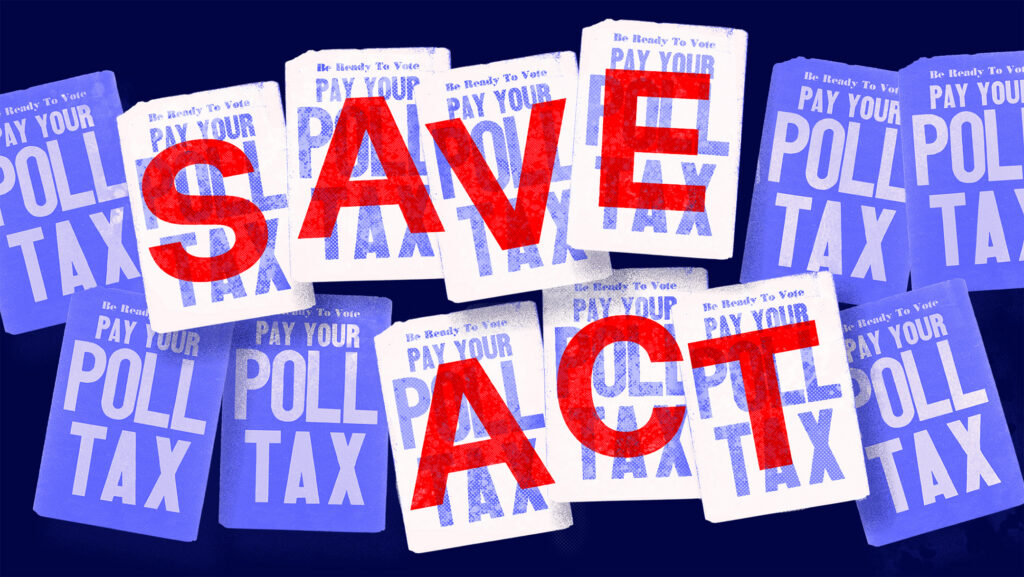
This is the reality of the SAVE America Act. This rollback of decades of progress and the implementation of a modern-day poll tax insults generations of people who fought tirelessly to expand voting rights under a system that did not extend liberty and justice to all.
When I was sworn into Congress, I took my oath of office with my hand on my father’s Bible. Inside, he kept the receipt of a Tennessee poll tax he paid when he registered to vote as a reminder of the struggle it took to exercise the sacred right to vote. Before him, my grandfather paid the same poll tax. My great-grandfather had to take a literacy test and find three white men to vouch for his character in order to vote. And my mother, grandmothers and great-grandmothers were shut out of the process entirely until the Voting Rights Act of 1965.
My family’s story is one of millions. Until the 24th Amendment banned poll taxes in 1964, they were implemented across the South to disenfranchise Black and poor voters. Before Congress passed the Voting Rights Act in 1965, states flatly ignored voices they felt they could afford to dismiss. A government by, of, and for the people only reflects the perspective, and therefore meets the needs, of those who are able to participate. Yet voter suppression tactics have been used throughout American history to shut some groups out.
We’ve seen a new era of voter suppression attempts in the 21st century, notably with the Shelby County v. Holder decision that struck down parts of the VRA and opened the door for new restrictive voting laws. Now, Congress holds the power to further narrow who can participate in our democracy. Alongside the Trump Administration, Congressional Republicans tout the SAVE America Act as a “common-sense” voter ID law to protect election integrity, deceiving millions of Americans about its true impact.
Congress holds the power to further narrow who can participate in our democracy.
In reality, the SAVE America Act specifically states that our most common forms of identification, state-issued IDs and driver’s licenses, aren’t sufficient. To register, voters would be required to have a passport, birth certificate or other specified proof of citizenship. More than 21 million Americans don’t have access to these documents, with lack of access disproportionately affecting communities of color, low-income populations and rural areas. And for anyone whose name no longer matches the one on their birth certificate, for example, women who took their husband’s last name, more documents are needed. Whether it’s the $2.12 my father paid in 1947, $130 for a new passport or over a thousand dollars for a certificate of citizenship, even a cent is too much — and illegal under the 24th Amendment.
Between 1999 and 2023, there were only 77 instances of non-citizens voting across the entirety of the United States — approximately three per year among millions of legitimate ballots cast. This data illuminates the truth. The SAVE America Act is not about protecting American elections: it’s an effort to stop certain communities from exercising their fundamental right to participate in our democracy. Legislators and concerned citizens alike must speak out against this dangerous bill to protect our hard-fought freedoms, and we must continue to hold institutions of power accountable.
As we monitor the SAVE America Act, the upcoming Louisiana v. Callais decision that could further erode the VRA and more, the story of our struggle and the voting rights of millions are on the line.
Rep. Jennifer McClellan is the first Black woman to represent Virginia in Congress. In the 119th Congress, she sits on the House Energy and Commerce Committee fighting to bring costs down for the American people. Prior to her election to Congress, Rep. McClellan served in the Virginia General Assembly from 2006 to 2023.