Standing up to DOJ’s voter roll power grab
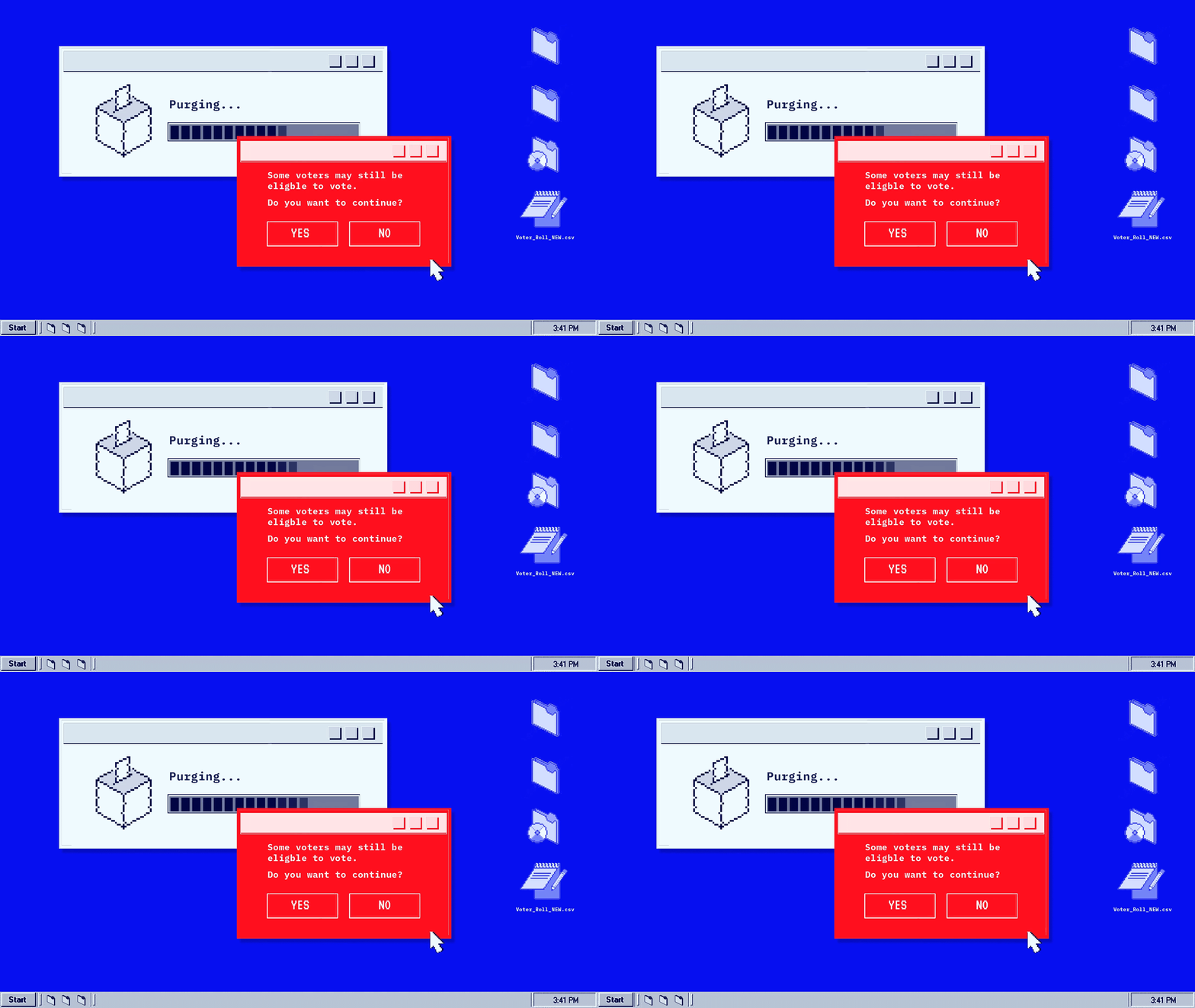
Donald Trump has a problem with free and fair elections. More than five years have passed, but he will stop at nothing to perpetuate the Big Lie that he won the 2020 election. This week, he sent FBI agents to raid the Fulton County election office for 2020 election materials. Now, the Trump Administration is marshalling the full force of the federal government to take private voter information across 44 U.S. states. This information includes full names, addresses, driver’s license numbers and Social Security numbers.
To date, the Department of Justice has sued 24 states and the District of Columbia for not complying with this request while inventing a legal right to the data that no previous administration has ever claimed, and no court has ever recognized.
Get updates straight to your inbox — for free
Join 350,000 readers who rely on our daily and weekly newsletters for the latest in voting, elections and democracy.
In Nebraska, Common Cause brought a case to protect the state’s voters from this invasion of privacy. A hearing was held on the case just this week. We sued because Nebraska law clearly states that certain voter information — birthdates, driver’s license information, and social security numbers — cannot be shared with anyone other than election officials. Nebraska law also prohibits third parties, including the federal government, from making or receiving copies of Nebraska’s unredacted voter file. At first, Nebraska’s attorney general announced that the secretary of state would not release the data while our case was pending. But the secretary of state recently reversed course, indicating that he would cave and hand over millions of Nebraskans’ personal data to the federal government. That’s why we went to court to seek a temporary restraining order that will stop Nebraska from putting its citizens’ personal information at risk.
This vacuuming of personal data is a breathtaking example of federal overreach that is indefensible as a matter of law, voting rights and data security. State and local governments administer elections in this country, not the federal government. They have effective means of confirming voters’ identities and running elections safely and securely. The federal government has no authority whatsoever to demand states’ complete voter lists.
The centralized database of personal information that the Trump Administration seeks to create would immediately become a prime target for misuse and hackers. Just last week, the DOJ admitted in court that a DOGE employee inappropriately accessed Social Security data at the urging of an advocacy group seeking to “overturn election results in certain states.”
The answer returns to Trump’s Big Lie.
Why would the administration place your personal data in harm’s way? The answer returns to Trump’s Big Lie. President Trump wants to control our elections, more specifically, who can vote in them. The administration wants to create a federal database with out-of-date information that will incorrectly identify naturalized U.S. citizens and others as ineligible to vote. They will encourage states to throw eligible Americans off the voter rolls and scream “fraud” about any minor discrepancy between voter lists and federal databases that were never designed for elections. The administration will claim that they have found the smoking gun that discredits the 2020 election and, more importantly, the 2026 midterm elections if they don’t go well for Republicans.
In the first decision in these cases, a judge dismissed the DOJ’s lawsuit in California. In the opinion, Judge David O. Carter plainly describes what is at stake:
“The taking of democracy does not occur in one fell swoop; it is chipped away piece-by-piece until there is nothing left. The case before the Court is one of these cuts that imperils all Americans. The erosion of privacy and rolling back of voting rights is a decision for open and public debate within the Legislative Branch, not the Executive. The Constitution demands such respect, and the Executive may not unilaterally usurp the authority over elections it seeks to do so here.”
We live in a perilous moment for democracy, but that does not mean we have to be paralyzed by fear. We can fight back. In fact, it’s the only effective way to stand up to a bully.
Dan Vicuña is the Senior Director of Voting & Fair Representation at Common Cause.