Wisconsin offers new guidance to local officials on emerging election threats
 Prefer us on Google
to see more of our voting rights news coverage when you search.
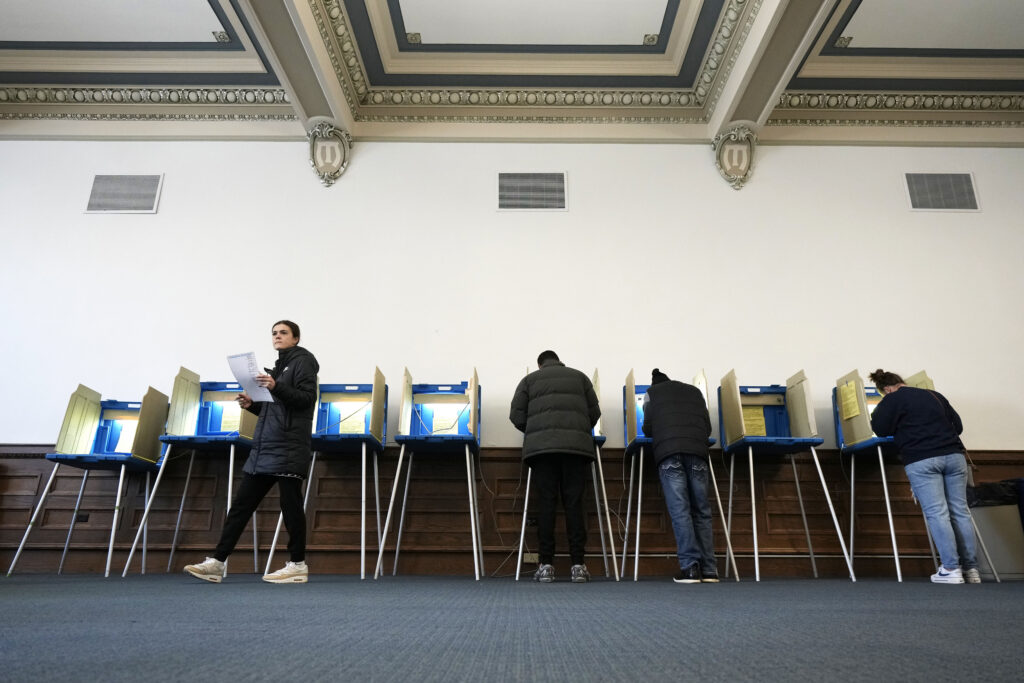
Wisconsin’s bipartisan elections commission is sending out new advice to local officials for this year’s midterms, advising them on how to manage potential threats amid rising concerns about voter roll purges and federal law enforcement presence at the polls.
Members of the commission stressed at their meeting Thursday that they don’t anticipate any unusual issues this year. However, they approved two new memos providing more guidance for local officials facing plenty of questions from voters and voting groups about their contingency plans.
President Donald Trump and his MAGA allies have made no secret of their willingness to undermine the 2026 midterm elections, from rigged congressional maps to unhinged attacks on mail voting and nonstop accusations of widespread illegal voting by non-citizens, plus their stubborn refusal to rule out the possibility of deploying federal agents to interfere with elections.
Get updates straight to your inbox — for free
Join 350,000 readers who rely on our daily and weekly newsletters for the latest in voting, elections and democracy.
Despite Trump’s threats, state and local election officials across the country have emphasized that the federal government has very little involvement in running elections, and that local officials are prepared to respond to unusual federal interference.
While election officials in some GOP-controlled states — including Texas and North Carolina — have run their voter rolls through the federal Systematic Alien Verification for Entitlement (SAVE) database, flagging thousands of voters as potential non-citizens, the Wisconsin Elections Commission affirmed Thursday that’s not the case in Wisconsin.
State law “prohibits election officials disclosing voters’ personally identifiable information, which makes it impossible for election officials to use SAVE as it is currently constructed,” the new guidance stated.
The memo confirmed that Wisconsin election officials cannot use the SAVE system to conduct citizenship checks.
The commission also advised local officials on what to do about law enforcement presence at the polls.
“In most circumstances, law enforcement should not be present at polling places unless they themselves are voting, unless they are carrying out legitimate law enforcement actions, or unless they are responding to election officials’ requests for assistance,” the memo stated.
If agents with the FBI, U.S. Immigration and Customs Enforcement (ICE) or the U.S. Department of Homeland Security (DHS) are present at polling locations, election workers were instructed that local and state election officials should be notified immediately.
The guidance also advised election officials that federal law “prohibits troops or armed people in federal service from being ordered, brought or kept at any place where a general or special election is held.”
The guidance passed with support from members of both parties, but there was some pushback from a Republican member of the commission who argued the advisory on law enforcement at the polls was unnecessary and would frighten voters.
But Meagan Wolfe, the administrator of the commission, argued that they should provide the information local officials requested.
“We don’t expect anything unusual at the polls on Election Day,” Wolfe said. “By no means are we looking to make anybody feel panicked or anything about this. But clerks are asking very directly for this type of information because they are getting hundreds of emails from voters and from groups asking, ‘Do you have a plan if these sorts of things were to happen?’ And so I see this just like any other contingency planning that we do to assist our clerks.”