Why Alabama is sending half of its voters back to the polls for a second primary election
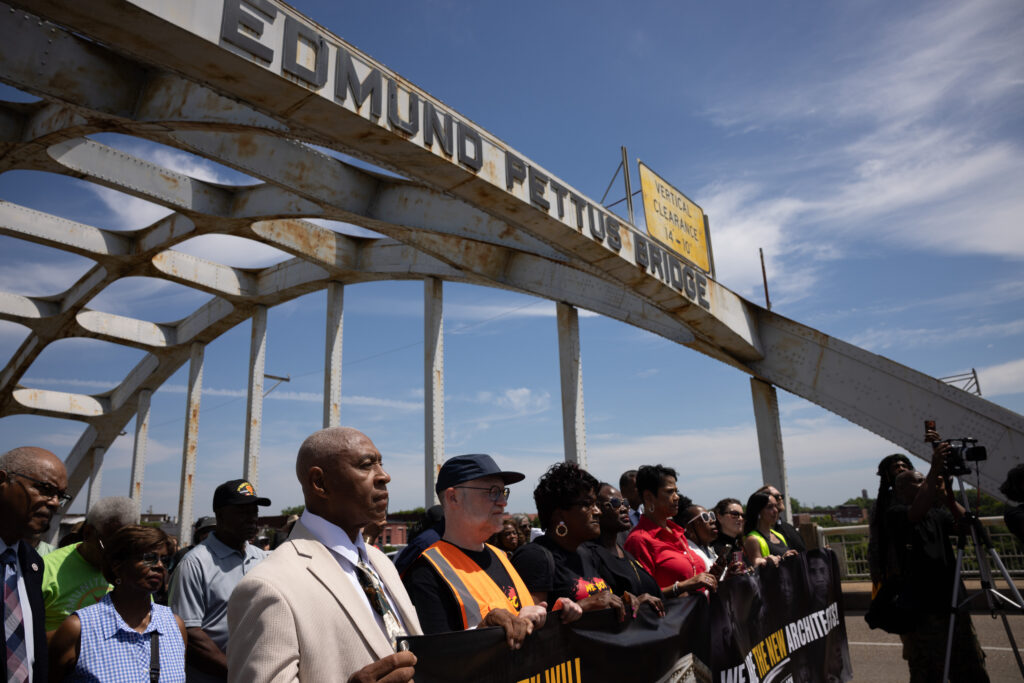
Voters in four of Alabama’s seven congressional districts are casting votes again today in an unusual second primary as a consequence of the GOP’s 11th-hour gerrymander after the May primary had already begun.
Alabama took the unusual step of halting several of its congressional primaries after mail voting had already begun following the U.S. Supreme Court’s Callais decision, which gutted the historic Voting Rights Act. That decision triggered a wave of last-minute redistricting as Southern states raced to take advantage of a new federal legal environment that suddenly welcomed racial gerrymandering, clearing the way to eliminate majority-Black districts.
Alabama nullified the primary congressional votes cast by residents in the races for the 1st, 2nd, 6th and 7th districts – leaving other votes on the ballots intact – while Republicans redrew the lines to eliminate a majority-Black district held by Democrats. Elections in the three remaining districts continued as usual. Now voters in those four newly-drawn districts must cast fresh votes for the U.S. House races.
Get updates straight to your inbox — for free
Join 350,000 readers who rely on our daily and weekly newsletters for the latest in voting, elections and democracy.
Along with Louisiana and Tennessee, Alabama was one of three Southern states that redrew its congressional maps for the 2026 midterm elections — a stunning decision, given that mail voting in its May primary election was already underway. In addition, Alabama is now using a map that a court previously struck down as intentionally racially discriminatory.
In District 1, one Democrat and four Republicans are running to represent the open seat previously held by Rep. Barry Moore (R) who is now running for Senate. It is considered a solid Republican district.
District 2, the seat targeted by the GOP gerrymander, is now considered to be a likely Republican pickup. But incumbent Rep. Shomari Figures (D) is running unopposed in the primary, hoping Democrats can hold onto the district. Six Republican candidates are running.
In District 6, incumbent Rep. Gary Palmer (R) is facing one primary challenger. Four Democrats are running in the primary for the seat, which is considered to be a solid Republican district.
In District 7, incumbent Rep. Terri Sewell (D) is running unopposed, while two Republicans are running to be their party’s nominee. It’s considered to be the state’s last remaining solid Democratic district.
The August special election will cost the state an estimated $4.4 million, Alabama Secretary of State Wes Allen said in May.
Alabama isn’t the only state where voters face massive confusion thanks to last-minute GOP gerrymanders. In Louisiana, Gov. Jeff Landry (R) suspended the state’s active primary election in an unprecedented attack on voting that courts declined to stop.