Mississippi has no recount law. Here’s how a battle over its Senate nail-biter might play out
 Prefer us on Google
to see more of our voting rights news coverage when you search.
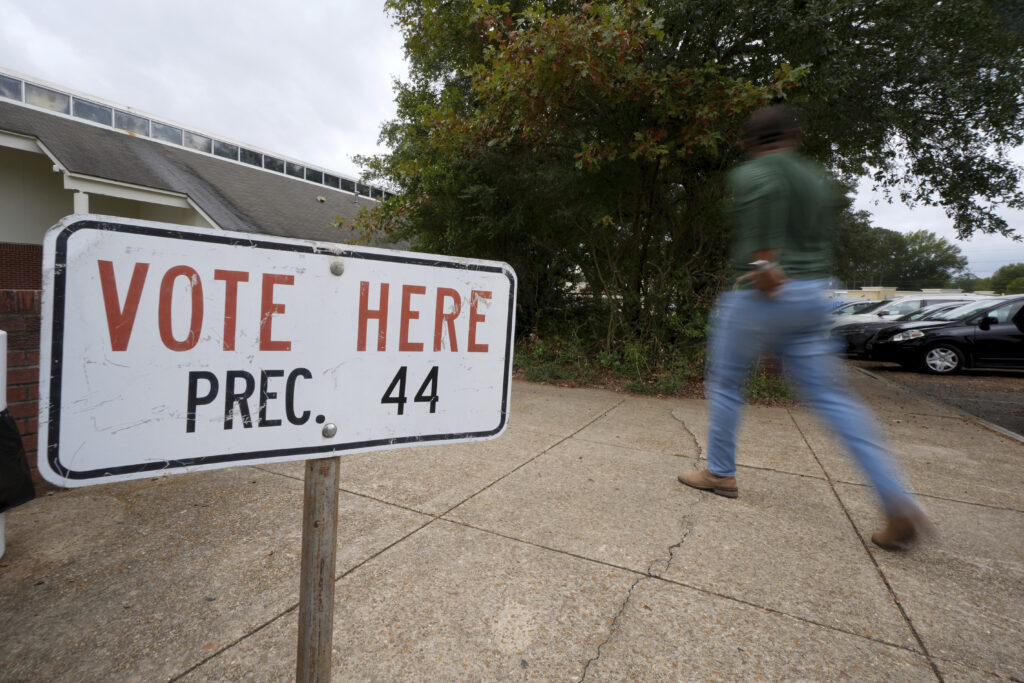
Democratic Senate candidate Scott Colom leads incumbent Sen. Cindy Hyde‑Smith (R) by just 43 votes Wednesday in Mississippi’s incredibly tight race, setting up a nail-biter in the only state with no recount provisions.
The lack of any instruction about what to do in a close Senate race — especially one that’s ripe for a contested result from either party — leaves many open questions about what could happen if the vote margin stays this close in the Magnolia State.
Mississippi’s election handbook has detailed rules for candidates who want to contest the results in primary, general, and special elections. But those rules are specifically written for contesting the office of any “county or county district office.” The state also has procedures for contesting state legislature races — but nothing for contesting U.S. Senate general elections.
It might seem like an unusual circumstance in modern elections, but as Notre Dame election law professor Derek Muller noted, the situation in Mississippi echoes what happened in the 2017 Alabama Senate special election, when former Sen. Doug Jones (D) narrowly unseated incumbent Sen. Roy Moore (R). Alabama law does not allow for a recount in federal elections for the U.S. House or Senate — and Moore refused to concede until every vote was counted. Ultimately, Jones won by more than 20,000 votes.
“That’s not to say a losing candidate in Mississippi has no remedy,” Muller wrote. “One remedy is to challenge decisions to exclude or to include certain ballots in the tabulation under state or federal law (if one could identify such ballots and then a legal theory). Those would require adjustment of vote totals even if not part of a ‘recount’ or a ‘contest.’”
Get updates straight to your inbox — for free
Join 350,000 readers who rely on our daily and weekly newsletters for the latest in voting, elections and democracy.
Muller also noted that the Senate could also exercise its constitutional authority to judge election returns and qualifications for its own races. Which means if the Mississippi race does come down to a few dozen votes, the Senate could ultimately determine the outcome.
While Congress usually leaves the resolution of electoral disputes to the states, it has used this power before. For example, in 1985 the House convened a three-person panel to settle a disputed Congressional race in Indiana. The race for Indiana’s “Bloody Eighth” congressional district was separated by just 34 votes after certification. The congressional panel directed a recount, which flipped the outcome to a new winner with just a four vote lead.
But there are still a lot of ballots to be counted that could prove decisive to either candidate.
Notably, the U.S. Supreme Court’s ruling in Watson v. Republican National Committee allows Mississippi to count mail ballots that arrive up to five days after voting ends, so long as they’re postmarked by Election Day.
Those late-arriving ballots could be the decisive votes to determine how big of a majority Democrats have in the Senate come January.