Voting rights advocates challenge South Dakota’s ‘confusing’ proof-of-citizenship system
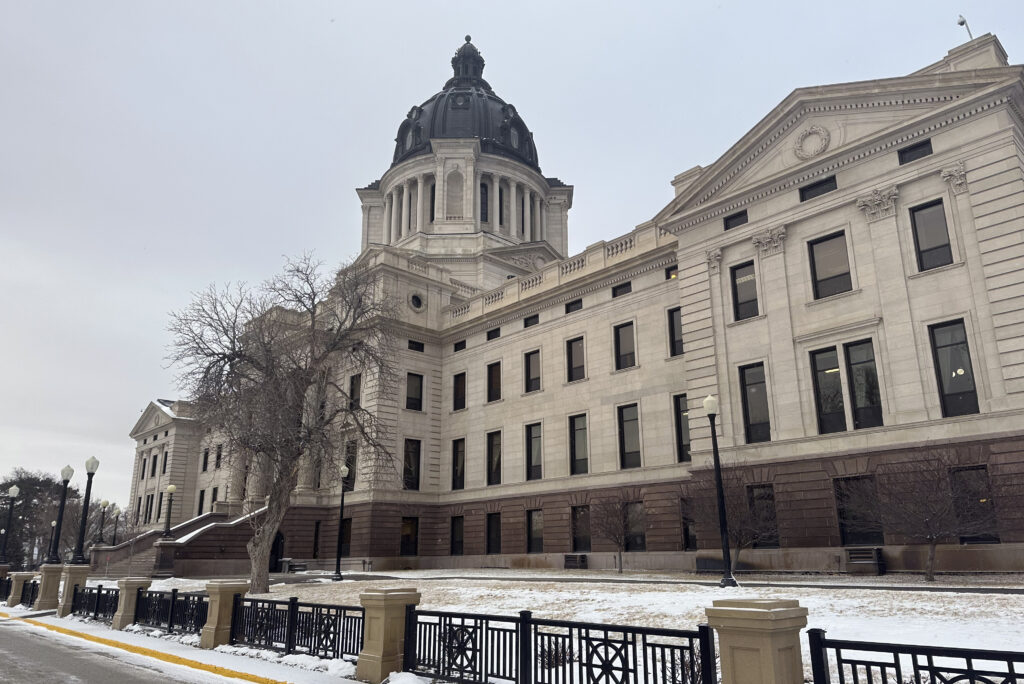
A coalition of voting rights advocates sued South Dakota Monday over the state’s implementation of a new strict proof-of-citizenship law. The pro-voting plaintiffs argue that confusing notices, a lack of any meaningful way to fix registration problems and an in-person documentation rule are unlawfully putting eligible voters at risk.
The League of Women Voters of South Dakota and voter Jaysen Hill filed the lawsuit in federal court, targeting how South Dakota is enforcing Senate Bill 175, a law enacted in March that requires new voters to provide documentary proof of U.S. citizenship to register for state and local elections.
Voters who do not provide an accepted form of citizenship documentation could still be registered as “federal-only voters,” meaning they may vote in federal races but are barred from voting for state and local offices.
The plaintiffs are not challenging South Dakota’s decision to require citizenship documentation itself. Instead, they say the state has built a system that can leave eligible voters unaware of why they were denied full registration and with no clear path to fix the problem.
One of the most striking allegations involves the notices sent to voters.
Get updates straight to your inbox — for free
Join 350,000 readers who rely on our daily and weekly newsletters for the latest in voting, elections and democracy.
According to the complaint, South Dakota sends the same form letter to federal-only voters regardless of why they received that status. That letter says the voter failed to provide a proper residential address — even when the actual problem is missing or rejected proof of citizenship.
The lawsuit says the state knows the notice is inaccurate but has not updated it.
The consequences are already showing up at the polls. The complaint alleges that at least 150 federal-only voters were denied the opportunity to vote in state and local races during South Dakota’s June 2 primary and subsequent runoff elections without receiving accurate notice of why their registrations were restricted or a meaningful chance to fix the problem.
Hill’s experience illustrates the stakes.
He says he registered in Minnehaha County in May by mail and included a photocopy of his South Dakota identification card. He later received a letter saying he had been made a federal-only voter because he used a commercial address, mail forwarding address or P.O. box.
Hill, who lives in an apartment and says he used his residential address, believed the notice was sent in error. He was never told that his citizenship documentation was the problem or how to correct it, according to the complaint, and he was unable to vote in June and July state and local elections.
“Eligible voters should not be blocked from participating in state and local elections because of unnecessary barriers in the registration process,” Marcia Johnson, chief of activation and justice for the League of Women Voters, said in a press release. “When voters face confusing requirements or receive inaccurate information about their registration, the result is fewer voices being heard in our democracy.”
The lawsuit also attacks a separate rule requiring voters who use certain IDs that South Dakota recognizes as proof of citizenship — including qualifying state driver’s licenses and nondriver IDs, as well as Tribal IDs — to present the original document rather than a photocopy. At the same time, South Dakota accepts photocopies of other documents, including birth certificates and passport pages.
The plaintiffs say that distinction violates the Materiality Provision of the Civil Rights Act of 1964, a federal protection that prevents election officials from denying someone the right to vote over paperwork errors that have no bearing on whether the person is actually qualified to vote.
Their argument is straightforward, that a photocopy of a qualifying ID contains the same information as the physical card, so forcing voters to appear in person does not help election officials determine whether they are eligible.
That requirement can be especially burdensome in rural South Dakota, where the groups say thousands of voters register by mail or through voter registration drives and round-trip travel to a county election office can exceed 100 miles.
“Federal law is clear: South Dakota must inform voters about documentation requirements before taking away their right to cast a ballot in state and local elections,” Mel Neal, legal counsel for voting rights at Campaign Legal Center, said. “Nor can South Dakota impose immaterial requirements that make it harder for Americans to register to vote.”
The lawsuit asks the court to require accurate notice and a meaningful opportunity to correct citizenship-document problems before voters are relegated to federal-only status. It also seeks to block the state from requiring original physical versions of driver’s licenses, nondriver IDs and Tribal IDs when voters submit those documents as proof of citizenship.
The case is notable because it does not ask the court to strike down proof-of-citizenship requirements altogether.
Instead, the plaintiffs argued that even if South Dakota can demand citizenship documentation, it cannot administer that requirement in a way that leaves eligible voters confused, unable to correct errors or shut out of state and local elections over paperwork rules that do not determine whether they are qualified to vote.