Virginia Democrats signal push for congressional map that leaves just one GOP seat in bid to counter gerrymanders
Virginia Democrats are openly expressing willingness to pursue a congressional redistricting plan that would create 10 out of 11 Democratic-leaning seats in the state’s U.S. House delegation — a move that could have major implications for control of Congress in 2026.
Currently, Democrats hold 6 seats in the Old Dominion, and Republicans hold 5.
The development reflects how aggressively Democrats in Richmond are responding to President Donald Trump’s nationwide push for mid-decade Republican gerrymanders.
Some Democrats have warned that, if left unchallenged, those efforts could lock in a GOP House majority before voters ever cast a ballot.
Get updates straight to your inbox — for free
Join 350,000 readers who rely on our daily and weekly newsletters for the latest in voting, elections and democracy.
Several Virginia lawmakers have publicly embraced a map that would leave Republicans with just one of Virginia’s 11 U.S. House seats. The comments come as the General Assembly prepares to reconvene next Wednesday and Democrats move quickly to advance a constitutional amendment allowing mid-decade congressional redistricting.
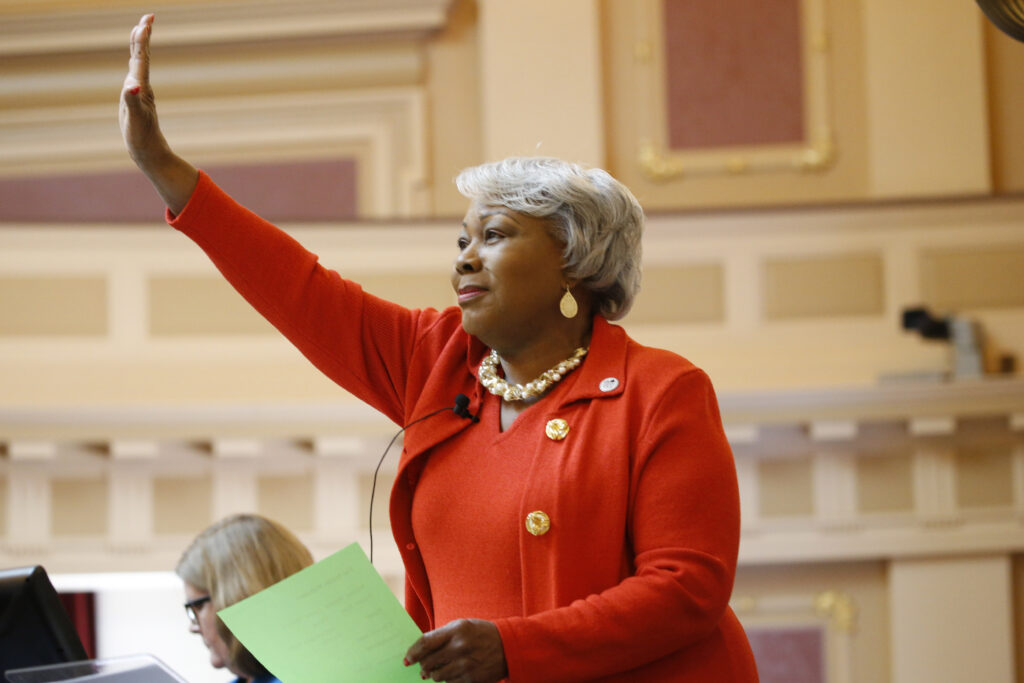
“I said in August of 2025 that the maps will be 10-1 and I’m sticking with that today,” Louise Lucas, Virginia Senate president pro tempore, said Friday. “Anyone in the Congressional delegation who wants a seat needs to campaign for it and not expect a safe seat.”
Lucas’ statement removes any doubt that the most powerful Democrat in the state Senate views a maximal response as both justified and necessary. Her stance reflects a broader belief among Virginia Democrats that restraint would amount to unilateral disarmament in a national redistricting fight already being driven by Republicans.
“If democracy is in danger from Trump’s attempts to mid-decade redraw in Texas, Miss and NC then we must act accordingly,” Schuyler VanValkenburg, a Democratic state senator whose support is seen as pivotal inside the caucus, posted on social media. “In Jan, I’m not voting to send redistricting to voters just to reinforce the status quo. We can get 8-3 w/ the current maps. 10-1. Right Sen. Louise Lucas?”
VanValkenburg has often been viewed as one of the caucus’ more reluctant members when it comes to redistricting. His embrace of a 10–1 outcome has led Virginia political observers to conclude that any internal resistance to leveling the field has largely collapsed.
The momentum toward a 10–1 map is rooted in events far beyond Virginia’s borders.
Over the past year, Trump and national Republicans have pressured GOP-controlled states to redraw congressional maps mid-decade — outside the normal census process — to cement partisan advantages before the 2026 midterms.
Democrats argue that without a comparable response, states like Virginia would be forced to absorb the national consequences of GOP gerrymanders elsewhere.
To that end, Virginia Democrats are advancing a constitutional amendment that would temporarily allow the General Assembly to redraw congressional districts mid-decade if other states do the same. The amendment would not dismantle Virginia’s voter-approved bipartisan redistricting commission for regular cycles, but it would give lawmakers a narrow window to act in response to out-of-state moves.
National Democrats are paying close attention. Hakeem Jeffries, the House minority leader, met this week with Virginia’s Democratic members of Congress as party leaders weigh whether a 9–2 or 10–1 map best serves Democrats’ chances of retaking the U.S House.
Some Democrats, including governor-elect Abigail Spanberger, have urged caution, warning that an aggressive map could complicate the statewide referendum required to activate the amendment. But legislative leaders in Richmond appear increasingly convinced that voters will understand the stakes — and that failing to respond forcefully would hand Republicans a structural advantage nationwide.