Trump won’t say if he’ll send armed agents to the polls. So Dems are suing to find out
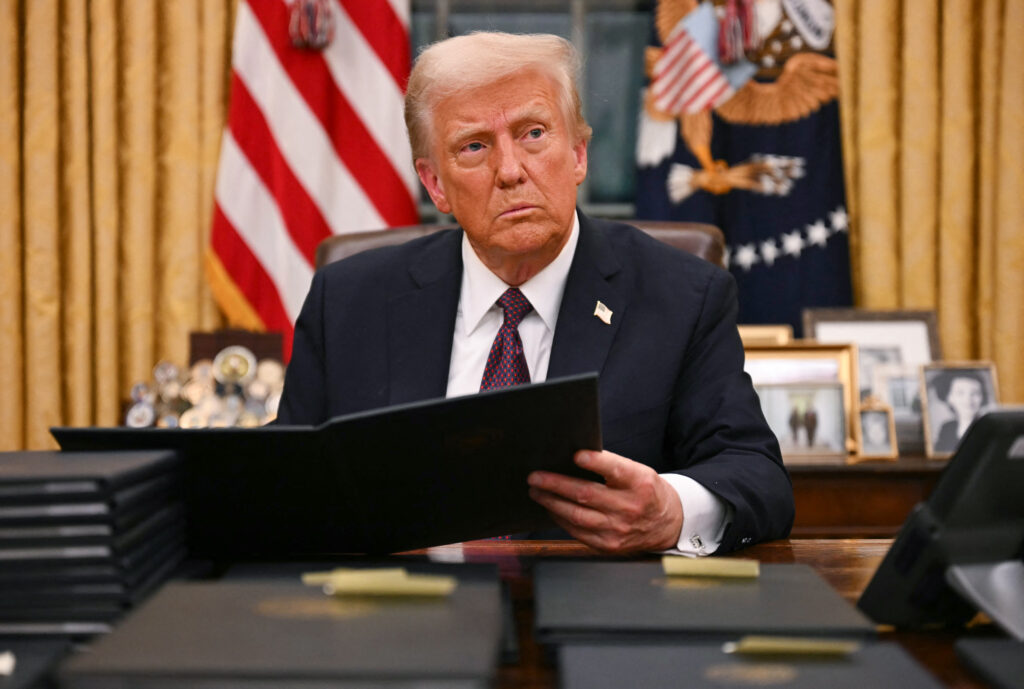
Democrats filed a lawsuit Tuesday demanding President Donald Trump’s administration unveil their plans, if any, for deploying federal officers or troops on election day.
Trump has said he’d like his administration to “take over” the voting this fall.
The Democratic National Committee (DNC) sued the Department of Justice (DOJ), Department of Homeland Security (DHS) and Department of Defense in Washington D.C., saying the agencies had essentially ignored 11 Freedom of Information Act (FOIA) requests sent since October regarding the “potential employment of federal agents and troops to polling places, drop boxes, and election offices.”
According to the DNC’s lawsuit, the agencies failed to send substantive responses or any documents.
Get updates straight to your inbox — for free
Join 350,000 readers who rely on our daily and weekly newsletters for the latest in voting, elections and democracy.
The requested records may or may not exist. Under FOIA, government agencies are required to inform the requester if no responsive files exist, or if they are exempted under the law from being revealed (like records related to ongoing criminal investigations).
The lawsuit was driven by the fear that Trump will follow through on his many statements suggesting he would “take over” the midterm elections this year. Some of Trump’s outside advisors have urged him to declare a national emergency and send either troops or federal agents to seize voting machines. White House Press Secretary Karoline Leavitt further fueled worries in February by refusing to guarantee federal DHS agents would not be sent to polling places. The FBI’s raid of Fulton County, Georgia’s voting office for 2020 election records, and new reports of a similar investigation in Maricopa County, Arizona, have both added to concerns.
“Donald Trump wants to bully and cheat his way through a midterm election that he knows Republicans will lose, but we won’t let him,” DNC Chairman Ken Martin said in a statement. “The DNC will stand on the side of voters and use every tool in our arsenal to stop voter suppression and intimidation before it can even begin.”
The DNC sent four FOIAs to the DOJ, requesting documents from the FBI, Civil Rights Division, Criminal Division, and Office of Information Policy.
It sent four to DHS, asking for files from Customs and Border Patrol, the Federal Protective Service, Immigration and Customs Enforcement and DHS headquarters. DHS responded to the headquarters request in December by claiming it was too broad in scope and requesting clarification. After the DNC responded, the lawsuit avers, the agency went silent.
The DNC also sent three requests to DOD, specifically to the National Guard Bureau, Northern Command and the Secretary of Defense’s office. DOD only responded to the last one, saying in December that the request was “not reasonably described.” The DOD then updated the DNC with a six month estimated completion date in late February — essentially scheduling the release for just prior to the midterm elections in November.
The DNC lawsuit asks the district court to order the administration to respond to the FOIA requests, by either providing the documents sought, stating affirmatively that they don’t exist, or providing a reason under FOIA for denying the request.
Some administration officials have contradicted Leavitt, stating affirmatively, on a private call with election officials, that armed agents would not be sent to the polls this fall. But Homeland Security Secretary Kristi Noem last week refused to rule out the possibility when asked during congressional testimony.
Federal law prohibits troops or federal officers from interfering with elections or even showing up in an official capacity at the polls (they are allowed to vote).
The Constitution also empowers states to run elections, while giving Congress the authority to pass superseding laws. The president, alone, has no authority over elections and Trump’s previous executive order on voting issues has been largely blocked by federal courts.
This story has been updated.