Federal court blocks key parts of Trump’s anti-voting order, restores states’ control over elections
 Prefer us on Google
to see more of our voting rights news coverage when you search.
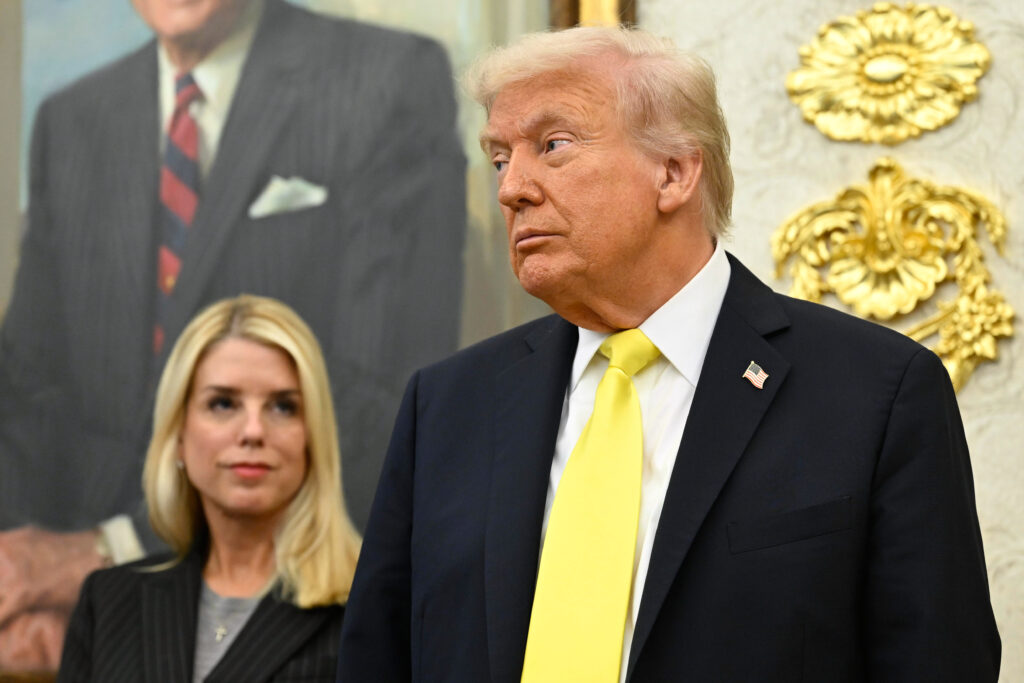
A federal court blocked core provisions of President Donald Trump’s anti-voting executive order Friday, ruling that the president had no authority to impose new election rules that threatened to disenfranchise voters and override state law.
In a sweeping order, District Judge John H. Chun, appointed by President Joe Biden, ruled in favor of Washington and Oregon, permanently halting enforcement of key sections of Executive Order 14248 — Trump’s March 2025 directive aimed at reshaping how states run elections.
The court found the order violated the Constitution by attempting to concentrate election power in the presidency, a move the judge warned posed a direct threat to democracy.
Get updates straight to your inbox — for free
Join 350,000 readers who rely on our daily and weekly newsletters for the latest in voting, elections and democracy.
“In the framework of our Constitution, the President’s power to see that the laws are faithfully executed refutes the idea that he is to be a lawmaker,” the judge wrote. “Accordingly, the ‘Constitution entrusts Congress and the States — not the President — with the authority to regulate federal elections.’”
The ruling blocks provisions that would have forced voters to produce documentary proof of citizenship to register using federal forms, pressured states to comply by threatening to withhold election funding and imposed a national deadline banning states from counting mail-in ballots received after Election Day — even if those ballots were postmarked on time.
Washington and Oregon, both universal vote-by-mail states, warned that Trump’s order would have upended their election systems, imposed massive new costs and locked eligible voters out of the democratic process. The court agreed, rejecting the administration’s argument that the executive order merely “enforced” existing law.
“Whenever the President issues an executive order, the power ‘to issue the order must stem either from an act of Congress or from the Constitution itself,’” the court added. “If the President lacks a statutory or constitutional basis the act is unlawful.”
The court repeatedly emphasized why allowing a president to dictate election rules is dangerous — particularly when those rules govern who gets to vote and whether their ballot counts.
“Separation of powers was designed to implement a fundamental insight: Concentration of power in the hands of a single branch is a threat to liberty,” the judge wrote, noting that the Founders deliberately denied presidents unilateral control over elections.
One of the most consequential parts of the ruling for voters involves mail-in ballots. Trump’s order sought to punish states that count ballots arriving after Election Day, a practice designed to protect voters from postal delays.
The court flatly rejected that position.
“The Court declares that Washington’s and Oregon’s existing laws governing ballot-receipt deadlines are not preempted,” the court wrote. “Unless, and until, Congress amends these statutes the Elections Clause authorizes Washington and Oregon to maintain their existing laws, which permit the counting of certain ballots received after Election Day.”
The judge also blocked Trump’s attempt to strong-arm states by tying federal election funding to compliance with his order.
“The President has no authority to unilaterally impose new conditions on federal funds or ‘thwart congressional will by canceling appropriations passed by Congress,’” the court wrote.
The injunction in the case is formally limited to Washington and Oregon, the two states that brought the lawsuit. But the court made clear that meaningful relief required blocking federal election officials from implementing the unlawful provisions altogether as they relate to those states, even if doing so has spillover effects beyond them.
In issuing a permanent injunction, the court framed its decision as a corrective — not just for this dispute, but for the broader constitutional order.
“In granting this relief, the Court seeks to restore the proper balance of power among the Executive Branch, the states, and Congress envisioned by the Framers,” the judge wrote.
The decision adds to a growing list of court rulings rejecting Trump’s effort to reshape U.S. elections by executive fiat. Similar challenges are pending or on appeal in other courts, setting up a broader legal reckoning over presidential power and voting rights.