‘Trump ultimately wants the chaos’: States can’t implement anti-mail voting order before midterms, experts warn
“We are way too close to an election for any major changes,” Colorado Secretary of State Jena Griswold (D) told Democracy Docket after the Supreme Court allowed the administration to move forward, for now, with President Donald Trump’s anti-mail voting executive order.
But, with 68 days until Election Day and some ballots being mailed as soon as next week, major changes are exactly what a new U.S. Postal Service rule imposing restrictions on a voting method one-third of Americans used in 2024 would require of election administrators.
“This just adds confusion. And Trump ultimately wants the chaos,” Griswold said. “This is an administration that’s hostile to free and fair elections, and Trump is laying the groundwork to refuse to accept the results in November. Since the day he took office again, he’s attacked our elections and democracy, so we’re going to continue to push back.”
Colorado is one of 24 states and the District of Columbia fighting the president’s order and the USPS rule implementing it in court. They filed a new lawsuit on Wednesday arguing the USPS rule “violates the Constitution and federal statutes many times over.”
However, states say they’re confident the rule will not survive legal challenges.
“The Supreme Court made their ruling. Yes, it did concern people, but it’s not going to change the way we run elections in Nevada at any point soon,” Nevada Secretary of State Cisco Aguilar (D) told Democracy Docket.
Still, Aguilar said the administration’s effort has a chilling effect nonetheless, by “discouraging groups of individuals from voting and having a voice.”
“It’s really sad because it’s the one time in America when every single voter has equal power,” he said. “All that matters is you’re an American citizen and you have a voice to participate.”
Get updates straight to your inbox — for free
Join 350,000 readers who rely on our daily and weekly newsletters for the latest in voting, elections and democracy.
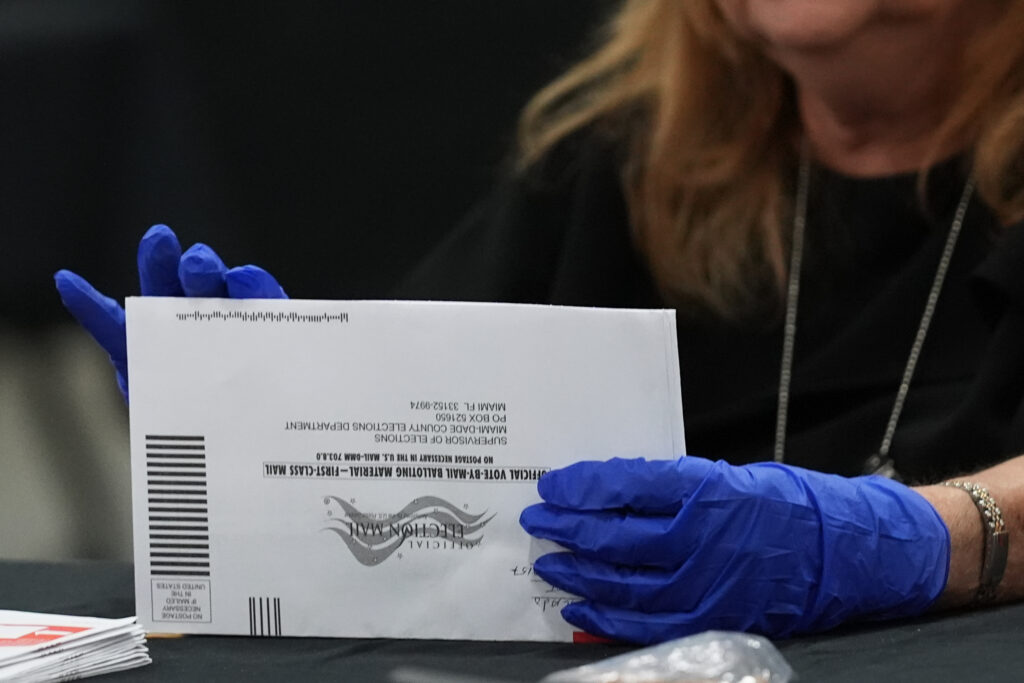
The USPS’ rule stipulates new design requirements for ballot envelopes, including trackable barcodes, and directs state officials to submit the names and addresses of voters who intend to receive a mail ballot to a new federal portal. If states don’t comply, USPS said those ballots will not be delivered.
“I would argue that it’s already functionally impossible to implement. We’re well past that date,” said Pamela Smith, the president and CEO of Verified Voting, a nonprofit that promotes the responsible use of technology in elections.
“You don’t upend something that’s centuries old on a whim,” Smith told Democracy Docket.
The Democratic states said they would bear significant costs to immediately redesign ballots and seek USPS review; develop new systems to share voter lists; train election officials on the new protocols; educate and reassure voters; and prepare for downstream effects, like more people opting to vote in person.
“In short, they must accomplish multiple Herculean tasks, each necessary to address the disruption caused by the Rule, in a matter of weeks, with limited resources,” the states wrote in their lawsuit.
When the Supreme Court allowed Trump’s order to move forward, Justice Ketanji Brown Jackson wrote a scathing dissent that said the administration was “needlessly injecting chaos” into the midterms – and accused the court’s Republican majority of abetting Trump’s efforts to sow doubts about the upcoming election.
“Taking its eye off the ball, the majority misses the Government’s actual objective: to secure our imprimatur for its effort to foment chaos ahead of the November elections,” she wrote.
Election administration experts, too, say it’s infeasible to implement the rule by November.
Smith said jurisdictions around the country are already proofing and printing ballots. Many have already ordered their envelopes.
Additionally, the so-called “Federal Ballot Mail Portal” that would collect the names, addresses and ballot barcode numbers for individuals receiving mail ballots is even more “opaque” to officials, Smith said.
Groups like the League of Women Voters of Massachusetts, which is suing to block the USPS rule, have warned it would likely disenfranchise those who rely on mail voting, including people with disabilities, older voters and rural voters who can’t physically vote in person as well as individuals who require translations.
“The Final Rule will exacerbate voters’ fears that their ballot will be intercepted by USPS and their confusion about how the Final Rule will impact their mail ballot and whether they are listed on yet-to-be-created lists,” the LWVMA wrote in a new supplemental complaint on Wednesday.
The Democratic states also argue the USPS drastically underestimates the time it will take to verify the ballots as required.
“USPS further estimates that the verification process for outbound mail ballots would take ‘less than a minute per mailpiece’ and ‘should take no more than a few hours for larger mailings.’ For California alone, that would amount up to 23 million minutes (approximate number of registered voters receiving a ballot), or more than 43 years,” their lawsuit noted.
While the Supreme Court lifted the block on Trump’s anti-mail voting order, it did so only because the conservative majority said the challengers had sued too early in the process. They made no determination on whether the president’s order or the USPS rule was legal – on that score, they said, “time will tell.”