Trump DOJ 0 for 13 in voter roll grab after court dismisses West Virginia lawsuit
 Prefer us on Google
to see more of our voting rights news coverage when you search.
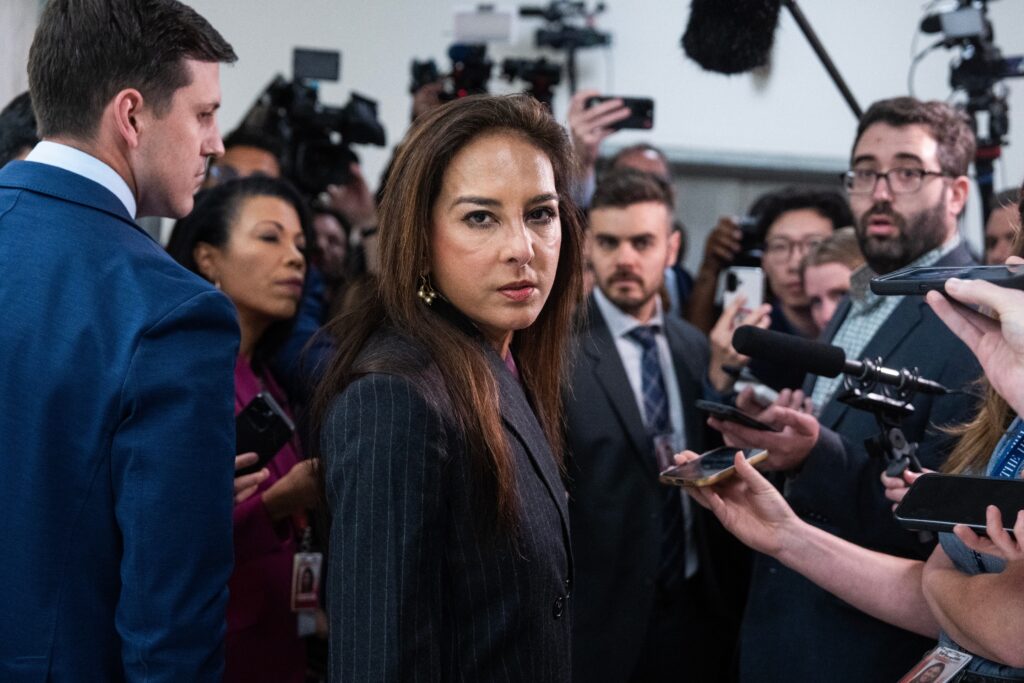
A federal judge tossed out the Department of Justice’s (DOJ) lawsuit to access West Virginia’s unredacted voter rolls, which marks 13 straight court losses for the department’s floundering effort to seize sensitive voter data from every state.
U.S. District Judge Thomas E. Johnston, who was appointed by former president George W. Bush, granted West Virginia’s motion to dismiss DOJ’s lawsuit Monday. In a scathing order, Johnston found the department failed to make a sufficient legal argument for its demand of sensitive voter data.
DOJ sent letters to every state last summer, demanding state election chiefs hand over their full, unredacted voter rolls under the guise of “voter list maintenance.” The data includes voters’ full names, addresses, driver’s license numbers, and partial social security numbers.
After most states refused to comply, citing privacy concerns and claiming the request was unlawful, DOJ sued 30 states and Washington, D.C. in hopes that a court would force access to the full voter rolls. In each case — including its West Virginia lawsuit — DOJ argued that, under Title III of the 1960 Civil Rights Act (CRA), the National Voter Registration Act (NVRA) and the Help America Vote Act (HAVA), states are required to hand over full voter registration records upon request to ensure clean voter rolls.
But Johnston shut down DOJ’s argument, writing that federal voting laws only require states to hand over its voter rolls if the department has an adequate purpose for the demand — like evidence that a state is violating an individual’s voting rights.
Get updates straight to your inbox — for free
Join 350,000 readers who rely on our daily and weekly newsletters for the latest in voting, elections and democracy.
“Because the demand letter did not include an adequate statement of its basis or purpose, as statutorily required, Plaintiff has failed to state a claim,” Johnston wrote.
President Donald Trump’s DOJ is on an impressive losing streak in its voter roll lawsuits. On Friday, a federal judge tossed DOJ’s lawsuit seeking New York’s unredacted voter roll for the same reasons that Johnston dismissed the West Virginia lawsuit. Last month, DOJ scored its first appeals court loss when a three-judge panel for the Sixth Circuit Court of Appeals affirmed a lower court’s dismissal of the DOJ’s Michigan lawsuit. But Civil Rights Division chief Harmeet Dhillon, seemingly unfazed from losing, asked for a rehearing before the full Sixth Circuit.
Despite the losing streak, DOJ’s voter roll grab nonetheless raises concerns about Trump’s broader efforts to seize states’ voter data and take control of voting.
It’s no secret that the Trump administration is seeking to build a national voter list, and the president’s latest executive order targeting mail voting could help achieve that goal, as it directs several federal agencies to create lists of verified U.S. citizens eligible to vote in each state.
But the Trump administration played coy about the real reasons for wanting to build a federal voter list and take over elections. Trump and the GOP have long stated their goal is to root out mass voter fraud, which isn’t an actual problem.
In his order, Johnston raised concerns about DOJ obfuscating why it actually wants access to every state’s voter rolls.
“Given the lack of an adequate basis or purpose, one is left to wonder what the real purpose was for the Justice Department to go to the trouble of filing civil actions like this one all around the nation,” he wrote. “Troubling though this question is, it is not before the Court at this time.”