This Week at Democracy Docket: Every Angle on DOJ’s Anti-Voting Crusade — and the GOP Isn’t Giving up on Gerrymandering
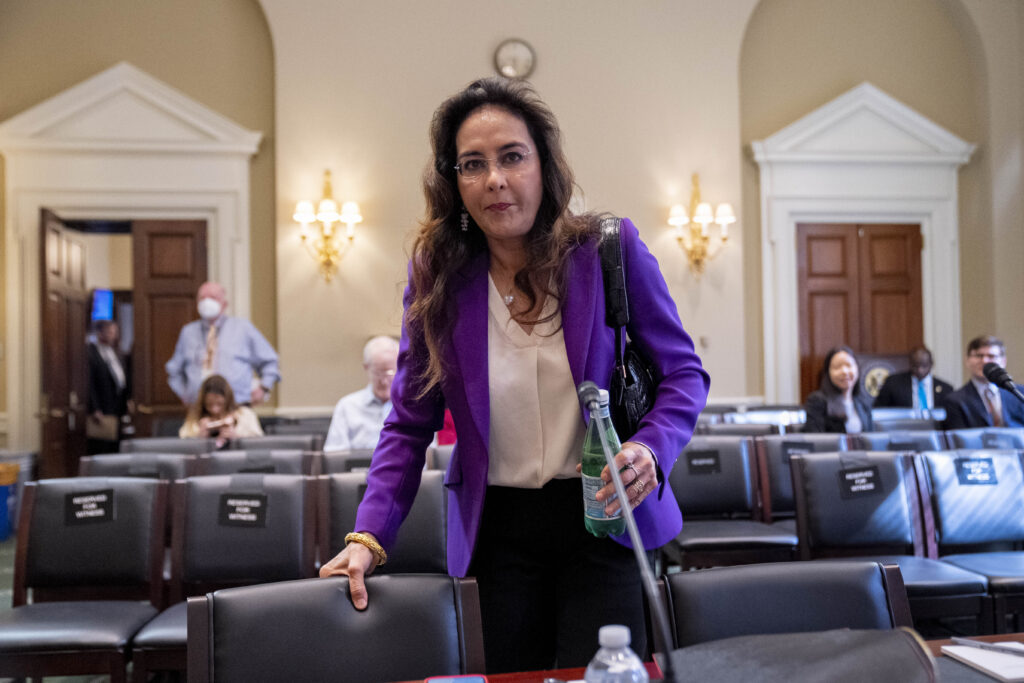
This week, President Donald Trump’s Department of Justice (DOJ) broke new ground in its dangerous campaign to take control of elections and promote baseless conspiracy theories about voting.
And we tracked them every step of the way.
Get updates straight to your inbox — for free
Join 350,000 readers who rely on our daily and weekly newsletters for the latest in voting, elections and democracy.
The department filed lawsuits against four new states — Colorado, Hawaii, Massachusetts, and Nevada — seeking their unredacted voter rolls. That’s 18 states now that DOJ has sued to obtain their voter rolls, saying it needs to search them for invalid registrations.
Though most of those being sued are blue states, Democracy Docket’s Yunior Rivas reported on signs that plenty of Republicans, too, are balking at the department’s unprecedented crusade. Harmeet Dhillon, the DOJ official leading the effort, said a lawsuit against Georgia is coming next, after the GOP-led state told her to “pound sand” when she requested their voter rolls. (In a later interview, she said she was told to “play in traffic,” which honestly sounds way worse.) Dhillon also revealed, for some reason, that a group of Republican-led states sent a letter expressing “serious concerns” about her request.
But the most dangerous voting lawsuit brought this week by Dhillon’s team wasn’t against a state and didn’t seek voter roll information. As Democracy Docket’s Jacob Knutson reported, it demanded that Fulton County, Georgia, hand over actual ballots from the 2020 election — a major escalation in Trump’s half-decade-long quest to prove large-scale voter fraud in the contest.
Meanwhile, Democracy Docket’s Matt Cohen continued digging into the backgrounds of some of the DOJ voting lawyers working on the effort to target state voter data – and at their web of ties to election-conspiracy theorists on the far-right fringe.
One, Eric Neff, briefly represented Patrick Byrne, the Trump ally who played a role in the scheme to overturn 2020, in a defamation lawsuit brought by Hunter Biden, Matt revealed. On that case, Neff worked under a Michigan lawyer who’s set to face trial there in connection with a scheme to access vote tabulators in Michigan. Another of the new DOJ voting lawyers filed a brief last year that promoted baseless fears about Dominion voting machines.
Meanwhile, Yunior noticed that the sweeping powers asserted for the Justice Department in Dhillon’s lawsuits against states are a striking departure from her previous stance on the subject. Under President Joe Biden, Dhillon was a staunch advocate of the right of states to run their own elections.
“Efforts by the federal government to override state authority [on voting issues], to my mind, are completely unconstitutional,” she declared in one typical comment, responding to a Biden initiative to expand access to voter registration.
Maybe it’s too much to expect consistency from Trump administration leaders when there’s a power grab at stake. Still, the speed with which Dhillon pulled off her 180 after taking a top job at Trump’s DOJ is still impressive.
But Dhillon wasn’t done — and neither was Yunior. This week, she also announced a civil-rights investigation of Colorado’s prison system. When Yunior saw that news, he wondered if it might somehow be tied to Trump’s ongoing effort to free Tina Peters, the election denier serving time for her part in a scheme to access the state’s voting machines, who on Thursday received a fake pardon from the president.
Turned out, Yunior was right. The far right seized on the probe as a way to help get Peters released — and it wasn’t long before Dhillon herself was signalling that that is, indeed, DOJ’s corrupt goal.
As closely as we tracked Dhillon and the Justice Department this week, we also found time to shine a light on some other GOP schemes to undermine democracy.
Democracy Docket’s Jim Saksa covered a hearing in the U.S. House that Republicans engineered as they lay the groundwork for an effort to weaken a key federal voting law. It’s the kind of quiet, long-term plot that other outlets likely won’t notice — but that we’re committed to sounding the alarm on.
Jim also brought you perhaps the most humiliating news of the week: for Trump: Indiana Republicans’ rejection of a new gerrymander, despite a no-holds-barred presidential pressure campaign, and numerous death threats against the hold-outs.
Still, the GOP isn’t giving up on their plan to use new maps to rig 2026. Democracy Docket’s Jen Rice untangled the web of lawsuits over Missouri’s Trump-backed gerrymander, as well as the effort to organize a referendum to stop it. Jen explained how the Republicans who run the state are using every maneuver they can think of to silence the voices of voters.
From voter suppression to gerrymandering to Trump’s executive power grab, the threats to American democracy are going to keep coming. And we’re going to stay on top of them.