Supreme Court Set to Hear Case That Could Impact Who Can Challenge Election Laws
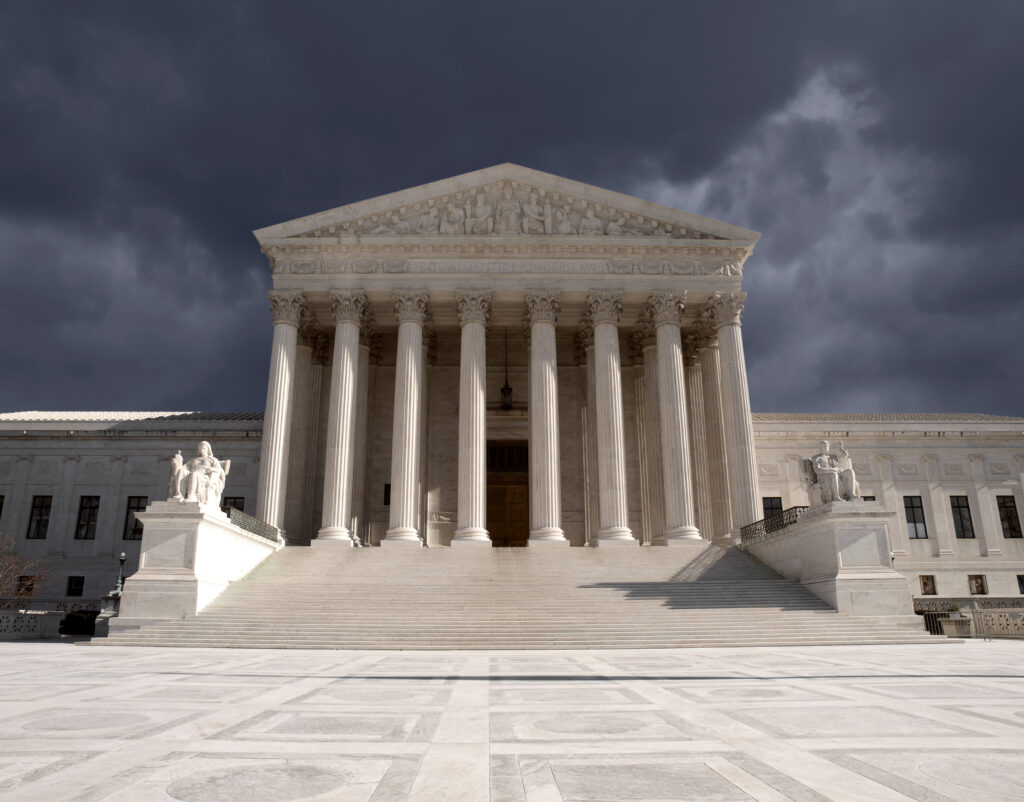
The U.S. Supreme Court is set to hear arguments in October in an Illinois case that could determine whether federal candidates have a legal right to challenge certain election laws in federal court.
Rep. Mike Bost (R) and two other Republicans challenged Illinois’ 14-day grace period for receiving and counting ballots postmarked by Election Day. A federal court initially dismissed the case because the plaintiffs lacked standing and “failed to plausibly allege” any injury.
Standing is a legal doctrine that decides who is allowed to bring lawsuits to keep courts from becoming political complaint forums. In order to have standing, a plaintiff must show they have suffered a concrete, personal injury caused by the action they’re challenging, and that a court ruling could fix that harm.
The plaintiffs asked the Supreme Court to review the case, arguing that the GOP candidates are indeed harmed by the counting of late-arriving ballots because it decreases their chances of winning and increases campaign costs — requiring candidates to expend resources to monitor the counting of late-arriving ballots.
The Supreme Court granted their petition and will hear oral arguments on their standing to sue on October 8.
Illinois election officials reject these claims and point out that the plaintiffs have not alleged any real-world impact on election outcomes.
“[Petitioners] do not claim that Illinois’s ballot receipt deadline affected their likelihood of prevailing in any race,” the Illinois State Board of Elections stated in its opposition brief. “Rather, petitioners contend that they are entitled to challenge the deadline simply by virtue of their status as candidates.”
The Department of Justice, under President Donald Trump, has sided with the plaintiffs. In an amicus brief filed by the solicitor general, the United States urged the court to reverse the lower court’s ruling arguing the candidates do have standing to challenge the Illinois law.
The case has also attracted an unusually large number of amicus briefs from both sides of the voting rights divide.
Anti-voting groups including the Republican National Committee (RNC), Honest Elections Project, Public Interest Legal Foundation and Restoring Integrity and Trust in Elections have filed in support of the plaintiffs, insisting they have standing to sue as the Illinois law would require GOP candidates to expend more resources on their campaigns.
The Supreme Court’s decision on standing in this case could have sweeping implications for voting laws, potentially making it easier for losing candidates to sue over ballot-counting rules and challenge election results.