After Callais, calls to reform Supreme Court grow deafening
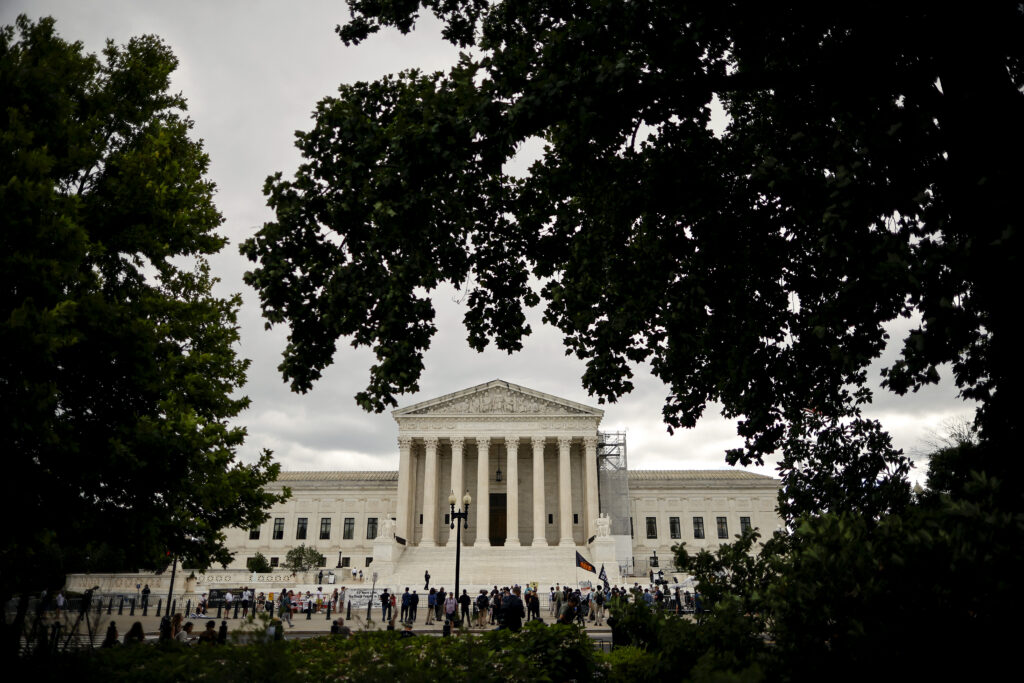
Following the Supreme Court’s gutting of the Voting Rights Act (VRA) Wednesday, legal scholars and advocates across the country demanded reforms to the Supreme Court to preserve free and fair elections and voting rights in the U.S.
In a 6-3 decision split along ideological lines, the court dealt a near-fatal blow to the landmark civil rights law that for decades dramatically increased Black voter registration and representation in local, state and federal government.
Get updates straight to your inbox — for free
Join 350,000 readers who rely on our daily and weekly newsletters for the latest in voting, elections and democracy.
The court’s decision Wednesday in Callais v. Louisiana opens the door for states — particularly Southern states with a history of suppressing the voting rights of minorities — to redraw their political maps in ways to eliminate Black and brown representation, undoing decades of progress.
In the aftermath of deeply unpopular rulings, ethics scandals and overt displays of partisanship, the Supreme Court under Chief Justice John Roberts faces a historic crisis of confidence. More Americans than ever hold an unfavorable opinion of the Supreme Court, recent polling has shown.
The court’s drop in favorability has coincided with the court’s conservative-appointed majority emboldening President Donald Trump’s political agenda by acquiescing to most of his vast claims of executive power. It has largely done so by utilizing its emergency — or “shadow” — docket to inexplicably pause lower-court restrictions on his policies.
In return, the president has repeatedly publicly attacked the court for even the slightest pushback to his extraordinary power grab.
“We are past the point of lamenting. Either Democrats are going to fundamentally remake this institution or they are co-signing autocracy,” Ryan Doerfler, a Harvard Law professor, wrote on social media after the Supreme Court’s ruling.
Beau Baumann, a constitutional law professor at the University of Utah College of Law, called on Democrats to make “juristocracy rollback” a key plank of the party’s political agenda.
In her scathing dissenting opinion Wednesday, Justice Elena Kagan accused the court’s majority of overriding not only Congress’s legislative authorities but also the will of voters.
“It ushered in awe-inspiring change, bringing this Nation closer to fulfilling the ideals of democracy and racial equality,” Kagan wrote, referring to the VRA. “And it has been repeatedly, and overwhelmingly, reauthorized by the people’s representatives in Congress. Only they have the right to say it is no longer needed—not the Members of this Court.”
Jonathan Ladd, a political scientist at Georgetown University, noted that there are alternative approaches to ensuring districts are representative of the voters within them, such as the John Lewis Voting Rights Advancement Act, proportional representation laws, or bans on partisan gerrymandering.
“But none will work without Supreme Court reform,” Ladd said. “No law could be more clearly authorized by constitutional text than the Voting Rights Act, which is explicitly authorized by Section 2 of the Fifteenth Amendment. But it doesn’t matter to this Court.”
“Any reform will be struck down without Supreme Court reform,” he added.
“The Court once again … has abused its power by gutting the Voting Rights Act to allow people of color to be redistricted in ways that should be illegal and which greatly helps the GOP,” Eric Segall, a professor at the Georgia State University College of Law who has long advocated for reforming the Supreme Court, said in a social media post.
“Everything makes sense if you view the Roberts Court as a subset of the Republican Party,” Segall said in another post.
In a piece for Slate, UCLA Law professor Rick Hasen wrote that the Supreme Court “has shown itself to be the enemy of democracy” through its Callais ruling.
In addition to calling on Democrats to pass new voting legislation the next time they hold power, Hasen said they must also consider reforming the court — a conclusion he said he “had been resisting until the court made this unavoidable.”
Just a day before the court ruling, the Brennan Center for Justice called on Congress, which under the Constitution has significant authority over the court’s structure and operations, to institute 18-year term limits and a binding ethics code for justices, overhaul the court’s use of its emergency docket, and improve the confirmation process.
“The Supreme Court is a branch of government. Nothing more, nothing less,” Brennan Center President and CEO Michael Waldman said in previewing the proposed reforms. “We want it to do what we need it to do: to stand up, with independence, for the rule of law. But we cannot rely on the Court to do that. Its power depends on its credibility — credibility it must earn.”