Supreme Court opens election litigation floodgates, says any candidate can challenge voting laws
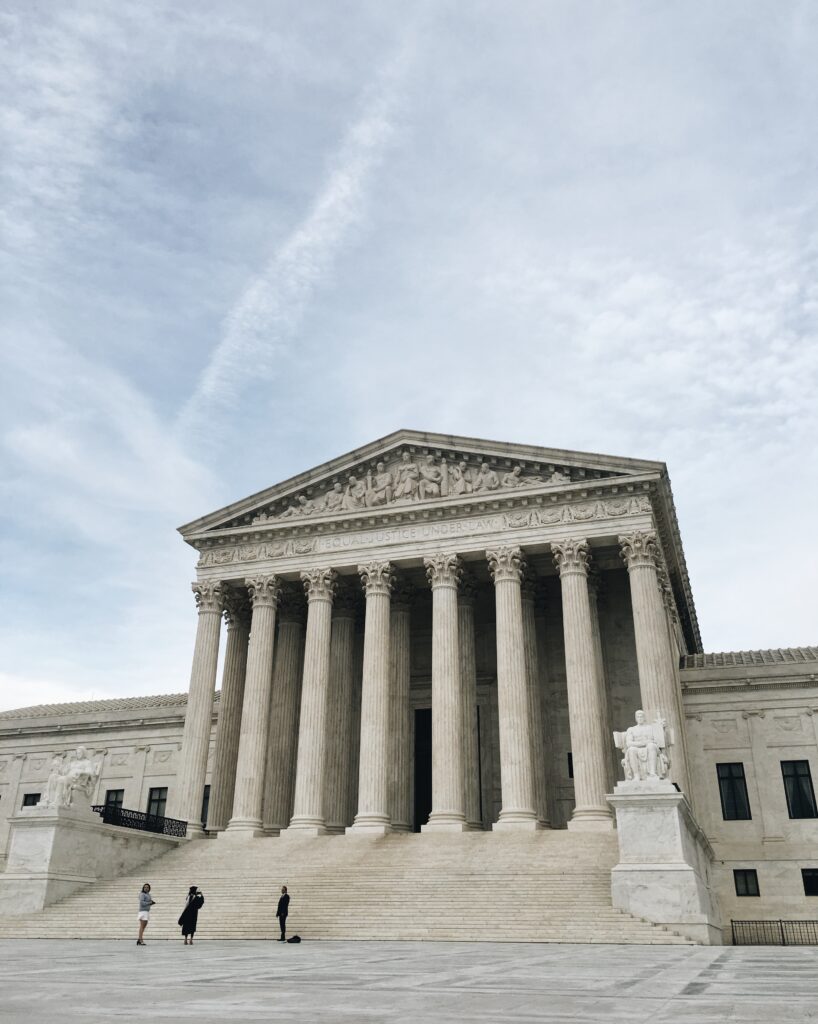
Any candidate for federal office may challenge election laws governing their election, the U.S. Supreme Court ruled in a 7-2 decision Wednesday, potentially triggering a deluge of litigation over the counting and certifying of results.
The Supreme Court overturned the 7th Circuit Court in Bost v. Illinois State Board of Elections, which had itself upheld a lower court decision, finding that Rep. Michael Bost (R-Ill.) had standing to challenge a state law allowing for the counting of mailed ballots that arrive after Election Day if they were postmarked prior.*
The court agreed to hear the case only on the question of Bost’s standing, not the validity of his underlying lawsuit against postal voting grace periods. The justices will hear oral arguments on that issue later this year in a separate case challenging Mississippi’s mail voting law.
Get updates straight to your inbox — for free
Join 350,000 readers who rely on our daily and weekly newsletters for the latest in voting, elections and democracy.
To have standing, plaintiffs must have a personal stake in the outcome of the case. For years, courts had held that candidates only have that stake in challenging an electoral law if it could potentially influence the outcome of their race. But, writing for the majority, Chief Justice John Roberts said a politician’s cares extend beyond just whether they win or lose.
“Candidates have a concrete and particularized interest in the rules that govern the counting of votes in their elections, regardless whether those rules harm their electoral prospects or increase the cost of their campaigns,” Roberts wrote. “Their interest extends to the integrity of the election—and the democratic process by which they earn or lose the support of the people they seek to represent.”
During litigation, attorneys for Illinois warned that a ruling like this could allow candidates to challenge voting rules for “purely ideological reasons” and air “generalized grievances about election law.”
The ruling was quickly cheered by election-denying conservative activists, with Judicial Watching calling it a “major… Supreme Court victory.”
Others who cast doubt on the 2020 election results had urged the court to rule in Bost’s favor ahead of Wednesday’s opinion, including Cleta Mitchell, a leading anti-voting activist and close Trump ally, and the Public Interest Legal Foundation (PILF), which wrote an amicus brief urging the Court to grand standing to all “individuals with election-related positions.”
The majority did not address those arguments in its opinion.
Justice Amy Coney Barrett wrote a concurring opinion, which Justice Elena Kagan joined, that agreed that Bost had standing to sue, but under the old standard that he suffered a pocketbook injury by the additional campaign funds spent on the post-Election Day ballot count watching. Barrett disagreed with the majority’s broad standing grant to all federal contenders.
“Candidates are apparently entitled to this extraordinarily forgiving rule because they are ‘not common competitors in the economic marketplace,’” she wrote. “I cannot join the Court’s creation of a bespoke standing rule for candidates. Elections are important, but so are many things in life. We have always held candidates to the same standards as any other litigant.”
In her dissent, which Justice Sonia Sotomayor joined, Justice Ketanji Brown Jackson similarly said the majority was granting politicians broader standing principles not enjoyed by other plaintiffs, which would further politicize the courts.
“It declares that all candidates have standing to challenge election regulations in light of their interest in a ‘fair process,’” Jackson wrote. “No matter that, in a democratic society like ours, the interest in a fair electoral process is common to all members of the voting public. The Court thus ignores a core constitutional requirement while unnecessarily thrusting the Judiciary into the political arena.”
Elsewhere in the opinion, Roberts alluded to electoral legitimacy concerns, without acknowledging the factual invalidity of those worries, which have been ginned up by right-wing agitators in furtherance of President Donald Trump’s ongoing lies about the 2020 election results.
“Rules that undermine the ‘integrity of the electoral process’ also undermine the winner’s political legitimacy, “Roberts wrote. “The counting of unlawful votes—or discarding of lawful ones—erodes public confidence that the election results reflect the people’s will. And when public confidence in the election results falters, public confidence in the elected representative follows. To the representative, that loss of legitimacy—or its diminution—is a concrete harm.”
While incidents of unlawful voting are vanishingly small, non-partisan in practice, and have never been shown to impact the results of a federal election, efforts to restrict legitimate voters’ ability to cast ballots have been widespread and deliberately aimed at helping a particular candidate win.
After the 2020 election, Trump and his allies filed over 60 lawsuits challenging the results. Many were dismissed quickly for lack of standing. Under this new standard, similar post-election challenges would likely survive that first procedural hurdle, potentially leading to long, protracted delays in the certification of election results, which can further erode public trust.
Still, the majority did warn that judges should avoid upending election laws at the last minute.
“The Court has repeatedly emphasized that lower federal courts should ordinarily not alter the election rules on the eve of an election. Such late-breaking, court-ordered rule changes can result in voter confusion and undermine confidence in the integrity of electoral processes,” Roberts wrote. “The democratic consequences can be worse if courts intervene only after votes have been counted. Counting first and ruling upon legality afterwards is not a recipe for producing election results that have the public acceptance democratic stability requires.”
Writing on the Election Law Blog, New York University Law School Professor Richard Pildes applauded the decision, saying it’ll lead to more election lawsuits settled before votes are counted.
Bost “will advance the important systemic interest in having the legality of election laws resolved in advance of elections, rather than in the much more fraught circumstances of post-election challenges during the vote counting process,” Pildes wrote. “One of the important policies about the conduct of election is that the rules be clearly settled in advance of the election. The Bost decision will contribute to that important aim of the election system.”
*The Democratic Party of Illinois, which filed an amicus brief in this case, is represented by the Elias Law Group (ELG). ELG firm chair Marc Elias is the founder of Democracy Docket.