Maryland voters skeptical of Democrats’ redistricting amendment, polls show
 Prefer us on Google
to see more of our voting rights news coverage when you search.
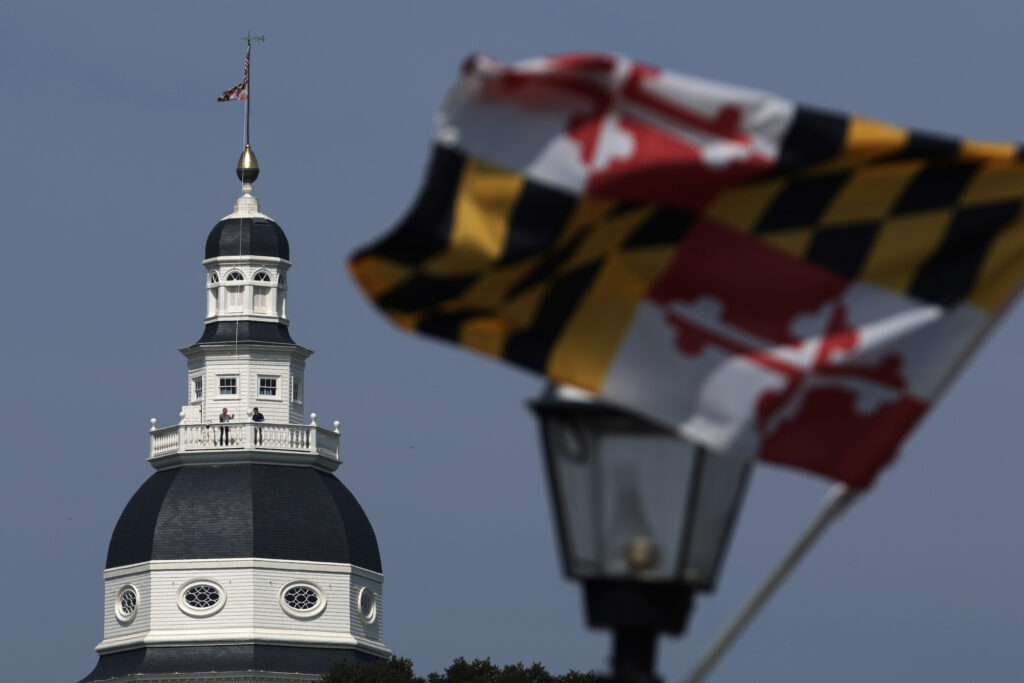
Maryland Democrats scored a win last month when the state’s Supreme Court allowed a constitutional amendment on redistricting to appear on the November ballot.
But the victory might be short-lived. Recent polling now shows that most Maryland voters are opposed to changing the state’s constitution to make it easier to redraw congressional districts and help Democrats counteract a Trump-backed wave of pro-GOP gerrymanders across the country.
The latest poll, released Wednesday by the Institute of Politics at the University of Maryland, Baltimore County (UMBC) and first reported by Maryland Matters, found that 53% of respondents opposed the redistricting question as it’s written to appear on the ballot. Only 25% supported the ballot measure, while 19% were on the fence.
The ballot measure asks voters to approve a constitutional tweak that will change the rules governing how the state’s congressional districts are drawn. That change will then allow Maryland Democrats to more easily redraw the state’s congressional map to their liking.
But voters appear broadly skeptical. Two previous polls released last month — one conducted by a group that opposes the ballot proposal and another conducted by a group supporting it — both found that a majority of respondents opposed the constitutional change.
Mileah Kromer, director of the poll conducted by UMBC, told Maryland Matters that she thinks most voters are confused by the ballot language, which was drafted by the Maryland Supreme Court.
Get updates straight to your inbox — for free
Join 350,000 readers who rely on our daily and weekly newsletters for the latest in voting, elections and democracy.
“So I think what our numbers really show — when you look at them in comparison with the full ballot language — is that there is certainly a disconnect between when people are presented with the full ballot language, understanding what that ballot language means and what it’s asking, and the real political ramifications of it,” she said.
In August, the Democratic majority in Maryland’s General Assembly passed a proposed constitutional amendment on redistricting. The change would clarify that the state’s constitutional requirements for compact districts that respect natural and political boundaries apply only to state legislative maps, not congressional ones.
Democrats currently hold seven of Maryland’s eight U.S. House seats, while U.S. Rep. Andy Harris (R-Md.) represents the Eastern Shore-based 1st Congressional District. With a rule change, Democrats could draw a new map that dismantles Harris’ district, potentially giving them an extra seat in the U.S. House of Representatives.
Republicans have sued to stop the proposed amendment from appearing on the midterm ballot, but the Maryland Supreme Court upheld Democrats’ plan to put it to a vote.
The state’s Democratic leadership — led by Gov. Wes Moore — previously said that reconfiguring the congressional map to dismantle Harris’ district is necessary to counter the partisan gerrymanders pushed by President Donald Trump last year.
“I continue to believe that our country needs national redistricting reform,” Moore said in August. “But until that happens, inaction is not an option. Maryland will not be caught flat-footed while Republicans engage in political redlining that guts decades of progress that the generations before us fought for.”