Louisiana Will No Longer Defend Map in Supreme Court Case on Future of VRA
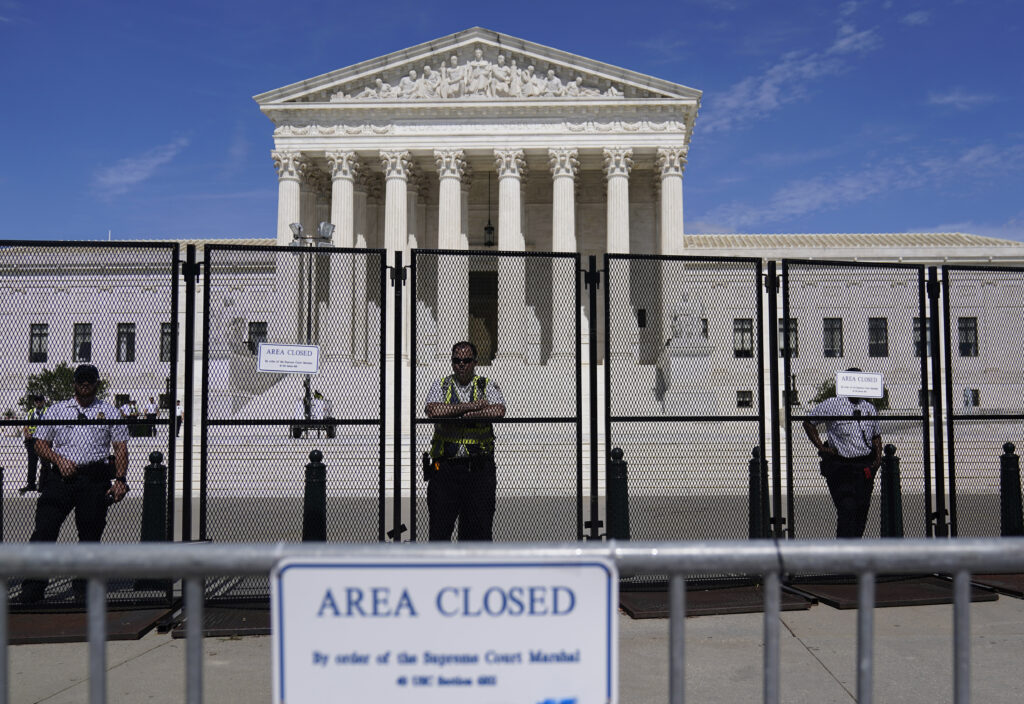
Louisiana and Black voters delivered opposing briefs to the U.S. Supreme Court Wednesday, setting the stage for arguments this fall that could determine the future of the Voting Rights Act and minority political representation.
Louisiana told the justices it will no longer defend the court-ordered map that added a second majority-Black congressional district. Instead, the state argued that any use of race in redistricting is unconstitutional.
Until now, Louisiana had sought to defend its map, arguing that it was required by a court to draw it, after an earlier map had been found to be racially discriminatory.
“Louisiana wants out of this abhorrent system of racial discrimination,” the state wrote in Wednesday’s brief. “The Court should answer yes to the question presented for reargument — the intentional creation of a second majority-minority district in S.B. 8 is unconstitutional.”
The state’s brief compared Section 2 of the Voting Rights Act to the race-conscious college admissions policies struck down by the court in 2023.
“Race-based redistricting is categorically unconstitutional for all the reasons race-based admissions programs are likewise unconstitutional,” the state added. “They should also end race-based redistricting. For the use of race in race-based admissions programs is just like the drawing of district lines to create majority-minority districts under Section 2.”
Louisiana Attorney General Liz Murrill (R) doubled down in a statement after the brief was filed, blasting compliance with the Voting Rights Act as an “abhorrent system.”
“Our Constitution prohibits the sorting of Americans into voting districts based on their skin color — and Louisiana wants no part of that abhorrent system,” Murrill said, acknowledging the state only drew the second majority-Black district “under protest” because federal courts had struck down its prior map for discriminating against Black voters.
Black voters, represented by pro-voting groups the NAACP Legal Defense Fund and ACLU, argued that the Voting Rights Act remains essential to preventing discrimination in Louisiana and beyond.
The voters called the law “the crown jewel of civil rights legislation” and reminded the court that multiple lower courts already found Louisiana’s prior map illegally diluted Black voting power.
“Seven federal judges all agreed that, based on present conditions in Louisiana, the Legislature’s 2022 congressional map likely unlawfully diluted the votes of Black Louisianians in violation of Section 2 of the VRA,” the plaintiffs argued. “The notion that the sun has set on the need for race-conscious remedial redistricting is contrary to both the fact of ongoing discrimination in Louisiana and the text and purpose of Section 2.”
The plaintiffs firmly rejected Louisiana’s push for a “colorblind” approach that ignores present-day discrimination.
The Supreme Court will hear oral arguments in October.
At stake is not just Louisiana’s congressional map but whether drawing majority-minority districts to protect against racial vote dilution is unconstitutional. A sweeping ruling against Section 2 of the Voting Rights Act could strip minority voters of one of the few remaining tools to ensure equal representation.